

Article
For years, the United States anchored global cyber diplomacy. As Washington rethinks its leadership role, the launch of the UN’s Cyber Global Mechanism may test how allies adjust their engagement.
Patryk Pawlak, Chris Painter
Source: Getty
Carnegie India scholars review key outcomes from fifteen ministerial meetings. These include fourteen outcomes under the Sherpa Track and one under the Finance Track.
On September 9, 2023, the New Delhi Leaders’ Declaration was adopted at the G20 Summit, garnering global attention. More remarkably, the summit was able to achieve a consensus among G20 members at a time of deep fractures within the diplomatic community on the Russia-Ukraine conflict. While there has been a focus on the Leaders’ Declaration since its adoption, the outcomes from the many ministerial meetings convened throughout the year have been given but little attention.
The G20 consists of two official tracks—the Finance Track and the Sherpa Track. The former is led by the finance ministers and central bank governors of member countries, and the latter by the Sherpas, who are emissaries of the leaders. The two tracks are tasked with “coordinating the substantive work of the G20,” and the various working groups operate under them to carry out deliberations on agenda items decided by the presidency.
The working groups are entities within the G20 and are thematically organized to ensure that there is a dedicated focus on specific sectors like education, culture, agriculture, health, and so on. The deliberations from these working groups inform the agenda for the ministerial meetings, which then identify areas for possible collaboration among the G20 members.
Featuring participation from ministers and high-level representatives from twenty advanced and emerging economies and building on the work done by experts as part of the working groups (including international agencies like the Organisation for Economic Co-operation and Development and the World Trade Organization), these ministerial meetings are key to understanding the Leaders’ Declaration. Outcome documents from these meetings, including reports, compendiums, policy priorities, and high-level principles, are valuable resources that are then considered during the formulation of a declaration toward the end of a country’s G20 presidency.
In this regard, we review a few key outcomes from fifteen ministerial meetings. These include fourteen outcomes under the Sherpa Track and one under the Finance Track. It should be noted that the list of outcomes shared here is not exhaustive and only includes the ones that the writers collectively deem important given their relevance to the contemporary international socioeconomic landscape. The outcomes for the respective meetings are listed in the table below.
| Meeting | Outcomes |
G20 Meeting of Agricultural Chief Scientists Varanasi, April 17–19, 2023 |
|
G20 Tourism Ministerial Meeting Goa, June 21, 2023 |
|
G20 Research Ministerial Meeting Mumbai, July 5, 2023 |
|
Third G20 Finance Ministers and Central Bank Governors Meeting Gandhinagar, July 17–18, 2023 |
|
G20 Labour & Employment Ministers’ Meeting Indore, July 21, 2023 |
|
G20 Energy Transitions Ministers’ Meeting Goa, July 22, 2023 |
|
G20 Disaster Risk Reduction Working Group Meeting Chennai, July 24–25, 2023 |
|
G20 Environment and Climate Ministers’ Meeting Chennai, July 28, 2023 |
|
G20 Anti-Corruption Ministerial Meeting Kolkata, August 12, 2023 |
|
|
Gandhinagar, August 18–19, 2023 |
|
Digital Economy Ministers Meeting Bengaluru, August 19, 2023 |
|
Trade and Investment Ministerial Meeting Jaipur, August 25, 2023 |
|
G20 Culture Ministers’ Meeting Varanasi, August 26, 2023 |
|
G20 Chief Science Advisers Roundtable Gandhinagar, August 28, 202 |
|
This week, India plans to convene a G20 virtual summit just before handing over the presidency to Brazil in December. Countries will come together to assess the progress made on the deliverables under the declaration released in September. Separately, the NITI Aayog is conducting feeder workshops to take suggestions from think tanks, civil society, and subject matter experts on implementing the declaration. A reading of these outcome documents can be a useful exercise to review their implementation and to map the continuity of these outcomes during Brazil’s G20 presidency and beyond.

Former Senior Research Analyst, Carnegie India
Swarnim Rai Shrivastava was a senior research analyst in the Technology and Society program at Carnegie India.

Senior Research Analyst, Technology and Society Program
Tejas Bharadwaj is a senior research analyst in the Technology and Society Program in Carnegie India.

Research Analyst, Technology and Society Program
Charukeshi Bhatt is a research analyst with the Technology and Society program at Carnegie India. Her work focuses on the intersection of emerging technologies and international security.
Carnegie does not take institutional positions on public policy issues; the views represented herein are those of the author(s) and do not necessarily reflect the views of Carnegie, its staff, or its trustees.
For years, the United States anchored global cyber diplomacy. As Washington rethinks its leadership role, the launch of the UN’s Cyber Global Mechanism may test how allies adjust their engagement.


Patryk Pawlak, Chris Painter
Integrating AI into the workplace will increase job insecurity, fundamentally reshaping labor markets. To anticipate and manage this transition, the EU must build public trust, provide training infrastructures, and establish social protections.

Amanda Coakley

Tech giants are increasingly able to wield significant geopolitical influence. To ensure digital sovereignty, governments must insist on transparency and accountability.

Raluca Csernatoni
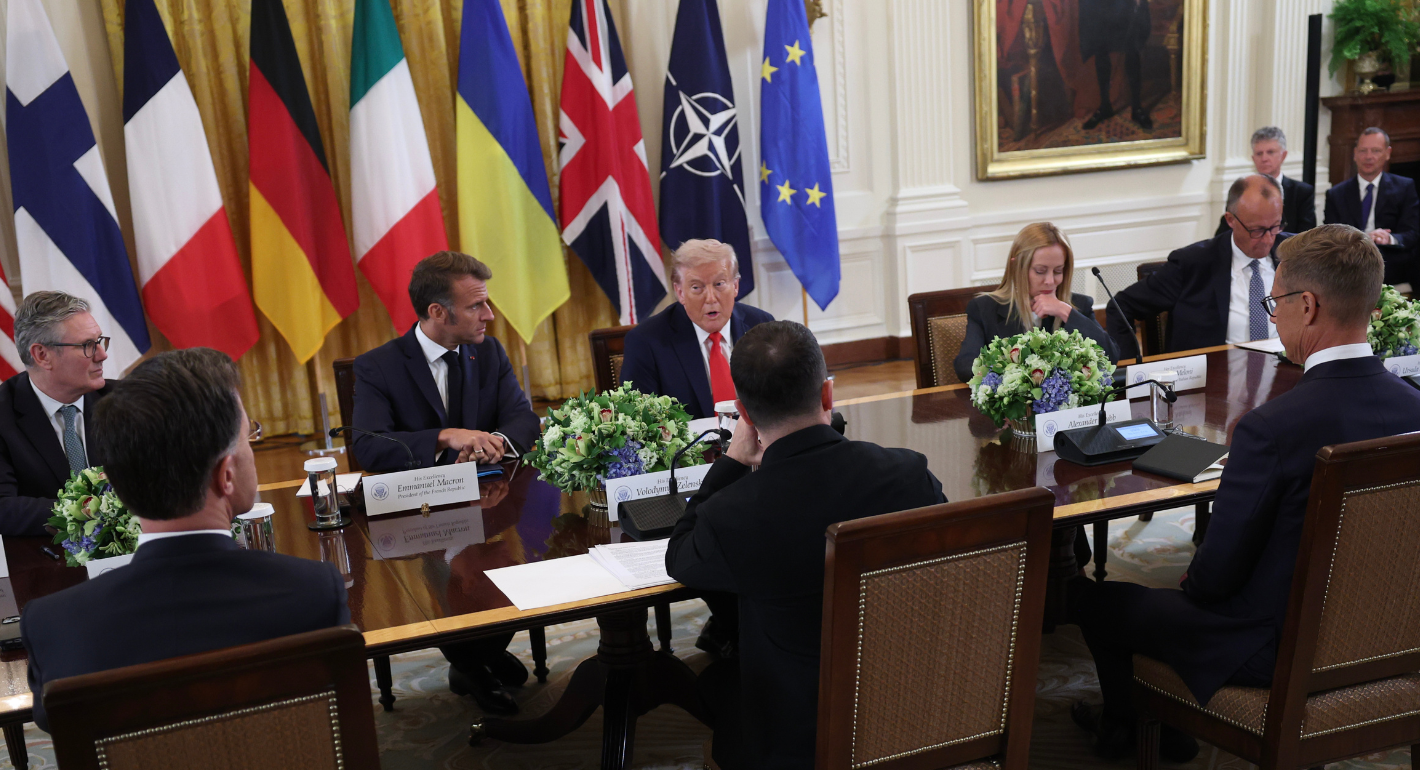
The second Trump administration has shifted the cornerstones of the liberal international order. How the EU responds will determine not only its global standing but also the very integrity of the European project.

Rym Momtaz

The EU’s pursuit of tech sovereignty has often sidelined the role of democracy in the digital sphere. The union should adopt a tech citizenship strategy that promotes citizen engagement, democratic innovation, and accountability.

Richard Youngs