

Paper
Christopher S. Chivvis, Rohan Mukherjee, Milan Vaishnav

Trump 2.0 has unsettled India’s external environment—but has not overturned its foreign policy strategy, which continues to rely on diversification, hedging, and calibrated partnerships across a fractured order.
Donald Trump’s return to the White House has once again altered the contours of international politics. The second Trump administration has adopted a more assertive and unpredictable approach to U.S. foreign policy—deploying tariffs and other economic tools against both rivals and partners, expressing open hostility toward multilateral institutions, and pursuing a highly transactional, personalized style of diplomacy. These developments have unfolded amid intensifying geopolitical competition and the weakening of the post-Cold War international order, contributing to a more fluid and uncertain global landscape.
For India, this evolving context raises several important questions about the viability of its foreign policy approach. Over the past three decades, Indian foreign policy has been increasingly organized around a strategy of diversification—deepening cooperation with the United States and the West while also cultivating relationships across a wide range of regions and non-U.S.-aligned institutions. This approach, often described as “multi-alignment,” aims to secure the benefits of close ties with the West without incurring the costs of estrangement from other important partners, thereby preserving India’s strategic autonomy. The return of Trump brings into focus a fundamental question: To what extent is Trump 2.0 disrupting the foundations of India’s approach to the world, and where is it instead reinforcing longer-term trends that were already underway?
This compilation examines how the early phase of the second Trump administration has shaped India’s foreign policy across key regions and issue areas. Rather than cataloging developments, the contributions assess the ways in which Trump 2.0 has altered India’s external relationships and strategic choices. The essays evaluate both the adjustments India has made and the structural forces that continue to shape its room for maneuver. Taken together, they advance a simple but consequential argument: While the second Trump administration has injected considerable turbulence into India’s external environment, it has not fundamentally overturned the logic that underpins India’s foreign policy. Instead, the actions of the new administration have served to clarify and accelerate the global trends that India must confront. By bringing tensions in the international system into sharper relief, Trump 2.0 has compelled India to adjust tactically while preserving the broad strategic orientation that has historically guided its diplomacy.
A common thematic thread running through these essays is the persistence of strategic diversification. Despite episodes of friction, the United States remains central to India’s long-term strategic objectives, particularly in defense cooperation, advanced technology, and efforts to balance China’s growing power. At the same time, uncertainty about U.S. policy has reinforced India’s instinct to broaden its network of partners. As several essays demonstrate, New Delhi has intensified engagement with Europe and other middle powers, expanded economic diplomacy, and maintained productive relationships with countries such as Russia that have fraught relations with the United States—even when doing so invites pressure from Washington. A similar pattern is visible in the Middle East, where India has sought to sustain parallel relationships with rival actors—from Israel and the Gulf states to Iran—while avoiding formal alignment.
A second theme concerns the limits of India’s room to maneuver. While New Delhi has shown considerable diplomatic agility, it cannot ignore the structural constraints it faces. The United States remains indispensable as a source of advanced technology, capital, and defense cooperation. China remains India’s primary long-term strategic competitor and a central driver of its external partnerships. Russia, despite its declining global influence and disastrous war in Ukraine, continues to play an important role in India’s defense, energy, and geopolitical calculations. As the essays in this series illustrate, India’s responses to Trump 2.0 do not reflect a dramatic realignment but the careful balancing of trade-offs among these relationships.
A third dynamic that India has been forced to confront is the expanding use of economic statecraft. The Trump administration’s zeal for deploying tariffs and other instruments of economic coercion has underscored how quickly economic interdependence can be weaponized. Several contributions highlight how this development has reshaped India’s approach to trade, supply chains, and technology cooperation. Moreover, it has prompted a reassessment of India’s earlier flirtation with inward-oriented economic strategies that had gained traction after 2017. Faced with increased market volatility and geopolitical pressure, India has accelerated trade negotiations with major partners, recalibrated its domestic regulatory policies, and deepened its integration into emerging global technology networks. In New Delhi, economic integration has been recast as a pillar of strategic resilience rather than merely a commercial interest.
A fourth theme concerns how India is adapting institutionally to a more fragmented international system. As multilateral institutions face a crisis of credibility, India has increasingly come to rely on smaller and more flexible coalitions to pursue its interests. These include issue-based partnerships in technology and security, such as the U.S.-India COMPACT and the UK-India Technology Security Initiative (TSI), as well as geopolitical groupings such as the Quad and BRICS. Yet these forums are themselves shaped by shifts in U.S. policy and the broader dynamics of major-power competition, requiring India to carefully calibrate participation so as not to trigger backlash from its key partners. Despite long-standing grievances with international institutions like the United Nations, India has not spurned multilateralism. Instead, New Delhi appears to be pursuing a layered strategy that combines support for global institutions with the strategic use of bilateral and minilateral cooperation.
While Trump 2.0 has generated significant disruption across the international system, it has also affirmed several of the core assumptions that have long underpinned India’s foreign policy. The volatility of U.S. leadership has both strengthened and vindicated New Delhi’s instinct to diversify its partnerships. The erosion of multilateral institutions has reinforced India’s calls for their reform and for more representative global governance. And the intensifying rivalry among major powers underscores the continuing importance of strategic autonomy.
Thus, India’s response to Trump 2.0 has been characterized less by strategic rupture than by tactical adjustment. Across domains as varied as trade policy, technology cooperation, great-power relations, and global governance, Indian policymakers have adjusted the specifics while preserving a broader strategy centered on diversification, flexibility, and hedging.
India’s response to the turbulence of Trump 2.0 offers a revealing window into how rising powers navigate uncertainty in an increasingly fragmented international system.
Whether this approach will remain sustainable as geopolitical competition intensifies remains an open question. What is clear, however, is that India’s response to the turbulence of Trump 2.0 offers a revealing window into how rising powers navigate uncertainty in an increasingly fragmented international system.
I am grateful to Andy Robaina for his excellent and detailed editorial feedback on all the pieces in this compilation, and to the authors for their quick turnarounds. Andy Robaina and Rohan Mukherjee provided helpful comments on this introduction. Thanks also to Sharmeen Aly, Alana Brase, Aislinn Familetti, Helena Jordheim, Jessica Katz, Robin McCoy, Amy Mellon, and Jocelyn Soly for their additional editorial and production assistance.

Director and Senior Fellow, South Asia Program
Milan Vaishnav is a senior fellow and director of the South Asia Program and the host of the Grand Tamasha podcast at the Carnegie Endowment for International Peace. His primary research focus is the political economy of India, and he examines issues such as corruption and governance, state capacity, federalism, and electoral behavior. He also conducts research on the Indian diaspora.
Recent Work


Christopher S. Chivvis, Rohan Mukherjee, Milan Vaishnav



Sophia Besch, Eric Ciaramella, Steve Feldstein, …
India entered 2025 confident it could accelerate U.S.-India strategic cooperation under Trump 2.0, betting on goodwill, personal chemistry between President Donald Trump and Indian Prime Minister Narendra Modi, and a shared focus on countering China. Like most countries, India misestimated the incoming administration’s domestic priorities and its highly personalized “court politics” style of decisionmaking. Nevertheless, a combination of personal channels, resilient defense cooperation, and deepening middle-power partnerships produced enough gains, positioning India better than many U.S. partners for the next three years and beyond.
Despite the positive start with the February 2025 joint statement, Trump 2.0 undermined India’s assumption of its own self-importance and the United States’ commitment to “strategic altruism.” Through the George W. Bush, Barack Obama, first Trump, and Joe Biden administrations, India often benefited from a broad willingness on the part of the United States to make exceptions, overlook friction, and treat the relationship as an investment in the larger balance against China. Under Trump 2.0, that margin narrowed; the United States no longer offered concessional deals to India on trade and defense, but instead expected transactions that favored the United States. India was unprepared for the degree to which strategic logic would give way to transactional demands for market access and concessions.
That harder edge appeared even more starkly in crises. During the India-Pakistan confrontation in May 2025, the Trump administration intervened openly, taking credit for crisis mediation and crossing the third rail of Indian foreign policy by offering to serve as a third-party mediator on the Kashmir dispute. Trump’s handling of the crisis signaled that this White House was willing to hyphenate India and Pakistan when in American interests and disregard India’s most important diplomatic taboo. The United States has pursued expanded economic and strategic interests with Pakistan, unhindered by New Delhi’s agitation. Washington grew increasingly insensitive to India’s other interests that the Biden administration tried to accommodate, including its historic and enduring relationships with Russia and Iran.
Trump 2.0 also unsettled India’s assumptions about how Washington would approach and prioritize the China challenge. In Trump’s first term, Indian policymakers saw a hawkish U.S. policy toward China as the structural glue of the partnership that elevated India’s status in the Indo-Pacific strategy and resulted in consequential direct military and intelligence assistance during the India-China border clash in 2020. An expected singular focus on China would not only continue to elevate India but also relieve friction over India’s relations with Russia.
In Trump’s second term, that adhesive of mutual rivalry with China has been less dependable. Trump seems fixated on major deals with China during his expected summit with President Xi Jinping, likely later this spring. In preparation for the meeting, the president appears focused on placating China—greenlighting advance Nvidia H200 chip sales to China, pulling punches on China’s aggression in the region, and stalling arms sales to Taiwan. Trump’s perceived focus on a “G2” great power condominium with China has raised an old fear in New Delhi: A great power grand bargain could leave India excluded and exposed. Indian analysts have also been unsettled by U.S. military campaigns in Venezuela and Iran, which could signal further de-prioritization of the Indo-Pacific.
Trump 2.0 did reinforce one Indian assumption: personal access to the president matters more than the formal bureaucratic process.
Trump 2.0 did reinforce one Indian assumption: personal access to the president matters more than the formal bureaucratic process. India understood this in Trump’s first term and again sought to cultivate leader-level ties early in 2025. Those efforts faltered after the May 2025 India-Pakistan conflict. President Trump’s subsequent appointment of Sergio Gor—director of the White House Presidential Personnel Office and one of Trump’s most trusted aides with “walk-in” access to the Oval Office—as ambassador to India restored a critical communication channel. Since arriving in New Delhi in January 2026, Gor has framed his mission around steadying the relationship and expanding strategic cooperation. That effort has quickly yielded returns through a trade deal announcement, India’s invitation into the U.S.-led AI and supply chain security initiative “Pax Silica,” and a continuous stream of visits from senior administration officials.
Taken together, these developments underscored a broader shift: the U.S.-India partnership would persist, but on more transactional terms and with fewer assumptions of strategic accommodation.
Despite some mistaken assumptions, India demonstrated agility in adapting to the Trump administration’s priorities while safeguarding defense cooperation with the United States and deepening its middle power partnerships. New Delhi leaned into several Trump administration economic security priorities, shifting emphasis from climate finance and green technology toward critical minerals security and AI infrastructure. In December 2025, India also passed the SHANTI (Sustainable Harnessing and Advancement of Nuclear Energy for Transforming India) Bill reforming nuclear liability laws to allow private sector participation in India’s nuclear power sector—a longstanding request from the U.S. government and industry. New Delhi also appears poised to substantively open its markets to further U.S. trade.
Continued structural pressures, including the increasingly unfavorable China-India military balance, reinforced the logic for deeper U.S.-India defense cooperation. Even during tensions in the relationship, U.S. and Indian defense ministers renewed a ten-year defense framework in October 2025 emphasizing deterrence in the Indo-Pacific, and cooperation in emerging domains such as space, cyber, and AI. The seventeen increasingly complex defense exercises the United States and India conducted together in 2025 nearly matched 2024’s record pace, while initiatives like the Autonomous Systems Industry Alliance helped accelerate private sector defense industrial collaboration, venture capital investment, and deep-tech partnerships.
New Delhi navigated unexpected U.S. pressure by reaching for its familiar multi-alignment playbook. It stabilized ties with China through Modi’s September visit to the Shanghai Cooperation Organization (SCO) Summit and burnished its Russia relationship during Putin’s December visit to Delhi. India also expanded diplomacy with middle powers, delivering concrete and symbolic gains. Visits with leaders in Brazil, Canada, France, Israel, and Japan produced agreements on defense, energy, labor mobility, technology cooperation, and trade and investment worth tens of billions of dollars.
Trade diplomacy proved the clearest expression of Indian agility. Faced with tariff shocks in the U.S. market, India accelerated negotiations with Oman, New Zealand, and the United Kingdom before finalizing a landmark agreement with the European Union in January 2026. The pace of negotiations demonstrated an uncharacteristic urgency that may have helped catalyze the United States to conclude its own deal with India.
India’s room to maneuver with the United States remains constrained by historic attachments to Russia. The Trump administration’s push for a Russia-Ukraine peace deal unexpectedly generated more, not less, sanctions-adjacent pressure on India. A majority of India’s legacy defense systems are Russian and will require sustainment for decades. But India possesses greater agency in its political alignments and energy purchases, especially when those choices incur real trade-offs not only with Washington, but also with its increasingly important European partners.
India also faces political limits in how far it can accommodate Trump. Unlike U.S. treaty allies such as Japan or South Korea—who have a national compulsion to bend to American impulses for the sake of U.S. extended deterrence—India is a sovereign actor with the world’s fourth-largest military and an independent nuclear arsenal. That gives New Delhi more autonomy, but it also narrows its repertoire. India cannot genuflect without significant domestic political costs.
To expand its room to maneuver and solidify enduring strategic cooperation, India will need to engage Capitol Hill more effectively—an area in which it has underinvested. This is less glamorous than executive summitry, but it is essential for durable U.S. policy. India will need a clearer strategy for navigating the legislative process and converting policy sentiment, congressional resolutions, and high-level agreements into enabling legislation and appropriations.
India has adapted to Trump 2.0 by shedding some illusions about the U.S. partnership but continuing to invest heavily in it. The relationship has always been a “nurtured” rather than “natural” partnership. New Delhi still counts the United States as its most important—if less reliable—partner, motivating it to play the best hand it is dealt while placing smaller bets elsewhere.

Sameer Lalwani
Non-resident Senior Fellow, German Marshall Fund Indo-Pacific Program; Research Affiliate, MIT Security Studies Program
Sameer Lalwani is a non-resident senior fellow with the German Marshall Fund Indo-Pacific Program and a research affiliate with the MIT Security Studies Program.
India’s ties with China follow a logic largely independent of U.S. policy. Nevertheless, President Donald Trump’s approach at home and abroad—especially toward both India and China—has affected the landscape in which New Delhi manages this relationship. Trump 2.0 has added impetus to New Delhi’s tactical thaw with Beijing, complicated its operating environment, and constrained elements of India’s ability to compete with China. Yet the persisting Sino-Indian strategic rivalry is also a crucial reason for India persevering with efforts to cooperate with Washington—even as it bolsters its own capabilities and other partnerships to hedge against overdependence on and uncertainty about the United States.
New Delhi’s efforts to stabilize ties with Beijing preceded the 2024 U.S. election. Nevertheless, Washington’s approach to India and China has only reinforced New Delhi’s rationale for re-engaging China. Fraught U.S.-India ties, combined with Trump’s evident desire for a deal with China, have likely created doubts in New Delhi about U.S. reliability and how Washington might respond in the event of an India-China crisis. This consideration would only strengthen India’s desire to prevent crisis escalation at the border.
Indian policymakers will hope that managing the border dispute and undertaking dialogue with China will ease pressure on Indian resources and strategic bandwidth, while also providing them greater diplomatic space—including in managing ties with Washington. Indian Prime Minister Narendra Modi’s trip to China for the Shanghai Cooperation Organization summit—and particularly the images of him with Chinese President, Xi Jinping and Russian President, Vladimir Putin—indeed seemed designed in part to signal to Trump and the U.S. establishment that India had options, and perhaps even to elicit some diplomatic “FOMO,” the fear of missing out on India.
Trump’s tariffs on India also strengthened another Indian motivation for stabilizing ties with China: the possibility of limited economic re-engagement. New Delhi has sought to reduce overdependence on the U.S. market by diversifying its export destinations—to include China. The need to ease U.S. tariff pressure on the Indian economy also seems to have increased New Delhi’s willingness to reconsider restrictions on Chinese economic activity in India and to ease the ability of firms operating in India to acquire industrial inputs or technical expertise from China. There is also a desire to enable additional and alternative sources of investment, evident in India’s decision to amend some of the restrictions imposed in 2020.
India has kept its stabilization effort on course despite clear reminders that there has been no strategic shift away from Sino-Indian structural competition.
Thus, India has kept its stabilization effort on course despite clear reminders that there has been no strategic shift away from Sino-Indian structural competition, such as China’s military support to Pakistan during the May 2025 India-Pakistan crisis.
While those developments reinforce India’s strategic rivalry with China, Washington’s approach over the last year has complicated every element of New Delhi’s balancing strategy vis-à-vis Beijing: one, managing ties with Beijing; two, internal balancing or building capabilities; and three, external balancing through partnerships with like-minded countries.
On the first, even as Trump’s approach has given India more reason to dialogue with China, it might have weakened New Delhi’s negotiating hand. A strong India-U.S. relationship combined with tense U.S.-China ties increases India’s leverage in negotiations with Beijing. Tension in India-U.S. ties has the opposite effect—especially when paired with a more accommodating U.S. approach toward China. A deeper concern for New Delhi might be that a Beijing more geopolitically comfortable with Washington may have less incentive to maintain stability with India. Instead, it could even take advantage by pressing India—potentially even at the border.
On the second, the Trump administration’s approaches to India and China have called into question certain Indian operating assumptions. The “China competition” prism encouraged successive U.S. administrations to strengthen India’s capabilities and to urge American firms and allies to support this effort. Under the Biden administration, this prism—and the convergence with India on China—even led to India benefiting from American efforts to diversify supply chains. But Trump 2.0’s “America first” approach, its outreach to China, and its tariffs on India have raised doubts about Washington’s interest in enabling India’s growth and power. They have even raised some concerns in New Delhi that the United States might instead act as a disruptor.
Skeptics have also questioned whether the United States is, in any case, the best capability-building partner for India if its support comes with strings attached—or if it increases America’s ability to pull such strings.
On the third, Trump’s pursuit of détente with China poses concerns for an India long wary of a G2 or potential U.S.-China condominium. A U.S.-China rapprochement could increase Beijing’s assertiveness toward India and in the region more generally. It could curb India’s utility for the United States and thus Washington’s incentive to cooperate and manage differences with New Delhi. And it could reduce the American willingness to balance China in the Indo-Pacific that has been crucial for India’s long-term strategy. New Delhi might also worry about a decrease in Washington’s ability to compete in the region, given the administration’s current preoccupations in the western hemisphere and Middle East.
Other aspects of Trump’s foreign policy also complicate India’s external balancing. His pressure on Britain, Canada, and Europe has reignited their engagement with China and complicated efforts to maintain a cohesive balancing coalition—although it has also encouraged greater cooperation between these countries and India. Then there’s a Trump policy that India had hoped for but hasn’t yet materialized: a U.S.-Russia rapprochement that could limit the deepening of Russia-China ties.
Despite these complications, the intensity of India’s rivalry with China and the gap in capabilities between the two Asian giants mean that the United States will remain vital for India. They are key reasons why, despite strains in the bilateral relationship, New Delhi has continued to cooperate with Washington—especially on defense, economic security, and technology—and has sought to manage or even downplay differences. China’s apparent limited interest in exploiting India-U.S. friction through a more conciliatory posture toward India will only reinforce New Delhi’s engagement with the United States. India will hope that Trump returns the United States to a more competitive posture vis-à-vis China. In the meantime, it will focus on the elements of U.S.-India cooperation to balance China that remain intact.
Simultaneously, however, India will seek to hedge against overdependence and growing uncertainty about the United States’ regional approach and its reliability. This adjustment does not mean a dramatic departure from India’s strategy but a rebalancing within it—placing even greater emphasis on strengthening its own capabilities, managing tensions with Beijing where possible, and deepening ties with other partners that can help it compete with China. Trump 2.0 has not altered the structural logic of India’s China policy, but it has complicated the environment in which that strategy operates.

Tanvi Madan
Senior Fellow, Brookings Institution
Tanvi Madan is a senior fellow in the Center for Asia Policy Studies in the Foreign Policy program at the Brookings Institution. She explores India’s role in the world and its foreign policy, focusing in particular on India’s relations with China and the United States.
In February 2026, the Trump administration lifted the 25 percent tariffs imposed on India last year over its continued imports of Russian oil, ending—at least temporarily—a dispute that had underscored Washington’s willingness to use coercive economic leverage even against close partners.
Regardless of whether New Delhi formally committed to curbing purchases in exchange for tariff relief—an issue further complicated by the U.S. Supreme Court’s decision to strike down Trump’s use of presidential emergency tariff authority—the episode exposed the delicate balancing act India faces: deepening ties with the United States while preserving its longstanding partnership with Moscow. The confrontation illustrated a broader pattern under Trump 2.0, marked by greater transactionalism and pressure from Washington—forces that have forced tactical adjustments in Indian policy without necessarily producing a strategic rupture in India-Russia relations.
As a middle power operating in an increasingly polarized international system, India’s room to maneuver is shaped by asymmetries of capability in its external relations, particularly vis-à-vis the United States and China. Despite episodic friction, the United States remains indispensable to India’s long-term strategic goals, especially in the Indo-Pacific and in advanced technology cooperation. Yet, precisely because of these asymmetries, New Delhi remains wary of overdependence on the United States. The return of a more protectionist and coercive administration in Washington has reinforced a longstanding Indian assumption: strategic autonomy requires diversified partnerships—including with Russia.
Trump 2.0 has strengthened, rather than unsettled, the core rationales underpinning India’s Russia policy. These include the depth of the defense relationship, with Russia remaining a major supplier of critical platforms; Moscow’s potential utility in meeting India’s energy needs; and the absence of significant conflict between the two countries. Beyond bilateral considerations, Russia also figures in India’s broader geopolitical calculus. Maintaining working ties with Moscow complicates the emergence of a consolidated China-Russia bloc, sustains India’s presence in non-Western institutions such as BRICS and the Shanghai Cooperation Organization (SCO), and reduces incentives for deeper Russia-Pakistan security cooperation. For Indian policymakers, these considerations retain salience even as Russia’s relative power declines.
Trump’s ambiguous China and broader Indo-Pacific strategy has reinforced New Delhi’s calculation that isolating Moscow would carry higher long-term costs than sustaining engagement.
At the same time, Trump’s ambiguous China and broader Indo-Pacific strategy has reinforced New Delhi’s calculation that isolating Moscow would carry higher long-term costs than sustaining engagement. Russia’s growing dependence on China since the invasion of Ukraine complicates this logic, but Indian officials continue to judge that continued engagement would still help preserve a measure of Russian neutrality. The reinstatement of the annual India-Russia bilateral summit in 2024 after a two-year gap, continued high-level diplomatic exchanges, and sustained coordination in non-Western multilateral institutions like BRICS and SCO reflect this approach. Rather than signaling alignment against the West, these moves are part of a broader strategy of diversification amid systemic volatility under the Trump administration.
However, the past year has also highlighted the structural constraints shaping India’s choices. The contemporary global order is increasingly defined by U.S.-China competition, notwithstanding rhetorical commitments by India and Russia to multipolarity. While the primacy of this competition predates Trump’s return, earlier U.S. administrations provided India greater diplomatic latitude to pursue external balancing strategies and imposed fewer costs on New Delhi for hedging. Trump 2.0’s readiness to deploy tariffs and other economic instruments has narrowed that latitude. India retains agency in calibrating its response, but its ability to shape outcomes remains limited by the overwhelming economic and technological weight of the United States.
Simultaneously, Russia’s prolonged war in Ukraine has exposed the limits of Moscow’s capacity. Now in its fifth year, the conflict has imposed mounting economic and military costs and raised questions about Russia’s long-term geopolitical influence in regions most consequential for India. Although Moscow remains diplomatically active from Africa to Latin America and across the post-Soviet space, the cumulative effects of sanctions, weak economic growth, anemic civilian investment, and labor shortages point to a difficult road for Russia. For India, this raises a different kind of constraint: Even if political will exists on both sides, Russia’s diminished capabilities may circumscribe its usefulness in advancing Indian interests in Central Asia, West Asia, or Afghanistan, and in shaping the broader Asian balance of power vis-à-vis China.
Economic ties underscore this limitation. While Russian oil imports surged following Western sanctions, broader trade was confined to a few sectors. Indian exports to Russia have hovered between $4 to 5 billion annually in recent years. Even in energy, though India has meaningful leverage, its willingness to exercise that leverage depends on external factors: future U.S. pressure or global market shifts could alter New Delhi’s calculus. Preserving a valuable defense partnership while diversifying suppliers to avoid overdependence presents its own dilemmas, made more visible by renewed American scrutiny. Similarly, while India and Russia cooperate in BRICS and SCO, the effectiveness of these forums in generating concrete policy coordination remains uncertain.
None of these long-term trends are products of Trump alone, nor are they likely to trigger abrupt shifts in Indian policy toward Russia. Instead, Trump 2.0 has accentuated existing tensions within India’s strategy. A more protectionist and coercive United States increases incentives for middle powers to hedge, even as structural realities constrain how far that hedging can go. Russia cannot replace the United States in India’s foreign policy hierarchy, just as India cannot substitute for China in Russia’s calculus. Nevertheless, strategic self-interest will continue to generate areas of coordination until a more stable world order emerges. The 2025 India-Russia summit, for example, targeted economic cooperation through 2030, intensification of engagement in the Russian Far East and Arctic, and continuity in defense, space, and nuclear collaboration.
Looking ahead, India would benefit from any U.S. success in ending the Russia-Ukraine war, which could modestly reduce Moscow’s dependence on Beijing and stabilize U.S.-Russia ties. Yet American pressure tactics—directed not only at India but also at traditional treaty-bound allies—are unlikely to convince India to abandon its strategically useful relationship with Russia, despite its limitations and uncertain trajectory. Ultimately, India’s Russia policy will be shaped less by Trump’s immediate tactics than by longer-term assessments of relative power, utility, and risk in an evolving international system. Trump 2.0 has reinforced India’s instinct to hedge—but it has also underscored the structural constraints within which that hedging operates.

Nivedita Kapoor
Assistant Professor, World Economy and International Affairs, HSE University
Nivedita Kapoor is Assistant Professor with the Faculty of World Economy and International Affairs at HSE University in Moscow, Russia.
When President Donald Trump was elected to a second term in 2024, New Delhi was confident it could manage the new administration more effectively than most U.S. partners and allies. The early signals seemed encouraging. Initial tensions were directed primarily at European allies over support for Ukraine, reinforcing India’s belief that its diversified diplomatic investments had insulated it from major disruptions.
Reflecting this confidence, a senior Indian official remarked at a closed-door event during the Global Technology Summit in April 2025 that “India’s investment in all geographies had paid off.” Europe, reeling from transatlantic tensions, appeared eager to deepen engagement with India. Prime Minister Narendra Modi’s February 2025 visit to Washington was widely seen in New Delhi as a success, having elicited commitments on security, defense cooperation, and critical technologies. It also appeared that India’s ties with Russia would face less scrutiny under an administration perceived as more accommodating toward Moscow.
These assumptions unraveled in the months that followed. As Washington revised its positions and the U.S.-India relationship deteriorated sharply, New Delhi’s confidence gave way to strategic recalculation. The result was not a wholesale realignment but an accelerated diplomatic pivot toward other middle powers—most notably Europe.
Successive Indian governments have invested in ties with Europe. Yet only in recent years—and particularly amid renewed transatlantic strain—has this relationship moved from the diplomatic back burner to the strategic foreground.
As former Indian foreign secretary Shyam Saran has noted, India’s post-1990 foreign policy recalibration involved revitalizing engagement with the West, including both the United States and Europe. Since 2015, the Modi government has expanded this engagement, gradually increasing diplomatic and political investments at multiple levels: bilaterally with key European capitals, subregionally through formats such as the Nordic grouping, and institutionally at the European Union level. The result has been a steady proliferation of high-level visits, new strategic partnerships, and a dense network of dialogue and consultation mechanisms linking Indian and European policymakers.
India’s outreach to Europe fits within its broad strategy of diversifying external partnerships abroad while strengthening domestic economic and technological capabilities at home—driven largely by an increasingly assertive and aggressive China. As in its engagement with Washington, New Delhi has prioritized cooperation with Europe across four critical pillars: emerging technologies, security and defense, migration and movement of skilled professionals, and trade and investment. India views domestic manufacturing capacity, access to critical and emerging technologies, and advanced defense industrial capabilities as key to its long-term economic and strategic goals. At the same time, New Delhi also seeks to minimize strategic dependencies on China, even as Russia’s utility in supporting these objectives rapidly declines. Together, these factors have pushed India toward deeper strategic cooperation with Western partners, including Europe.
Yet for much of the past decade, India’s engagement with Europe fell short of its ambitions, particularly in contrast to the U.S.-India partnership. While the United States and India were aligned on the strategic challenges posed by China’s rise, many European governments continued to prioritize commercial ties with Beijing. Moreover, India’s longstanding defense relationship with Russia was a more acute political concern for Europe than it was for the United States. With the notable exception of France—a key strategic partner—Europe remained second fiddle to the United States and key Indo-Pacific partners such as Australia and Japan in India’s strategic hierarchy.
However, that dynamic turned a corner after 2019. New Delhi’s efforts to break new ground were finally reciprocated as European debates on China hardened. In particular, Beijing’s support for Moscow following the invasion of Ukraine recast China as a conventional security challenge for the first time in European strategic thinking. Simultaneously, growing anxieties over the so-called “China shock” and its debilitating consequences for European industry, jobs, and competitiveness further underlined the urgent need for economic diversification. It was against this backdrop that European Commission President Ursula von der Leyen visited New Delhi in February 2025 and alongside Prime Minister Modi, announced that the two partners would sign a long-elusive Free Trade Agreement (FTA) by year’s end. The visit was framed not merely as a trade milestone but as part of a broader agenda centered on economic security and coordinated responses to China-related challenges.
While the “China factor” created unprecedented convergence between India and Europe, the decisive acceleration in elevating this partnership followed Trump’s return to office. As tensions in the U.S.-India relationship escalated, India intensified its diplomatic outreach to Europe. European capitals, in turn, were eager to seize this window of opportunity. Speaking at the meeting of the Weimar Format—a trilateral grouping consisting of France, Germany, and Poland to which India was invited for the first time this year—Indian External Affairs Minister S. Jaishankar noted that “among India’s major relationships,” its ties with Europe had “the most room to grow.” The U.S. imposition of 50 percent tariffs, with severe consequences for India’s labor-intensive sectors, further strengthened New Delhi’s incentive to conclude the long-pending FTA with the EU to secure greater market access. Prime Minister Modi declared that the EU agreement would “strengthen stability within the international system” at a time when “the global order is undergoing profound turbulence.” In this sense, Europe became not merely an economic partner but a strategic counterweight amid renewed American volatility.
Europe became not merely an economic partner but a strategic counterweight amid renewed American volatility.
Transatlantic tensions have also reshaped European strategic thinking in ways that resonate strongly in New Delhi. Amid ongoing disputes with Washington, including tensions surrounding Greenland, European leaders are increasingly speaking a language familiar to Indian foreign policymakers—that of diversification, partnerships, and strategic autonomy. For its part, India has adopted Europe’s vocabulary of “derisking,” popularized by von der Leyen, to describe efforts to manage both pressure from China and uncertainty from the United States. Writing after the Munich Security Conference, Jaishankar noted that in this “volatile and uncertain era, longstanding assumptions and expectations have now become questionable.” In the face of tariffs, he highlighted India’s goal of pursuing economic security by building ties with “trusted partners” like Europe.
Even on Russia, traditionally a point of friction, India has managed its differences with Europe more smoothly than with Washington. Whereas the United States publicly criticized India’s continued imports of Russian oil and imposed additional tariffs in response, India signed an advanced security and defense partnership with the EU despite divergent approaches to Moscow. The ability to manage this divergence reflects a degree of political maturity in India-Europe ties that was less evident in earlier phases of the relationship.
Overall, these developments suggest that although India’s investments in Europe predate the second Trump administration, shifts in U.S. policy have accelerated the strategic elevation of the relationship. Yet structural limits remain. While India sees Europe as an important partner to build capabilities around security, critical technologies, and advanced manufacturing, the relationship remains too immature to fully replace its partnership with the United States. Despite the closer embrace between New Delhi and various European capitals, the United States will remain India’s key strategic relationship even as New Delhi builds a wider network of partnerships to manage and absorb the turbulence caused by Trump 2.0.

Garima Mohan
Senior Fellow, Indo-Pacific Program, German Marshall Fund
Garima Mohan is a senior fellow in the Indo-Pacific program at the German Marshall Fund based in Brussels.
Since Donald Trump returned to the White House in early 2025, the Middle East—or West Asia, as Indian decisionmakers generally call the region—has once again become a theater of sharp tensions. Sanctions on Iran have tightened, and the region has slid gradually toward open confrontation, culminating most recently in joint U.S.-Israeli strikes on Iranian targets. In this increasingly polarized environment, India’s long-practiced strategy of engaging all sides has come under strain. Yet Trump 2.0 has not fundamentally altered India’s strategy in the Middle East; rather, it has intensified pressures on a balancing approach that long predates the current administration.
For over a decade, New Delhi has carefully built relationships across regional rivalries in the Middle East. It has deepened defense cooperation with Israel, expanded energy and investment ties with Saudi Arabia and the United Arab Emirates (UAE), maintained pragmatic engagement with Iran, and sustained its longstanding political support for the Palestinian cause. This calibrated balancing strategy—sometimes described as “strategic autonomy” or “multi-alignment”—has allowed India to avoid choosing sides while maximizing economic and security gains.
This balancing approach has been driven by a series of structural factors. Close to nine million Indian citizens live and work in the Gulf. The region also supplies a significant share of India’s energy imports. Roughly 50 percent of India’s crude oil imports and 54 percent of its natural gas shipments transit through the Strait of Hormuz. Sovereign wealth funds from Saudi Arabia and the UAE are major investors in India’s infrastructure and technology sectors. Israel has become a critical defense partner, supplying advanced military technology ranging from air defense systems to drones and electronic warfare capabilities. India has also been closely monitoring Chinese investments in infrastructure projects in the Middle East.
Until recently, Iran had also held strategic importance for India. The Chabahar Port project, located in southern Iran, has provided India with access to Afghanistan and Central Asia, bypassing Pakistan. Iran has also served as an alternate energy source, although imports have declined sharply due to U.S. and international sanctions. For decades, New Delhi has tried to insulate this relationship from the turbulence of U.S.–Iran tensions.
For the past two decades, U.S. policies in the Middle East largely supported India’s balancing act. India has benefited from the United States’ security presence in the region, as well as U.S. efforts to normalize ties across the region, including initiatives such as the Abraham Accords. The emergence of new minilateral partnerships, such as I2U2 (a group consisting of India, Israel, UAE, and the United States) and the India-Middle East-Europe Economic Corridor (IMEC) was meant to consolidate preexisting economic and connectivity partnerships, while indirectly countering China’s economic influence. India was able to seize upon these initiatives to diversify its engagement with the region and to develop trilateral partnerships in technology and infrastructure projects, further enhancing its economic presence.
Trump’s first term had already been marked by “maximum pressure” on Iran, including secondary sanctions targeting countries that continued economic engagement. His second term has revived and intensified that approach. Sanctions enforcement has tightened, further limiting India’s dealings with Tehran. However, India has neither severed ties nor adopted Washington’s maximalist rhetoric.
Prime Minister Narendra Modi’s visit to Israel on February 25, three days before the U.S.-Israeli bombing of Iranian facilities and the killing of Ayatollah Ali Khamenei on February 28, has complicated this balancing act. These developments did not signal a strategic realignment so much as they illustrated how quickly India’s regional diplomacy can be overtaken by great power confrontation. Modi’s trip to Tel Aviv underscored India’s deepening strategic partnership with Israel. It also took place at a moment when Israel faced growing diplomatic isolation in parts of the Global South and when regional tensions with Iran were visibly rising. In hindsight, the timing appeared even more consequential. While India was not directly involved, its high-profile engagement with Israel and its initial silence regarding the bombing of Iran has inevitably attracted attention and criticism.
It would be premature to interpret the visit as a wholesale realignment. India’s ties with Israel have been strengthening for years. Defense cooperation has intensified, particularly after India’s brief but intense eighty-eight-hour military confrontation with Pakistan in May 2025, which reinforced the value of drone warfare and air defense systems. Reports of additional procurement or co-development agreements during the visit are consistent with past purchases and cooperation, including under previous Indian National Congress Party governments.
India is unlikely to abandon its core doctrine of strategic autonomy. It has consistently resisted rigid alignments and avoided adopting other countries’ regional rivalries as its own. Even now, New Delhi has not designated Hamas as a terrorist organization, despite Israeli requests to do so, thereby preserving diplomatic maneuverability. Nor has it publicly endorsed the full spectrum of Israeli security positions when it comes to Iran and the region.
Trump 2.0 certainly presents a sterner test than previous U.S. administrations. The coming months will determine how sustainable this balancing act remains. If the U.S.-Israel-Iran conflict deepens into a prolonged war, pressure on India to clarify its stance will intensify. The Trump administration’s emphasis on alignment, sanctions enforcement, and visible loyalty reduces the comfort zone for India’s more cautious approach.
The Trump administration’s emphasis on alignment, sanctions enforcement, and visible loyalty reduces the comfort zone for India’s more cautious approach.
Complicating India’s calculations is Pakistan’s apparent adaptation to the transactional logic of Trump’s second term. Islamabad has moved quickly to align itself with Washington’s priorities in the region. It has strengthened its security cooperation with Saudi Arabia, publicly supported Trump’s Gaza initiative, offered to contribute peacekeeping troops, and joined the Board of Peace. These moves position Pakistan as a flexible partner willing to deliver political and security support in exchange for strategic dividends.
For India, this is a reminder that regional diplomacy does not occur in isolation. If Pakistan or China succeed in presenting themselves as more responsive partners to either Washington or the Gulf states, India could face competitive pressure after a decade of successful diplomatic outreach to Israel and the Gulf Cooperation Council (GCC) states.
India does not have the luxury of disengagement from the Middle East given its large diaspora communities and its economic, energy, and security interests. The ongoing escalation between Israel, the United States, and Iran threatens shipping lanes, energy supplies, and regional stability—all core Indian interests. If confrontation deepens, the space for neutrality may further shrink. Whether New Delhi can preserve its balanced approach in an era of renewed great power confrontation will shape not only its Middle East footprint, but also the credibility of its broader claim to strategic autonomy in a fragmented world. Trump 2.0 has therefore tested the resilience of India’s Middle East strategy without fundamentally overturning it.

Nicolas Blarel
Associate Professor of International Relations, Institute of Political Science, Leiden University
Nicolas Blarel is Associate Professor of International Relations at the Institute of Political Science, Leiden University in The Netherlands.
India’s recent turn in trade policy has surprised many observers. Long regarded as one of the most protectionist large economies, India is now poised to become one of the more open economies. Over the past year, India has concluded major free trade agreements with the European Union and the United Kingdom and has announced a broad framework for an interim trade accord with the United States. Across these arrangements, India has committed to deep tariff cuts and rules-based disciplines that curb protectionism. The shift is striking not only because it reverses the inward turn that began in 2017, but also because it has unfolded amid extraordinary turbulence in the global trading system.
At a time when trade policy has become increasingly weaponized, India is moving toward openness rather than retrenchment. For Indian policymakers, volatility has underscored the premium on predictable, rules-based access to external markets. Far from reducing India’s exposure to global demand, it has exposed the limits of relying on domestic scale.
After more than two decades of gradual liberalization following the landmark 1991 reforms, India pivoted toward protectionism around 2017. This shift formed part of a broader “self-reliance” (atmanirbharta) strategy aimed at reviving manufacturing and reducing import dependence. The clearest manifestation of this strategy was a sharp rise in tariffs. Between 2017 and 2018, India raised tariffs across nearly half of product categories, pushing the average most-favored-nation tariff from about 13 to nearly 18 percent. These increases concentrated on low-skill manufactured goods and key intermediate inputs—precisely the sectors critical for labor-intensive export growth.
Over time, protection increasingly took the form of non-tariff barriers, especially Quality Control Orders (QCOs). Between 2018 and 2024, the government notified close to 800 QCOs across 100 sectors. Unlike tariffs, these measures were opaque, discretionary, and difficult to challenge. They imposed substantial costs on downstream exporters while benefiting a narrow set of domestic producers, as a recent paper by economists Abhishek Anand and Naveen Thomas demonstrates.
Alongside tariff hikes, QCOs, and the undermining of earlier free trade agreements, the government launched the Production-Linked Incentive (PLI) scheme, under which firms received subsidies tied to increased domestic manufacturing. The initial focus fell on higher-skill and capital-intensive sectors such as electronics, mobile phones, pharmaceuticals, automobiles, drones, and semiconductors. The thrust was clear: India would build domestic capacity, reduce strategic vulnerabilities, and promote scale in targeted industries.
This inward turn did not occur in isolation. In advanced economies, the post-financial-crisis decade saw a sharp backlash against globalization. The so-called China shock was widely interpreted as evidence that import competition had hollowed out manufacturing employment in the United States and parts of Europe. These anxieties fueled a broader protectionist turn, culminating in Trump’s trade war with China. For New Delhi, the lesson appeared straightforward: If the liberal order’s architects were retreating, the era of export-led growth might be ending. These reasons also contributed to India’s hesitation in joining multilateral agreements like the Regional Comprehensive Economic Partnership (RCEP) or the Comprehensive and Progressive Agreement for Trans-Pacific Partnership (CPTPP).
Indeed, many believed India’s large internal market could drive structural transformation without heavy reliance on manufacturing exports. However, as Arvind Subramanian and I argued in 2020, this diagnosis was flawed. India’s historical growth accelerations have coincided with export dynamism, and its effective domestic market size was far smaller than headline GDP suggested. The belief that domestic demand could substitute for external demand ignored the productivity and scale effects of trade.
The belief that domestic demand could substitute for external demand ignored the productivity and scale effects of trade.
Beginning in 2025, global trade volatility intensified. The United States escalated its use of tariffs for economic statecraft. In April 2025, President Trump announced sweeping reciprocal tariffs, imposing a baseline 10 percent duty on nearly all imports, with substantially higher rates on selected partners. Steel and aluminum tariffs rose to 50 percent. Crucially, these actions extended beyond China to close allies. Trade policy became episodic and unpredictable, with tariffs imposed, challenged, suspended, and renegotiated in rapid succession.
For its part, India was hit with an additional 25 percent tariff in August 2025 due to continued imports of Russian crude. Market access no longer depended solely on trade rules but on geopolitical leverage, underscoring the vulnerability of undiversified economies. For India, the costs of inwardness became unmistakable.
The impact on India was immediate. Exporters in key labor-intensive sectors such as apparel, garments, footwear, and marine products warned of decreased demand and potential job losses as Indian goods became less competitive. Simultaneously, the much-discussed China+1 opportunity risked slipping away. Since 2020, supply chain diversification out of China has attracted foreign investment into India, most visibly in large-scale cellphone manufacturing by firms such as Foxconn for Apple. Yet market-access uncertainty threatened not only current exports but also future investment. The larger risk lay not just in lost shipments, but in forgone investment and capacity.
These external pressures coincided with domestic employment concerns. Despite solid headline GDP growth, formal job creation in manufacturing lagged. India’s underperformance in labor-intensive manufacturing relative to peers such as Bangladesh and Vietnam was increasingly stark. The PLI schemes have yet to yield broad-based results, and it remains debatable how much recent growth in cellphone production and exports stems directly from PLIs versus general diversification away from China. Exports were no longer an abstract macroeconomic variable; they had become integral to India’s employment strategy.
Against this backdrop, India recalibrated with unusual speed: policymakers rationalized tax rates under the Goods and Services Tax (GST)—India’s nationwide sales tax system, enacted long-pending labor reforms, and established a commission to reduce regulatory hurdles for businesses. Rapid expansion of solar energy infrastructure is underway with an aim to lower energy costs. On trade, the government withdrew several QCOs—particularly those affecting apparel and garment inputs—removing cost disadvantages that hampered exporters.
In July 2025, India concluded a comprehensive trade agreement with the United Kingdom, followed in January 2026 by the announcement of a landmark free trade agreement with the European Union. These agreements eliminated or reduced tariffs on the majority of bilateral trade and secured zero-duty access for labor-intensive products. For the first time, India agreed to zero import duties on many manufacturing products and substantially cut auto tariffs. In key job-creating sectors, these agreements restored competitiveness in major markets.
At the same time, India maintained engagement with the United States. Despite political provocations, India avoided public confrontation. Negotiations ultimately produced a broad trade understanding that reduced the punitive tariffs from roughly 50 to 18 percent. This dual strategy—diversifying while remaining engaged with the world’s largest economy—reflected pragmatic economic statecraft. In a world of fragmented supply chains, exclusion from global markets would have been far costlier than negotiating within them. This restraint reflected a structural constraint: The United States remains India’s largest export destination and a key source of technology and capital, limiting New Delhi’s ability to disengage.
India’s inward turn rested on the belief that domestic scale and selective protection could incubate competitiveness. The experience of the past few years has weakened that premise. Global volatility has not diminished the importance of exports; it has increased the premium on predictable market access. Protection, especially through opaque non-tariff barriers, has proven incompatible with export competitiveness in an era of global value chains.
India’s recent trade agreements do not reflect naïve faith in globalization but rather a recognition of structural realities. Employment generation in a labor-abundant economy requires expanding labor-intensive exports. Competitive exports require low-cost imported inputs and predictable market access. And in an environment where states deploy trade as an instrument of economic statecraft, diversification reduces strategic vulnerability.
After the Supreme Court partially struck down the U.S. tariff regime in February 2026, the administration imposed a temporary global tariff under alternate authority. Given their episodic nature, trade policy risks are likely to remain recurrent and difficult for firms to price. India’s response has remained measured. It continues to work toward finalizing a U.S. deal even as its agreements with the EU and the UK secure preferential access to a large and diversified set of markets.
Trump 2.0 did not create India’s structural trade challenges, but it accelerated the reckoning with earlier assumptions about domestic scale and selective protection. India’s response—diversifying agreements while remaining engaged with the United States—demonstrates agency within constraints rather than wholesale realignment.
In this sense, openness is not idealism—it is strategic resilience. In an age of volatility, diversified and rule-bound integration may be India’s most durable hedge.
Nonresident Scholar, South Asia Program
Shoumitro Chatterjee is a nonresident scholar in the Carnegie South Asia Program and an assistant professor of international economics at the School of Advanced International Studies, Johns Hopkins University.
Over the last five years, India has sought to position itself internationally as a pivotal technology partner within a network of trusted innovation ecosystems. This ambition has taken institutional form through a range of new frameworks—including the EU-India Trade and Technology Council (TTC), the U.S.-India Initiative on Critical and Emerging Technologies (iCET) and its successor TRUST, the UK-India Technology and Security Initiative (TSI), the U.S.-India-South Korea technology trilateral, and the I2U2 grouping. Across these platforms, New Delhi intends to embed itself in partnerships spanning semiconductors, artificial intelligence, quantum technologies, critical minerals, and resilient supply chains.
Yet deeper technological integration—especially in supply chains and advanced manufacturing—has remained limited. Trump 2.0 exposed these limits. Tariffs imposed on India in August 2025 demonstrated that technological cooperation cannot be insulated from trade politics and economic leverage. Rather than transforming India’s technology strategy, the episode clarified a structural reality: Technology partnerships depend on supply chain integration, and supply chain integration depends on trade openness.
Technological integration is not simply about technology transfer. It also hinges on broader supply chain coordination, which in turn requires access to low-cost inputs from multiple countries. Even where supply chains shifted to India under the China+1 strategy, many of the components imported by firms operating in India were of Chinese origin.
In February 2025, the optics in Washington, DC, suggested a continuation of the familiar warmth between Indian Prime Minister Narendra Modi and U.S. President Donald Trump. Their interaction reflected a transactional comfort that implied that the U.S.-India relationship could progress without becoming entangled in the frictions that constrained Washington’s ties with other partners.
Behind the scenes, negotiations over a Bilateral Trade Agreement (BTA) appeared to be progressing faster than many skeptics expected. Some press reports even hinted that the broad contours of a deal were emerging by July 2025. However, what looked like an early harvest soon turned into an Indian summer of discontent. The United States raised tariffs on Indian exports in August 2025 and doubled them later that month. The escalation was accompanied by sharp rhetoric from senior members of the Trump administration, making it more difficult for New Delhi to sell compromise domestically or treat trade talks as divorced from politics.
By February 2026, Indian and American negotiators reached an interim trade agreement, surprising even observers closely tracking the talks. Yet the tariff episode revealed several realities for India: market access can be weaponized, supply chain participation is conditional, and technology cooperation cannot be insulated from trade volatility.
In effect, the United States—India’s most significant technology partner—demonstrated that economic leverage can shape the broader strategic relationship.
India’s response illustrated both agency and constraint. While New Delhi retained the ability to adjust domestic policies and pursue new partnerships, the direction of these adjustments was shaped by structural realities: dependence on global supply chains, exposure to U.S. market power, and the technological gap with China.
India’s response unfolded along four lines. First, New Delhi implemented internal policy adjustments, while also realizing that U.S. trade policy was increasingly oriented toward deals that required massive investment pledges or regulatory concessions from partners. Second, India assessed Washington’s push for partners and allies to decouple from China and opted instead for a distinct approach: reducing strategic dependence on China without fully mimicking the U.S. model of decoupling. Third, India responded to volatility in bilateral relations with calibrated diplomacy rather than confrontation, complemented by sustained outreach to Washington. Finally, Trump 2.0 tariffs acted as an accelerant, pushing India to expedite trade agreements with other partners.
While these adjustments were spurred by Trump, many of them had already been underway. They reflected less a preference for hedging against the United States than a recognition that India’s technology partnerships were approaching their limits without deeper trade liberalization. In this sense, trade agreements came to be viewed as the infrastructure that could enable India’s technology ambitions. The logic was straightforward: Advanced technologies require integrated supply chains; integrated supply chains require diversified input sourcing; and diversified input sourcing requires trade openness.
India had already begun adopting several measures before the Trump administration’s tariff hikes. In March 2025, New Delhi dropped its equalization levy—often called the “Google tax”—which imposed a 6 percent tax on online advertising services provided by large foreign technology firms. The measure had long been opposed by the United States.
Following the August 2025 tariffs, India moved further to align its regulatory approach with longstanding desires of American firms. That same month, New Delhi withdrew its widely debated Draft Digital Competition Bill, which would have introduced regulatory rules for large platform companies—many of them American—similar to those contained in the European Union’s Digital Markets Act. India also withdrew or amended Quality Control Orders (QCOs) covering more than seventy products.
QCOs have been widely criticized as technical barriers to trade, particularly because many of the affected products were already compliant with international standards. The U.S. government had repeatedly raised these concerns, including in its National Trade Estimate (NTE) Report on Foreign Trade Barriers. These apparent concessions were received positively in Washington. Indeed, the United States Trade Representative, Jamieson Greer remarked in testimony before Congress that the United States had received the “best offer ever” from India during its negotiations.
Soon after the United States raised tariff rates to 25 percent in August 2025, India issued a strongly worded statement describing the measures as “unjustified and unreasonable.” Yet when an additional round of tariffs followed later that month, New Delhi refrained from escalating the dispute publicly. The Ministry of External Affairs issued no further statement, signalling a deliberate choice to avoid antagonizing Washington.
Rather than responding with retaliatory measures, India opted to absorb the pressure while continuing negotiations.
This restraint reflected a broader strategic calculation. Rather than responding with retaliatory measures, India opted to absorb the pressure while continuing negotiations. Some analysts described this approach as tactical altruism—offering concessions or restraint without demanding immediate reciprocity—with the hope that avoiding confrontation would prevent further escalation.
Coverage of the eventual trade deal has been rightfully credited to Sergio Gor, the newly arrived U.S. Ambassador to India, with the conclusion of the interim trade deal. However, India also complemented quiet diplomacy with intensive engagement with Washington. Over the six months following the August 2025 tariff hikes, Indian Ambassador Vinay Kwatra held no fewer than ninety-two meetings with U.S. lawmakers and officials, emphasizing energy cooperation and economic ties in an effort to stabilize the relationship—and also perhaps to highlight India’s attempt to diversify away from Russian oil. This diplomatic outreach formed an important backdrop to the negotiations that ultimately produced the interim trade agreement in early 2026.
Managing China-related risk is central to India’s technology strategy. Chinese firms continue to dominate key segments of electronics manufacturing, intermediate components, and industrial inputs, leaving India’s emerging technology ecosystem heavily dependent on Chinese supply chains.
New Delhi’s response to these risks has not mirrored Washington’s. China policy under Trump 2.0 has vacillated—particularly on semiconductor restrictions—and has at times appeared to prioritize tariffs over addressing the broader structural factors that have resulted in China’s manufacturing advantage. India has instead pursued a more calibrated strategy: reducing strategic dependence on China without fully adopting a decoupling framework.
This does not imply a softer posture toward Beijing. For instance, the interim India-U.S. trade deal incorporates stricter rules of origin than India’s other recent agreements. These provisions reflect New Delhi’s concern about its large trade deficit with China and its desire to prevent a surge of Chinese components entering Indian supply chains through third countries.
India has also begun to rethink its approach to trade agreements as part of its broader technology strategy.
Recent free trade agreements aim not only to diversify India’s export markets but also to diversify sources of industrial inputs and components. This shift comes at a time when India’s two largest trading partners, the United States and China, are moving in more protectionist directions: Washington through expanded tariff use and Beijing through efforts to build a more self-sufficient economic system. Diversifying supply chains has, therefore, become central to India’s industrial policy ambitions.
India’s push for new trade agreements also coincided with a growing recognition in Washington that tariffs had produced mixed results: They increased costs for American manufacturers, and many firms adapted by relocating production closer to major markets to bypass tariff barriers.
For India, however, these agreements are not merely export instruments. They serve as enabling frameworks for technology ecosystems that depend on integrated supply chains, access to components, and predictable market access.
Regardless of whether the Trump 2.0 tariffs were motivated by India’s continued imports of Russian oil or other political frictions, the episode underscored a structural reality: India was operating in an environment where its largest trading and technology partner was willing to deploy tariffs as an instrument of economic leverage.
India’s technology partnerships cannot outrun trade integration.
Trump 2.0 did not create India’s technology ambitions, which long predate the tariff disputes of 2025. What it did, perhaps inadvertently, was clarify a central constraint: India’s technology partnerships cannot outrun trade integration. In this sense, India’s response reflects recalibration rather than realignment. Technology cooperation remains central to India’s strategy, but its success ultimately depends on deeper integration into supply chains and more predictable trade relationships.

Fellow, Technology and Society Program
Konark Bhandari is a fellow with Carnegie India.
Recent Work
Konark Bhandari
Konark Bhandari
India’s approach to global governance and multilateralism rests on three core assumptions. Donald Trump’s second presidency has put each of these assumptions under strain, testing whether India’s long-standing strategy toward the multilateral system can still deliver material and political benefits. Yet rather than forcing a fundamental strategic shift in New Delhi, U.S. disruption has largely affirmed the logic of India’s existing approach.
India’s first assumption is that global governance, or the cooperative management of shared global challenges, is valuable. It provides tangible benefits for states seeking to solve transnational problems while allowing rising powers such as India to gain recognition and status by contributing to global public goods.
Second, despite these benefits, the multilateral system—the set of rules and institutions designed to make global governance possible—is unfairly balanced in favor of the great powers, especially the United States and its Western allies, and is in pressing need of reform. Indian leaders have consistently advocated for a more representative and equitable order that reflects the changing global distribution of power and the significant contributions of states like India.
Third, given the glacial pace of multilateral reform efforts, India can earn both material benefits and status by investing in alternative means of cooperation—in keeping with its broader policy of “multi-alignment.” Alternatives include bilateral relations with various powers; trilateral forums with Australia, France, Japan, the United Arab Emirates, and others; high-profile minilateral groupings such as the Quad (Australia, India, Japan, United States) and BRICS (Brazil, Russia, India, China, South Africa); and more active membership in China-backed international organizations such as the Asian Infrastructure Investment Bank (AIIB) and Shanghai Cooperation Organization (SCO).
While the first Trump administration was hostile to global governance and withdrew selectively from international organizations, the second has been significantly more aggressive, dismantling the multilateral system as the world has known it since the end of the Second World War. Where the United States remains active, it has shifted from being an architect and guarantor to an obstacle and source of instability. The United Nations Security Council (UNSC), for example, passed only forty-four resolutions in 2025—the lowest number since 1991—and the UN as a whole now faces a liquidity crisis due in large part to Washington’s unpaid arrears. Conflict resolution now appears to be the prerogative of unilateral U.S. initiatives and new U.S.-backed groups such as the Board of Peace. More broadly, the United States has withdrawn from more than sixty-six international organizations across a wide range of areas in which states have traditionally cooperated.
Where the United States remains active, it has shifted from being an architect and guarantor to an obstacle and source of instability.
These changes have far-reaching consequences for India. Several international institutions in which New Delhi had invested for both material and status benefits—including the UNSC, the G20, and even the International Solar Alliance—must now either operate without the world’s most consequential state or contend with its unbridled unilateralism. The question of reforming the multilateral system may be rendered moot at a time when the system’s survival is itself at stake and steadily depleting institutional resources must be devoted to managing severe contestation. Alternative means of cooperation have also come under strain as U.S.-centric minilaterals become insular and the growing rift between the United States and the rest of the world makes multi-alignment significantly more costly for India.
When it comes to minilateral groupings, Washington has pared down the Quad to focus primarily on military and economic security, abandoning earlier efforts to build influence through the provision of public goods in areas such as public health and climate change. The United States also boycotted the 2025 G20 summit in South Africa and disinvited South Africa from the 2026 G20 summit in Miami over a spat with Pretoria regarding the status of white minorities. Separately, Trump threatened additional tariffs against any countries that supported the “anti-American policies of BRICS.”
Yet the upheavals of Trump 2.0 have largely reinforced rather than overturned India’s core assumptions about global governance and multilateralism. Instead of forcing a fundamental shift in strategy, U.S. disruption has confirmed the utility of India’s long-standing approach: preserving global governance where possible, pressing for reform of multilateral institutions, and hedging through alternative forms of cooperation.
U.S. disruption has confirmed the utility of India’s long-standing approach: preserving global governance where possible, pressing for reform of multilateral institutions, and hedging through alternative forms of cooperation.
The value of global governance has been brought into sharp relief by the prospect of its collapse, and the case for reform has never been stronger as the world confronts the considerable downside of the multilateral system’s dependence on a single superpower. At the same time, India’s investment in alternative means of cooperation appears to have been vindicated as a hedge against the potential failure of the wider multilateral system. New Delhi’s essential position appears to be that global governance is worth preserving, but its long-term viability depends on more countries having leadership stakes in the multilateral system. Equally, it knows that Washington cannot be ignored and relations with the United States must be carefully managed to prevent further damage to international cooperation.
India is adjusting its foreign policy in line with the above implications. As multilateralism in general falls into abeyance, New Delhi has sought to secure the benefits of international cooperation through key partnerships and agreements with countries in the Western core of the international order—such as the UK, European Union, and Canada—that are themselves grappling with strained relations with Washington. These partnerships are designed to promote cooperation not just on trade but also in a host of areas including technology, defense and security, and climate.
Crucially, these agreements explicitly state their commitment to the rules-based international order and especially to the reform of multilateral institutions such as the UNSC, World Trade Organization, World Health Organization, International Monetary Fund, and multilateral development banks. India thus continues to see value in global governance but is now institutionalizing its reform agenda in the absence of U.S. involvement. Since 2023, for example, BRICS declarations have begun mentioning the Security Council when calling for UN reform—the 2025 statement specifically named Brazil and India in this context (but not South Africa, due to the opposition of new BRICS member countries from Africa).
At the same time, India has approached minilateral groupings more cautiously, seeking to avoid further clashes with the United States while safeguarding its core interests. New Delhi thus remains active in the Quad but has tempered its enthusiasm as the grouping becomes more securitized. A similar approach is evident in India’s 2026 BRICS presidency, which has so far taken a more technocratic approach—focused on “resilience, innovation, cooperation, and sustainability”—as compared to Brazil’s presidency in 2025, which overtly focused on global governance reform and drew the ire of President Trump in the process.
In sum, the scale of U.S. disruption has reinforced each of New Delhi’s core assumptions about global governance—that it remains valuable, that the multilateral system requires reform, and that alternative forms of cooperation can compensate for institutional dysfunction. India’s response has been to diversify its partnerships, embed its reform agenda in new institutional frameworks, and calibrate its minilateral engagements to minimize geopolitical friction. Middle and rising powers may yet rescue the international order, though their success will depend in part on their ability to manage relations not just with each other but also with the United States. In other words, Trump 2.0 is testing India’s approach to global governance without fundamentally altering it.
Nonresident Scholar, South Asia Program
Rohan Mukherjee is assistant professor of International Relations at the London School of Economics and Political Science and deputy director of LSE IDEAS, the foreign policy think tank of the LSE. He is also a nonresident scholar at the Carnegie Endowment for International Peace and at the National Bureau of Asian Research.
Recent Work
Christopher S. Chivvis, Rohan Mukherjee, Milan Vaishnav


Stewart Patrick, Sithembile Mbete, Matias Spektor, …
Director and Senior Fellow, South Asia Program
Milan Vaishnav is a senior fellow and director of the South Asia Program and the host of the Grand Tamasha podcast at the Carnegie Endowment for International Peace. His primary research focus is the political economy of India, and he examines issues such as corruption and governance, state capacity, federalism, and electoral behavior. He also conducts research on the Indian diaspora.
Sameer Lalwani
Non-resident Senior Fellow, German Marshall Fund Indo-Pacific Program; Research Affiliate, MIT Security Studies Program
Sameer Lalwani is a non-resident senior fellow with the German Marshall Fund Indo-Pacific Program and a research affiliate with the MIT Security Studies Program.
Tanvi Madan
Senior Fellow, Brookings Institution
Tanvi Madan is a senior fellow in the Center for Asia Policy Studies in the Foreign Policy program at the Brookings Institution. She explores India’s role in the world and its foreign policy, focusing in particular on India’s relations with China and the United States.
Nivedita Kapoor
Assistant Professor, World Economy and International Affairs, HSE University
Nivedita Kapoor is Assistant Professor with the Faculty of World Economy and International Affairs at HSE University in Moscow, Russia.
Garima Mohan
Senior Fellow, Indo-Pacific Program, German Marshall Fund
Garima Mohan is a senior fellow in the Indo-Pacific program at the German Marshall Fund based in Brussels.
Nicolas Blarel
Associate Professor of International Relations, Institute of Political Science, Leiden University
Nicolas Blarel is Associate Professor of International Relations at the Institute of Political Science, Leiden University in The Netherlands.
Nonresident Scholar, South Asia Program
Shoumitro Chatterjee is a nonresident scholar in the Carnegie South Asia Program and an assistant professor of international economics at the School of Advanced International Studies, Johns Hopkins University.
Fellow, Technology and Society Program
Konark Bhandari is a fellow with Carnegie India.
Nonresident Scholar, South Asia Program
Rohan Mukherjee is assistant professor of International Relations at the London School of Economics and Political Science and deputy director of LSE IDEAS, the foreign policy think tank of the LSE. He is also a nonresident scholar at the Carnegie Endowment for International Peace and at the National Bureau of Asian Research.
Carnegie does not take institutional positions on public policy issues; the views represented herein are those of the author(s) and do not necessarily reflect the views of Carnegie, its staff, or its trustees.
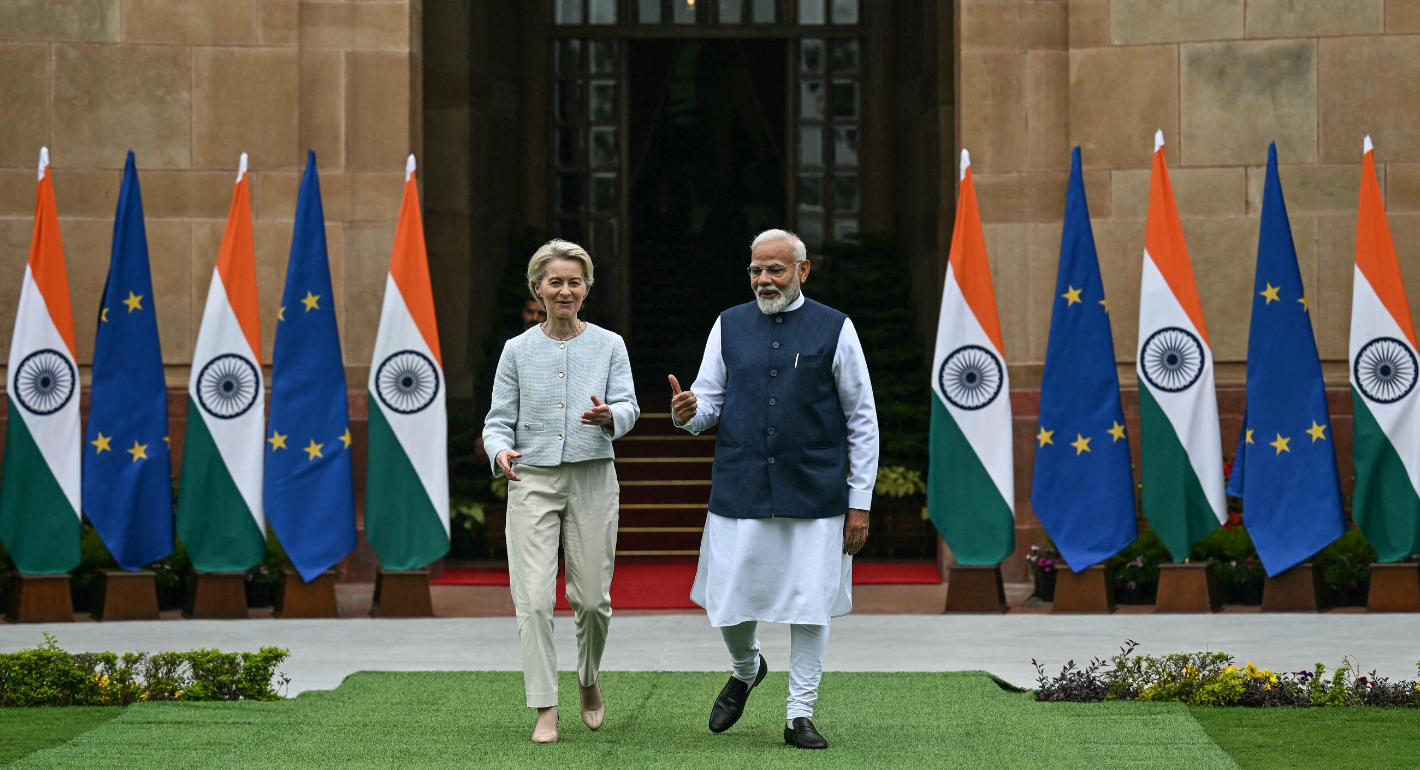
As European leadership prepares for the sixteenth EU-India Summit, both sides must reckon with trade-offs in order to secure a mutually beneficial Free Trade Agreement.

Dinakar Peri
In the last decade, nondemocratic regimes have received more development assistance than democratic countries. This reveals how donors struggle with autocratization despite a rhetorical commitment to democracy.

Marc de Tollenaere
Countries around the world are struggling to bridge the gap between citizens and political elites. Innovative practices outside the West, while far from ideal, should be considered in debates about democratic renewal in Europe.


Richard Youngs, Ken Godfrey
Dissatisfaction with globalization has turned into a powerful force, with unchecked globalism increasingly seen as a threat to the integrity of democratic rule. Policymakers must reframe globalization to mitigate its negative consequences while keeping its core growth-enhancing dynamics intact.

Sinan Ülgen
COP26 provides a forum for deliberating about climate adaptation, but such global meetings must also account for the needs of developing nations. A narrow climate agenda will only perpetuate divisions between postindustrial and developing countries.
Sinan Ülgen