

Commentary
Judy Dempsey
{
  "authors": [
    "Judy Dempsey"
  ],
  "type": "commentary",
  "blog": "Strategic Europe",
  "centerAffiliationAll": "",
  "centers": [
    "Carnegie Endowment for International Peace",
    "Carnegie Europe"
  ],
  "collections": [],
  "englishNewsletterAll": "",
  "nonEnglishNewsletterAll": "",
  "primaryCenter": "Carnegie Europe",
  "programAffiliation": "",
  "programs": [],
  "projects": [],
  "regions": [
    "Europe"
  ],
  "topics": [
    "EU"
  ]
}
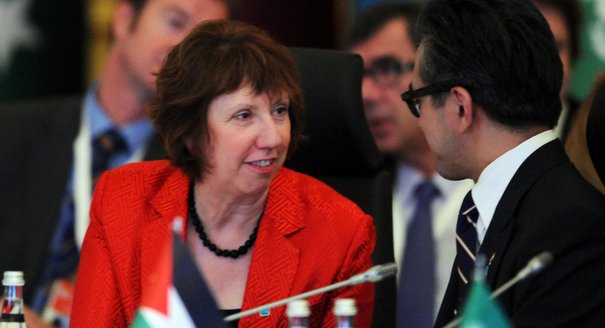
Source: Getty
A long-awaited report from the European External Action Service provides a chance for the EU to reestablish its credentials as the leading Western organization supporting human rights and democracy.
Could this be the issue that will define Catherine Ashton’s tenure as head of the European Union’s diplomatic service?
This Monday, the European External Action Service (EEAS) publishes its long-awaited strategy on human rights and democracy.
The concisely written twelve-page report, obtained by Carnegie Europe, is important because it deals with an issue that is absolutely crucial to the EU’s philosophy and raison d’etre. It also provides elements of a security strategy for the 27-member bloc.
Any success the EEAS—a new diplomatic service that initially spent most of its time in institutional battles—has in implementing this ambitious vision and agenda will go towards proving its worth.
“The European Union is founded on a shared determination to promote peace and stability and to build a world founded on respect for human rights, democracy and the rule of law,” states the report that will be presented to foreign ministers on Monday.
According to this document, the EU is determined to make a fresh start on implementing human rights. “The EU will promote human rights in all areas of its external action without exception,” it states.
“In particular, it will integrate the promotion of human rights into trade, investment, technology and telecommunications, Internet, energy, environmental, corporate social responsibility and development policy…”
But how, exactly?
One of the biggest challenges facing Ashton is reconciling realpolitik and commercial interests with values.
This tension has always bedeviled democratic Western governments. Few if any have found a sustainable balance. And too many have chosen to play down human rights violations whenever it has suited their interests, or even found ways to get EU sanctions lifted off certain countries.
But the difference between national governments and the EU now is that Ashton has put human rights at the top of her agenda. She is going to make a big stab at it, and this is how:
Most importantly, she wants to appoint a special human rights envoy as soon as possible (Interesting, isn’t it, that the EU, which likes appointed envoys across the world, has never had anybody to be in charge of human rights before? That really says a lot.).
The envoy is supposed to “enhance the effectiveness and visibility of the EU’s human rights policy” the document states.
I wonder whether the envoy will “name and shame” countries that flout their human rights obligations, and whether he or she will have sufficient leeway and support from all the member states to make his judgment stick. After all, Ashton is proposing a human rights policy that will underpin all aspects of “the internal and external policies of the European Union.”
Ashton is not naïve about the difficulties involved in implementing her strategy.
She is right to state that human rights constitute universally applicable legal norms and that democracy is a universal aspiration.
But, the document acknowledges quite bluntly, “their universal nature is questioned on grounds of cultural differences,” of which China and other countries (unnamed in the document) keep reminding their Western interlocutors.
It is going to demand a lot of patience and persuasion but also a dogged commitment on the part of the EU to pursue this immensely complex aspect of its policy.
Nor does Ashton have any illusions about the power of social media that played a revolutionary role in mobilizing opposition against the Arab dictators. Yet, it also works the other way round, as the report explains.
“Modern information and communications technology, while facilitating the free exchange of information between individuals, have also massively increased the coercive power of authoritarian states”.
It will be fascinating to see how the EU’s human rights strategy will deal with this new battle being waged over control, knowledge, and democracy.
One of Ashton’s concerns is for her report to be acknowledged by member states and then to be filed away under the heading of “good intentions”. It wouldn’t be the first time that happens, either.
That is why she has included a 36-point “EU Action Plan on Human Rights and Democracy.”
Ranging from establishing a “genuine partnership with civil society” and making much better use of conditionality and sanctions, to “making trade work in a way that helps human rights,” she has charged the EU institutions with concrete steps for implementing the action plan until December 2014. Each of the points will be followed up, she declares.
So Ashton does not want any slippage. That is good news.
Open Society, the foundation set up by the financier and philanthropist George Soros to promote human rights, welcomes the report. But it also says that implementation will be crucial.
Yet, here is a chance for the EU to reestablish its credentials as the leading Western organization supporting human rights and democracy. Ashton’s report shows that when the EU puts it mind to something, it can think strategically. Now it has to act.

Nonresident Senior Fellow, Carnegie Europe
Judy Dempsey is a nonresident senior fellow at Carnegie Europe
Recent Work
Judy Dempsey
Judy Dempsey

Trump is distracted and Ukraine wants Europe to step up. The continent’s leaders must find their voice and assert it in talks with Russia.

Alissa de Carbonnel

Mounting economic strain and battlefield losses will not necessarily make the Kremlin less dangerous. They could instead push Moscow toward a more aggressive hybrid campaign designed to test NATO’s Eastern flank, exploit allied hesitation, and fracture European resolve.

Maksym Beznosiuk

Over the past ten years, NATO has held almost as many summits as it did during the entirety of the Cold War. Are they still useful, or is it time to stop holding annual meetings?

Rym Momtaz, ed.
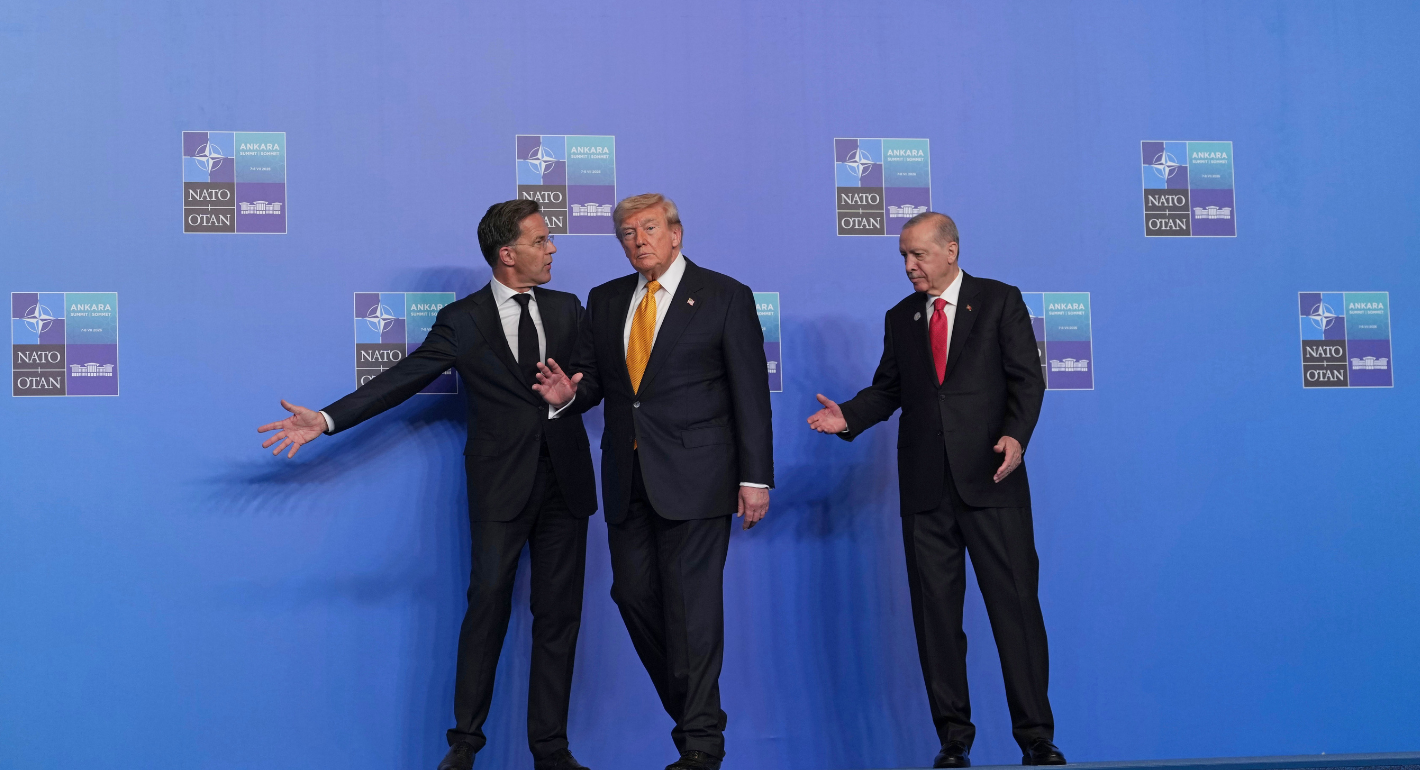
Nearly a year and a half after Europeans leaned into sucking up to Trump, the strategy has produced some benefits when it comes to Ukraine.
Rym Momtaz
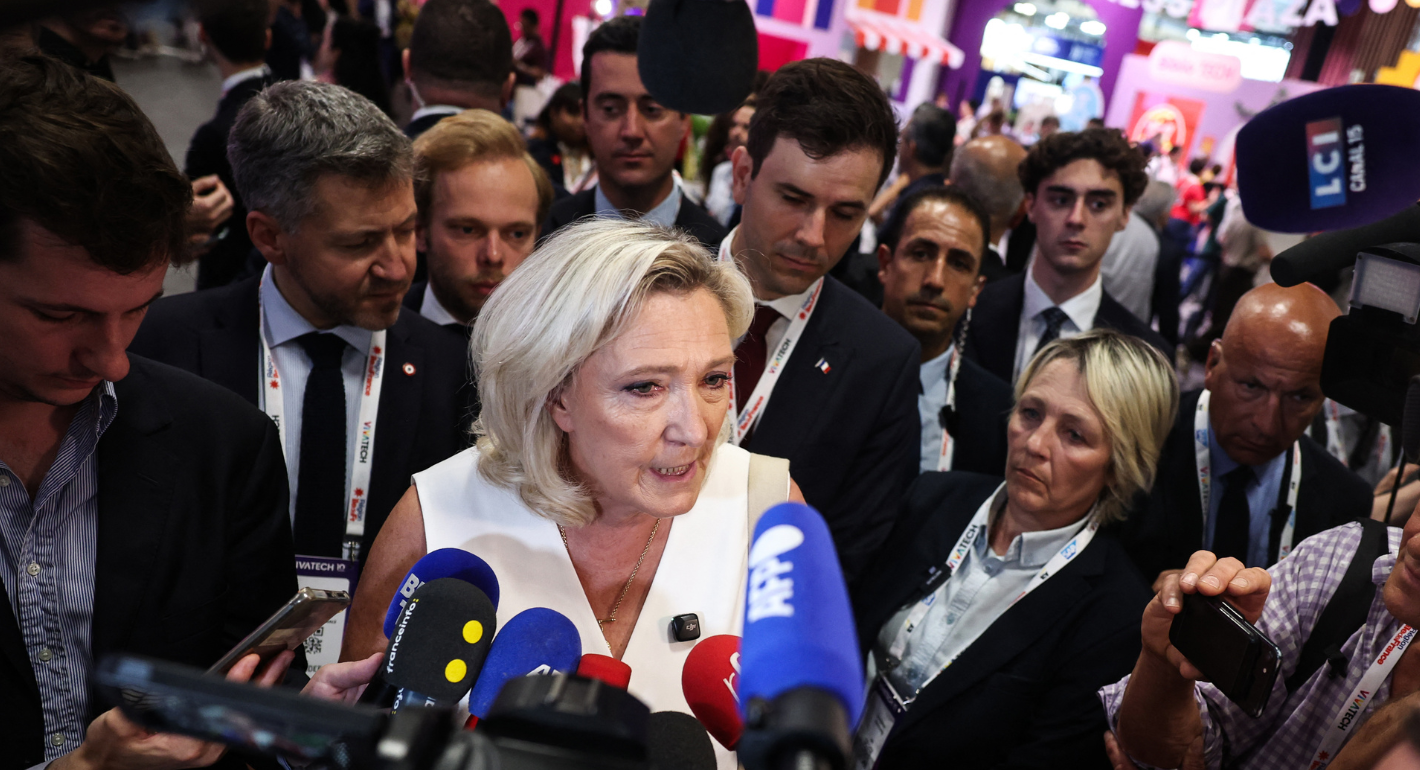
Far-right leader Marine Le Pen can—and will—run in France’s next presidential election. What does the outcome of her appeal against a 2025 embezzlement conviction mean for the country’s political future?

Catherine Fieschi