

Article
Marc Pierini
{
  "authors": [
    "Marc Pierini"
  ],
  "type": "commentary",
  "blog": "Strategic Europe",
  "centerAffiliationAll": "",
  "centers": [
    "Carnegie Endowment for International Peace",
    "Carnegie Europe"
  ],
  "collections": [],
  "englishNewsletterAll": "",
  "nonEnglishNewsletterAll": "",
  "primaryCenter": "Carnegie Endowment for International Peace",
  "programAffiliation": "",
  "programs": [],
  "projects": [],
  "regions": [
    "Middle East"
  ],
  "topics": [
    "EU"
  ]
}
Source: Getty
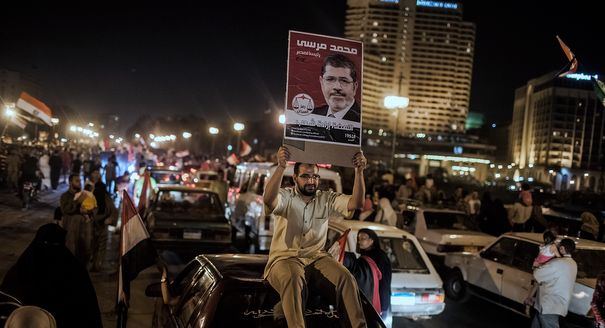
We cannot yet be sure if the election of Mohamed Morsi as president of Egypt marks the beginning of a new era for the country.
The election of Mohamed Morsi as president of Egypt is a momentous development, as it embodies the coming to power of the Muslim Brotherhood after years of estrangement. This also has a huge meaning for the rest of the Arab revolutions.
Is this the beginning of a new era, however ? We cannot be sure yet.
As a matter of fact, this president has no parliament in front of him and no constitution on which to base his actions. This is all work in progress at this point in time. In addition, the armed forces retain a substantial chunk of the real power.
This is indeed not the first time, in Egypt, that the Muslim Brotherhood will have to negotiate and compromise with another centre of power.
Yet, this time, there is a real difference and it comes from the ballot box: this president is the first one elected in a free and democratic election and he won by a substantial margin. He therefore carries not only a clear legitimacy in the eyes of his voters, but he also embodies their immense expectations, especially on the social and economic front.
This is no small challenge for president Morsi, when one considers, for example, Egypt’s heavy reliance on tourism revenues while the very presence of tourists on Egyptian soil is challenged by ultra-conservatives.
In his introductory speech, Mohamed Morsi made a number of references to the prestige of Egypt and, expectedly, to God and religion.
Equally noticed outside Egypt, he made a clear reference to the respect of Egypt’s existing international treaties. This applies first and foremost to the peace treaty with Israel, no doubt a key ingredient for the continuation of the massive military and economic assistance from the United States.
That being said, huge challenges lie ahead for Egypt. And not just for Mohamed Morsi, but also for the rest of the political spectrum and the armed forces.
No one should be under any illusions: a balance will have to be found between diverging tendencies.
On the one hand, a directly elected president coming from the ranks of the Muslim Brotherhood carries both values and expectations, a political reality which the army will have to take into account.
On the other hand, the economic survival and development of Egypt relies on foreign aid and direct investment and on a continued influx of tourists, an economic reality which the Brotherhood will have to take into account.
Challenging weeks and months lie ahead.
Marc Pierini, a former EU career diplomat, has served as the EU Ambassador to Turkey, Tunisia, Libya, Syria, and Morocco.

Senior Fellow, Carnegie Europe
Marc Pierini is a senior fellow at Carnegie Europe, where his research focuses on developments in the Middle East and Turkey from a European perspective.
Recent Work
Marc Pierini
Marc Pierini
Carnegie does not take institutional positions on public policy issues; the views represented herein are those of the author(s) and do not necessarily reflect the views of Carnegie, its staff, or its trustees.

The aftermath of the Ceuta crisis shows Europe has drawn the wrong lessons. Rather than doubling down on failed migration policies, the EU needs to address the underlying roots of such episodes.

Richard Youngs
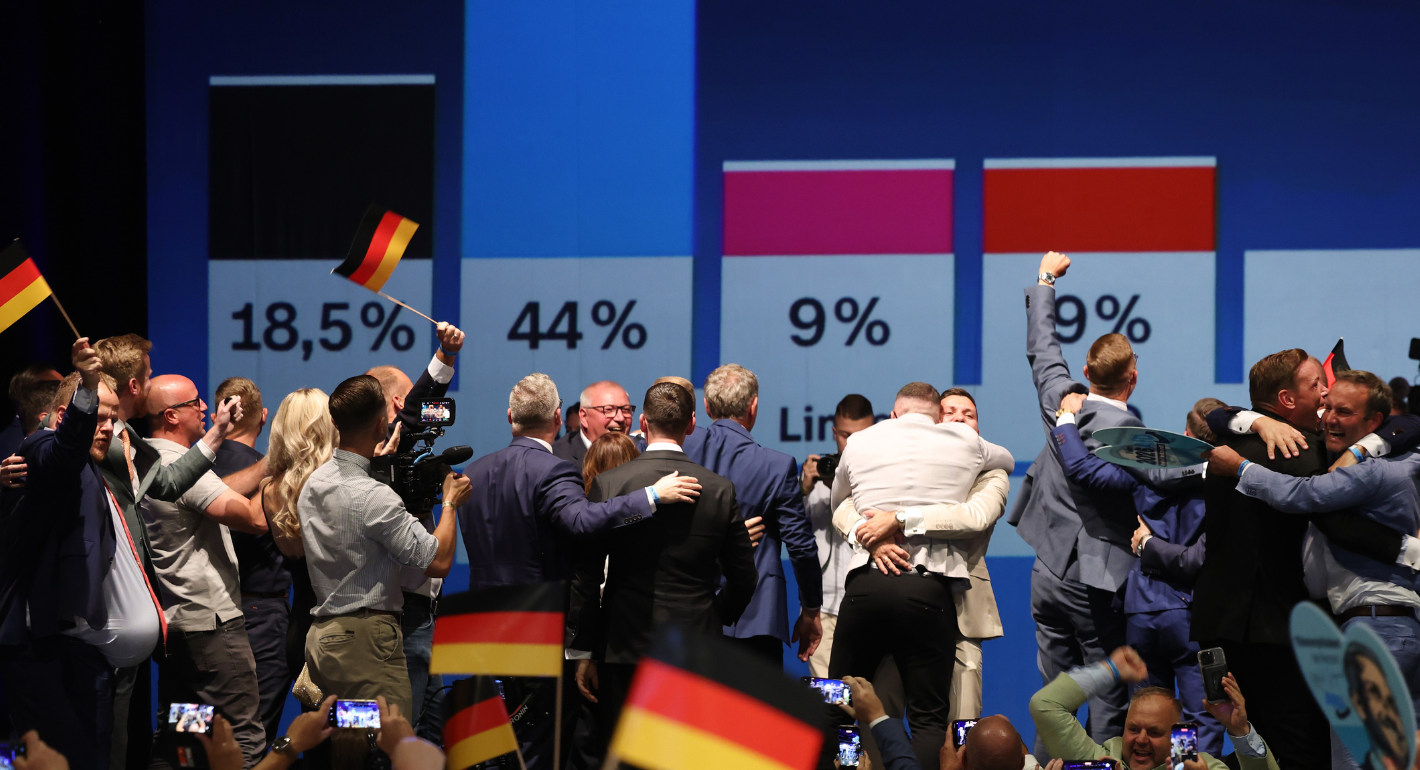
An overwhelming victory by a far-right-wing party in a small state in eastern Germany will have major repercussions for Chancellor Friedrich Merz’s coalition.

Judy Dempsey

Canadian Prime Minister Mark Carney has twice inspired praise for standing up to U.S. President Donald Trump: at the 2026 World Economic Forum in Davos and on Canada-U.S. trade negotiations. Is Carney showing a third way better than the EU has in dealing with the Trump administration?

Rym Momtaz, ed.

The EU’s responses to two recent incidents expose the gulf between European perceptions and capabilities. Unless the union can bridge that gap, it will never become a real geostrategic power.
Rym Momtaz

In supporting Europe’s far-right, MAGA and Russia both want the same thing: a weaker EU. Europe must defend itself without abandoning the openness these forces exploit.

Armida van Rij