

Article
Marc Pierini
{
  "authors": [
    "Marc Pierini"
  ],
  "type": "commentary",
  "blog": "Strategic Europe",
  "centerAffiliationAll": "",
  "centers": [
    "Carnegie Endowment for International Peace",
    "Carnegie Europe"
  ],
  "collections": [],
  "englishNewsletterAll": "",
  "nonEnglishNewsletterAll": "",
  "primaryCenter": "Carnegie Europe",
  "programAffiliation": "",
  "programs": [],
  "projects": [],
  "regions": [
    "Europe"
  ],
  "topics": [
    "EU"
  ]
}
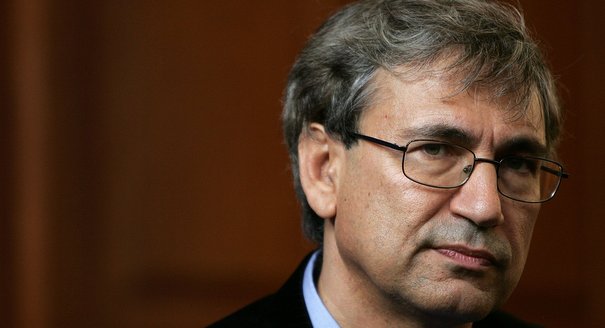
Source: Getty
Orhan Pamuk certainly speaks his mind when he vents his disappointment at Europe’s waning interest in Turkey, but he overlooks two important issues.
Orhan Pamuk’s article “Europe is turning away from Turkey – and the rest of the world”—published by The Guardian on Friday, October 26—was a fascinating piece. Not just because the writer is a Nobel Laureate in Literature and certainly the world’s best-known Turk, but because he probably reflects a widespread feeling in his country. His article is therefore worth a few short comments.
Pamuk certainly speaks his mind when he vents his disappointment at Europe’s waning interest in Turkey. I am as worried as he is about the rise of conservatism and populism in Europe. In the last few years, we have all heard European political leaders saying a wide variety of negative things about Turkey. Some statements, such as the suggestion that 100 million Turks want to migrate to the EU, verged on the ridiculous, and were made for purely domestic political purposes.
My only regret about his article is that Pamuk overlooks two important issues.
One, which he touches upon in just one short sentence, is the fact that Turkey has not moved forward very much in the field of fundamental freedoms recently. This is one of the basic requirements for accession to the EU and, for a host of reasons, Turkey has not filled the bill to this date. To the dismay of its political leadership, Turkey was reminded of this last month by the European Commission’s yearly progress report. Well, Sayin Pamuk, this is no small shortcoming! The accession process is, amongst other things, about reaching EU standards on a host of governance issues, and Turkey is not there yet.
The other, to my mind even more important missing ingredient, and an issue which Orhan Pamuk does not raise at all, is whether he thinks that Turkey itself, through the promotion of a more conservative, religious society, is moving away from Europe. I recently wrote a piece on this question entitled "Turkey is turning its back on the EU: Hypothesis or Reality?”. The issue of Turkey moving away from Europe is now a real, not theoretical, question. It has been formulated publicly at a very senior level in the current Turkish administration, strong reaffirmations of Turkey’s European orientation in the past two weeks by the Prime Minister in Berlin, the EU Minister in the Turkish press, and the Foreign Minister in Brussels notwithstanding.
It strikes me that Turks like Orhan Pamuk and Europeans like me are asking themselves very similar, even symmetrical, questions.
My own fear is that, by promoting strongly conservative societal norms, Turkish governmental circles are not only creating the impression that they have started estranging Turkey from Europe, but they are also fuelling the arguments of those in the EU who are not keen on Turkey’s entry in the Union and definitely want to estrange Turkey from Europe.
Are we, from both ends, and for different motives, making the same, massive strategic mistake?

Senior Fellow, Carnegie Europe
Marc Pierini is a senior fellow at Carnegie Europe, where his research focuses on developments in the Middle East and Turkey from a European perspective.
Recent Work
Marc Pierini
Marc Pierini

Are Germany’s economic, industrial, and political struggles becoming a liability for the EU’s ability to rise to the geopolitical moment?

Rym Momtaz, ed.

European Commission President Ursula von der Leyen is about to give her annual address on the state of the EU. Here’s what she won’t—but should—say.
Rym Momtaz

The aftermath of the Ceuta crisis shows Europe has drawn the wrong lessons. Rather than doubling down on failed migration policies, the EU needs to address the underlying roots of such episodes.

Richard Youngs

An overwhelming victory by a far-right-wing party in a small state in eastern Germany will have major repercussions for Chancellor Friedrich Merz’s coalition.

Judy Dempsey

Canadian Prime Minister Mark Carney has twice inspired praise for standing up to U.S. President Donald Trump: at the 2026 World Economic Forum in Davos and on Canada-U.S. trade negotiations. Is Carney showing a third way better than the EU has in dealing with the Trump administration?
Rym Momtaz, ed.