

Commentary
Judy Dempsey
{
  "authors": [
    "Judy Dempsey"
  ],
  "type": "commentary",
  "blog": "Strategic Europe",
  "centerAffiliationAll": "",
  "centers": [
    "Carnegie Endowment for International Peace",
    "Carnegie Europe"
  ],
  "collections": [],
  "englishNewsletterAll": "",
  "nonEnglishNewsletterAll": "",
  "primaryCenter": "Carnegie Europe",
  "programAffiliation": "",
  "programs": [],
  "projects": [],
  "regions": [
    "Europe",
    "North America"
  ],
  "topics": [
    "EU"
  ]
}
Source: Getty
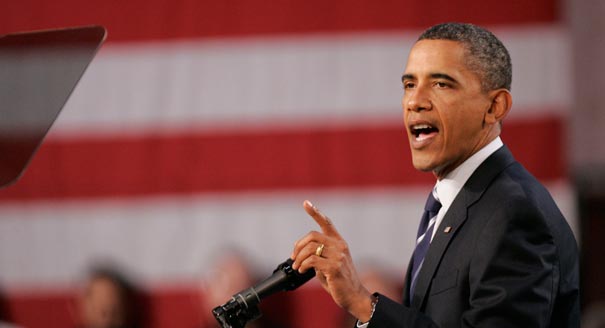
The re-election of Obama means one thing for Europe: the need for more Europe, not less.
The re-election of Obama means one thing for Europe: the need for more Europe, not less. Obama has far too many foreign policy issues to deal with during his second term, and Europe is not one of them. This means that the EU and NATO have to take a hard look at how they are going to deal with a new order across the Atlantic that was already taking shape during Obama’s first administration.
For NATO it means accepting the fact that the United States is not going to keep picking up the pieces. The Pentagon has not forgotten NATO’s mission in Libya. Either NATO responds to that new reality or it will become a mere tool-box, and often inadequately equipped, for America’s coalitions of the willing.
As for the EU, it should realize that it is going to have limited influence outside the bloc as long as it does not have strategic goals. That will only happen once the member states realize that pooling sovereignty will make Europe more secure and stronger. That may revive America’s interest.

Nonresident Senior Fellow, Carnegie Europe
Judy Dempsey is a nonresident senior fellow at Carnegie Europe
Recent Work
Judy Dempsey
Judy Dempsey
Carnegie does not take institutional positions on public policy issues; the views represented herein are those of the author(s) and do not necessarily reflect the views of Carnegie, its staff, or its trustees.

With its public finances in shambles, the far right polling at 35 percent ahead of the 2027 presidential election, and a growing protest movement, is France’s crisis a threat to the EU’s geopolitical awakening?

Rym Momtaz, ed.

Ahead of a tough winter for Ukraine, Donald Trump’s swing back toward Russia bodes ill. But instead of panicking, Kyiv’s European allies are focusing on action.
Rym Momtaz

While the EU and European governments are embracing the much-lauded middle-power moment, this entails three difficult conundrums.

Richard Youngs

Much has been said of the changes Brussels is trying to make to the EU enlargement process. Here’s why gradual integration might—or might not—be the answer.

Dimitar Bechev

The European Commissioner for Trade is headed to China. But after President Xi’s bridge-building visit to Washington, can a more isolated EU overcome Beijing’s stranglehold on critical raw materials? Who will blink first?
Rym Momtaz, ed.