

Commentary
Judy Dempsey
{
  "authors": [
    "Judy Dempsey"
  ],
  "type": "commentary",
  "blog": "Strategic Europe",
  "centerAffiliationAll": "",
  "centers": [
    "Carnegie Endowment for International Peace",
    "Carnegie Europe"
  ],
  "collections": [],
  "englishNewsletterAll": "",
  "nonEnglishNewsletterAll": "",
  "primaryCenter": "Carnegie Europe",
  "programAffiliation": "",
  "programs": [],
  "projects": [],
  "regions": [],
  "topics": [
    "EU"
  ]
}
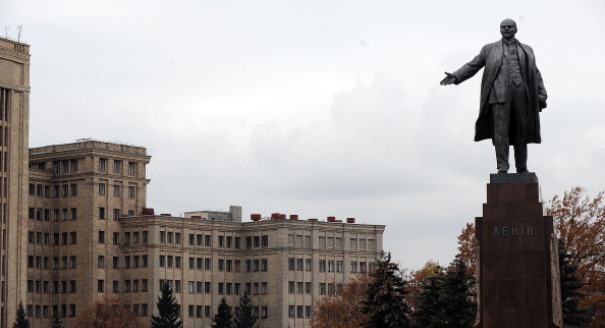
Source: Getty
Central and Eastern Europe need to break free from the shackles of bureaucrats, oligarchs, and the Communist mindset. That involves creating a strong middle class.
During a fascinating discussion last weekend at the annual Wrocław Global Forum on Eastern Europe’s foreign policy, several young people kept returning to one issue: the region’s democratic malaise.
How, one Polish student asked, could she influence the political system so that she could trust it? Another student, from Ukraine, described the situation in his country as “horrible.” He told conference delegates how old monuments to Lenin were still standing and that politicians were not serving their citizens. What could the EU do to make a difference, he asked?
Other members of the young audience also expressed a sense of powerlessness and disappointment with their politicians, both in government and in opposition.
Why is this?
As a panelist, I suggested that the difficulties of transformation from Communism to democracy were grossly underestimated. Sustained pressure from civil society was needed to complete any such transition.
Chairing the discussion, the historian Norman Davies spoke about the perpetuation of a mindset. While dissidents once were fiercely anti-Communist, many unconsciously reverted to paranoid reflexes built by a Communist system when they attained power.
Consider events in the region over the past few weeks. Petr Nečas, the Czech conservative prime minister, said he would resign this week after prosecutors raided government offices to investigate allegations of political favors and secret surveillance.
Ever since the overthrow of the Communist regime in 1989, Czech politics has been dominated by corruption and political infighting. These have hindered the establishment of a strong, transparent, and vibrant parliamentary democracy. They have also prevented the Czechs from having political and strategic ambitions.
It’s even worse in Bulgaria. Last Friday, thousands of people took to the streets to protest against the Socialist government’s decision to rush through the appointment of Delyan Peevski as the new national security chief. The protestors shouted “mafia” and “resign” to express their disgust over the deep ties between politicians and oligarchs that are jeopardizing their democracy.
Peevski, who in 2007 was sacked for corruption (but later reinstated) as a deputy minister, has powerful business interests. His mother owns a network of national newspapers and television channels, raising questions about the concentration of media ownership in a few hands.
Yet there has been no legislation to safeguard press freedom. It’s as if the political elites are mocking the EU’s efforts at encouraging Bulgaria to combat corruption and the abuse of power.
In Poland, the Euroskeptical opposition Law and Justice party (PiS) led by Jarosław Kaczyński envies the parliamentary majority of Hungary’s Prime Minister Viktor Orbán. The EU’s increasingly vocal criticism of Orbán’s methods has only served to strengthen that envy.
In a worrying comment, PiS spokesman Jan Dziedziczak recently told Hungarian television that PiS admired Orbán for his independent foreign policy, for his conservative values, and for not being a vassal of Brussels or Berlin. PiS supporters who had been invited to Hungary last year said they wished Poland could have a leader like Orbán.
Poland’s Prime Minister Donald Tusk has remained on the fence over events in Hungary and the intolerant views of PiS. He has also stayed especially silent about the ultraconservative Catholic Polish radio station Radio Maryja, which often espouses anti-Semitic views.
In neighboring Ukraine, the gains of the 2004 Orange Revolution have been squandered through personal rivalries and the power of the oligarchs.
While knocking down monuments to Lenin may have a cathartic affect for young people, such a gesture alone will not have the desired effect of breaking with the past. For that to happen, societies have to fundamentally change.
What the region needs is a strong middle class. That entails building a strong private sector free of the shackles of bureaucrats, party interests, oligarchs, and the Communist mindset.
Lessons on the importance of a middle class may come from an unlikely place: Finland. Toward the end of the discussion in Wrocław, there were several questions about the Nordic state as a role model for a strong democracy and trust. Why were Finns so incorruptible? Why did they have such a well-educated population? Why was the country so stable?
During World War II, Finland successfully defended itself against a Red Army invasion. Finland could resist because it had a strong and determined middle class to protect its interests and values.
The situation in Eastern and Central Europe was completely different. There, the middle classes, predominantly Jewish, had been murdered by the Nazis, leaving a power vacuum that the Communists could take advantage of.
Building a middle class takes time. It is difficult to combat the special interests, corruption patronage, and clientelism that characterize countries like Greece, Bulgaria, Romania, and now Hungary.
The EU cannot speed up this process much. But it is the best help that these countries will get because it provides a framework of rules for politics and business. Eventually, that will allow an independent, self-confident middle class to emerge.

Nonresident Senior Fellow, Carnegie Europe
Dempsey is a nonresident senior fellow at Carnegie Europe
Recent Work
Judy Dempsey
Judy Dempsey
Carnegie does not take institutional positions on public policy issues; the views represented herein are those of the author(s) and do not necessarily reflect the views of Carnegie, its staff, or its trustees.
The far right failed to win big in France’s municipal elections. But that’s not good news for the country’s left wing, which remained disunited while the broader right consolidated its momentum ahead of the 2027 presidential race.
Catherine Fieschi
Donald Trump has demanded that European allies send ships to the Strait of Hormuz while his war of choice in Iran rages on. He has constantly berated NATO while the alliance’s secretary-general has emphatically supported him.

Rym Momtaz, ed.
The EU is structurally incapable of reacting to today’s foreign policy crises. The union must fold the EEAS into the European Commission and create a security council better prepared to take action on the global stage.

Stefan Lehne
The war in Ukraine is costing Russia its leverage overseas. Across the South Caucasus and Middle East, this presents an opportunity for Europe to pick up the pieces and claim its own sphere of influence.

William Dixon, Maksym Beznosiuk
The war in Iran proves the United States is now a destabilizing actor for Europe and the Arab Gulf. From protect their economies and energy supplies to safeguarding their territorial integrity, both regions have much to gain from forming a new kind of partnership together.
Rym Momtaz