

Commentary
Judy Dempsey
{
  "authors": [
    "Judy Dempsey"
  ],
  "type": "commentary",
  "blog": "Strategic Europe",
  "centerAffiliationAll": "",
  "centers": [
    "Carnegie Endowment for International Peace",
    "Carnegie Europe"
  ],
  "collections": [],
  "englishNewsletterAll": "",
  "nonEnglishNewsletterAll": "",
  "primaryCenter": "Carnegie Europe",
  "programAffiliation": "",
  "programs": [],
  "projects": [],
  "regions": [
    "Europe"
  ],
  "topics": [
    "EU"
  ]
}
Source: Getty
Critics should stop blaming enlargement for Europe’s lack of strategic muscle. The promise of membership remains one of the EU’s most powerful foreign policy tools.
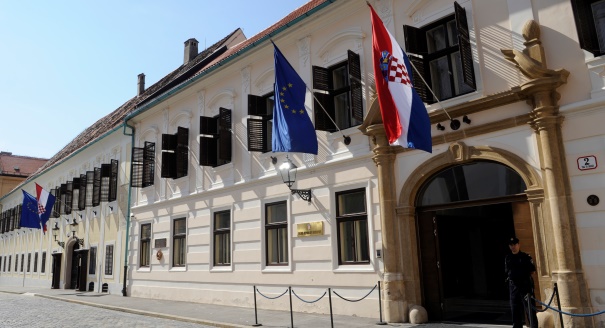
On July 1, Croatia will become the 28th member of the European Union. For the first time, a country that was deeply embroiled in the Balkan Wars of the 1990s will take a seat in Brussels.
Ever since accession negotiations began in 2003, successive Croatian governments, despite wavering support from their domestic public, were determined to complete the talks quickly.
For politicians in Zagreb, joining the EU was about drawing a line under the wretched and bloody past of recent civil war. It was also about proving to the EU, as well as to Croatia’s western Balkan neighbors, that the country was not condemned to crouch outside the EU’s door.
Croatia’s accession has immense strategic implications for the EU. The most important question is what will happen to the enlargement policy, one of the bedrocks of the EU, after Croatia’s entry.
There is an unofficial consensus that enlargement will come to a full stop for several years. This is not good news for the western Balkans or for Europe’s Eastern neighbors. Like Croatia, they all aspire to membership—and not just for the economic benefits. Joining the EU is about binding one’s country to a strong and proven system of values that can underpin a fragile democracy.
Yet many EU governments are now unwilling to extend these benefits further afield. They say it is because of enlargement fatigue. But this notion serves mostly as an excuse to cover up the mistakes the EU made in admitting Bulgaria and Romania in 2008, when they were far from ready. Corruption was and still is endemic in both countries. The functioning of an independent judiciary is haphazard, to say the least.
When Bulgaria and Romania were preparing to join, France and the other EU countries that supported the pair’s entry claimed that it was far better to have them inside the EU than outside. It would help Brussels keep up the reform momentum, they argued.
Yet reform has been lacking—and not just in Romania and Bulgaria. Take Hungary, which joined in 2004. The former Socialist government and now the incumbent Fidesz administration led by Viktor Orbán have run roughshod over the rule of law and basic norms of transparency and accountability.
As for Croatia, even the European Commission says in its final report on the country’s accession preparations that Zagreb has yet to tackle corruption, trafficking, and organized crime. Once admitted, will Croatia really attack those problems, which after all affect Europe’s security too, or will it lapse into lethargy?
Enlargement fatigue has become a synonym for disappointment, because the pressure for reform, despite new monitoring mechanisms by Brussels, largely disappears once countries have been admitted.
Blaming fatigue also covers up the frustration in managing the EU’s security and defense policy at the level of the 27 or, counting Croatia, 28.
But wasn’t the Lisbon Treaty of 2009 supposed to give the EU’s high representative for foreign affairs and security policy greater powers to strengthen Europe? Wasn’t it supposed to allow the EU to gain a sense of strategic purpose? Unfortunately, nothing of the sort has taken place.
Some blame enlargement. But that is disingenuous. With few exceptions, several (big) national governments have flexed their muscles at the expense of a strong and coherent foreign policy. They have done so because they do not want the EU to assume more powers. Either they do not trust Brussels or they do not want to see their influence back home diminished.
In other words, it is not the new members who now bear the most responsibility for weakening Europe’s voice in global affairs, but those that have been part of the club for decades.
Curiously, one of the rare occasions on which member states gave the EU’s High Representative Catherine Ashton carte blanche was over the issue of Kosovo’s independence. Her success last April in pulling off, against all the odds, an agreement between Serbia and Kosovo over the status of the partially recognized state was testament to her perseverance and skill as a diplomat.
Yet she only got this chance because no member state wanted to claim responsibility for such a highly complex issue. They delegated it to Ashton because they did not want to be associated with failure.
Now, national governments are boasting about Europe’s success, not acknowledging that it was only possible because they had left Ashton alone to get on with the job. It shows that the EU, however big and ungainly, can work effectively if the member states stop meddling or undermining the high representative.
So critics should stop blaming enlargement for the EU’s lack of strategic clout. Instead, once Croatia has settled in, the EU needs to think hard about what use it should make of possibly its most powerful instrument: the promise of membership.

Nonresident Senior Fellow, Carnegie Europe
Judy Dempsey is a nonresident senior fellow at Carnegie Europe
Recent Work
Judy Dempsey
Judy Dempsey

Trump is distracted and Ukraine wants Europe to step up. The continent’s leaders must find their voice and assert it in talks with Russia.

Alissa de Carbonnel

Mounting economic strain and battlefield losses will not necessarily make the Kremlin less dangerous. They could instead push Moscow toward a more aggressive hybrid campaign designed to test NATO’s Eastern flank, exploit allied hesitation, and fracture European resolve.

Maksym Beznosiuk

Over the past ten years, NATO has held almost as many summits as it did during the entirety of the Cold War. Are they still useful, or is it time to stop holding annual meetings?

Rym Momtaz, ed.
Nearly a year and a half after Europeans leaned into sucking up to Trump, the strategy has produced some benefits when it comes to Ukraine.
Rym Momtaz
Far-right leader Marine Le Pen can—and will—run in France’s next presidential election. What does the outcome of her appeal against a 2025 embezzlement conviction mean for the country’s political future?
Catherine Fieschi