
European strategists focus a great deal on the EU’s Eastern and Southern neighborhoods. And rightly so: what happens there has a huge impact on the stability of those regions and on Europe as a whole.
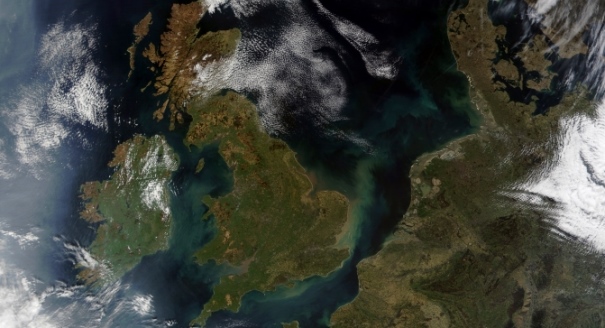
Yet there is a neighborhood in the very West of Europe where instability also threatens: the UK and Ireland.
The reason is a looming double vote that will have enormous consequences for the two countries and the rest of Europe. David Cameron, the British prime minister, has called a referendum on Britain’s EU membership for 2017; and just under a year from now, Scotland will vote on whether to remain part of the UK.
No one should have any illusions about what impact a British exit from the EU or a Scottish exit from the UK would have on Ireland, and particularly on Northern Ireland’s peace accord. Not only that: a pro-independence result in Scotland could embolden other movements seeking autonomy or independence from central government. One need only think of Catalonia.
Cameron’s referendum, to be held in 2017—assuming he is reelected at Britain’s next general election in 2015—still seems a long way off. But Irish academics are taking the implications for Ireland of a possible “Brexit” very seriously.
For one thing, they are concerned about what will happen to the special Anglo-Irish trade relationship. Before Ireland and Britain joined the EU in 1973, the Irish economy was almost completely dependent on the UK. This reinforced Ireland’s sense of dependency on its former colonial rulers.
Joining the EU released Ireland from this dependency. “The EU has given the Irish a stake in building up a personality,” said Melanie Hoewer, deputy director of the Institute for British-Irish Studies at University College, Dublin.
“A small state needs a multilateral environment. The EU provided that in all sorts of ways,” added Brigid Laffen, director of the Robert Schuman Center for Advanced Studies at the European University Institute in Florence.
While EU membership helped draw the poison from the British-Irish relationship, ties remained very close, for geographical, historical, and linguistic reasons.
Consider the latest statistics. Ireland is Britain’s fifth-largest export partner. In the first eleven months of 2011, nearly one-third of all Irish imports came from Britain. Indeed, Ireland imports more goods from Britain than from the rest of Europe combined.
As for Irish exports, the EU accounted for €4.49 billion ($6.09 billion), or 57 percent, of Ireland’s total exports in July 2012, with Britain and Belgium receiving 30 percent of total exports. The Republic of Ireland is Northern Ireland’s second-largest trade partner.
Clearly, the EU single market has been enormously beneficial to Ireland. And even though Britain has not adopted the euro, unlike Ireland, the existence of the single market has enabled both countries to maintain their strong trading relationship. That, analysts say, could be endangered if Britain quits the EU and the single market.
And what would happen to Northern Ireland if Britain were to leave the EU, or if the Scots voted to quit the UK?
The EU membership of both Britain and Ireland has been good for Northern Ireland. Over time, membership has helped defuse the province’s bloody sectarian conflict, which was as much of a problem for Europe’s stability as it was for Britain and Ireland.
Remember the Irish Republican Army attacks on British military bases in Europe? Remember how terrorist organizations from the rest of Europe and beyond supported those attacks? The province was awash with weapons, hatred, and fear.
That bitter conflict could threaten to return as a consequence of Scottish independence or a British EU exit. “If Scotland broke away, the loyalists in Northern Ireland could well push for their own independence,” Hoewer said.
“In terms of their loyalty to the Crown, they might generate fierce resistance towards a possible unification of the island,” she added. Sinn Féin, the Irish nationalist party that has long campaigned for a united Ireland, could even feel emboldened to push for unification of the island.
These are not idle speculations. The historic Good Friday peace accord of April 1998, which sought to end the long conflict in Northern Ireland, has endured. But it needs constant nurturing to build up trust and stability among the Protestant and the Catholic communities in Northern Ireland.
With the UK and Ireland struggling to reestablish economic growth, the last thing either government wants is for nationalists from either side to exploit the growing unemployment for their own political agendas. That is why it is time that Europeans started to pay attention to the potential troubles brewing in their Western neighborhood.


