

Commentary
Judy Dempsey
{
  "authors": [
    "Judy Dempsey"
  ],
  "type": "commentary",
  "blog": "Strategic Europe",
  "centerAffiliationAll": "",
  "centers": [
    "Carnegie Endowment for International Peace",
    "Carnegie Europe"
  ],
  "collections": [
    "Europe’s Eastern Neighborhood"
  ],
  "englishNewsletterAll": "",
  "nonEnglishNewsletterAll": "",
  "primaryCenter": "Carnegie Europe",
  "programAffiliation": "",
  "programs": [],
  "projects": [],
  "regions": [
    "Russia",
    "Eastern Europe",
    "Western Europe",
    "Europe"
  ],
  "topics": [
    "EU",
    "Foreign Policy"
  ]
}
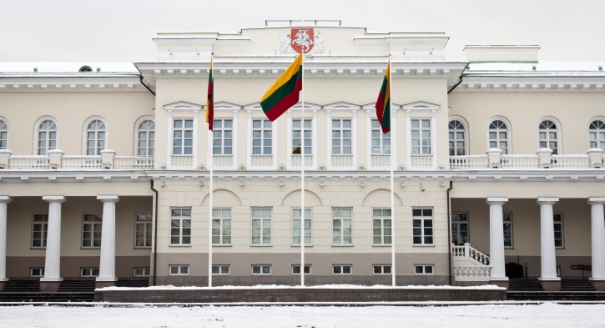
Source: Getty
In the run-up to the EU’s Eastern Partnership summit in Vilnius, Europeans have been surprisingly united in the defense of their values, but also their interests.
The EU’s special summit that will take place later this month in Vilnius is fueling a fierce competition between Europe and Russia, the likes of which haven’t been seen since the ebbing days of the Cold War. Amid that competition, there is a rare convergence of EU values and interests.
Russian President Vladimir Putin is doing everything possible to intimidate the countries in the EU’s Eastern Partnership (EaP)—Armenia, Azerbaijan, Belarus, Georgia, Moldova, and Ukraine—to keep them from signing new trade, economic, and political accords with Brussels.
The pressure points are well known: from threatening impoverished Moldova with higher energy prices to stopping exports of certain Ukrainian products to Russia.
Contrary to a widespread view, this heavy-handed pressure is actually good news. It shows how worried Putin is about the long-term impact of some EaP countries becoming closer to Brussels. If he considers Russia’s geopolitical interests to be at stake, then European governments are recognizing that the Vilnius summit is important for them, too.
At first sight, the Eastern Partnership meeting seems to be about defending values. After all, values are what postwar Europe and the EU itself were built on. And values are supposed to underpin EU foreign policy, especially toward the bloc’s Eastern neighbors. This commitment to values has been one of the EU’s enduring attractions.
But Linas Linkevičius, the foreign minister of Lithuania, whose government is hosting the summit, fears that Europe is losing track of its values.
“If the current trend continues, I believe it could become a weakness,” he said in an interview with Carnegie Europe. “We have built the EU on a solid foundation based on values. But if you follow the documents that we have been issuing over the past decade, this wording [about values] is slowly disappearing. We are more and more talking about interests.”
Values and interests repeatedly and inevitably clash. Time and again, European governments, confronted with realpolitik and globalization, have put interests before values. Reconciling the two is difficult and rare.
Yet in the run-up to the Vilnius summit, Europeans have been surprisingly united in the defense of their values, but also their interests. They have firmly stood up to Russia’s meddling.
EU national governments, the European Commission, and the European Parliament have been highly critical of Russia’s bullying of EaP countries. Indeed, Russia is waking up to the fact that it is no longer easy to play EU member states off against each other. Much of that is due to Angela Merkel, the German chancellor, who is much more critical of Russia than was her predecessor, Gerhard Schröder.
Of course, it is not in Europe’s interests to have a neighborhood that is vulnerable to blackmail and intimidation by Russia. Nor, indeed, is it in Europe’s interests to have its Eastern neighbors, such as Belarus and, further afield, Azerbaijan, ruled indefinitely by authoritarian regimes. Over time, these regimes will become even more corrupt. They will also become unstable as a younger generation and a promarket business community demand change.
For Linkevičius, this expression of European solidarity is surely good news, given his fears that Europe is losing sight of its values. “I am happy to say that the EU has passed the unity test,” he said. “All the institutions are now united. It was a very clear signal [for Russia] to stop [the intimidation]. And I hope it is over. It is counterproductive. It will achieve nothing,” the foreign minister argued.
So far, Russia has not indicated any intention of changing tack. Indeed, one wonders how Russia will react if Ukraine does sign the new accord with the EU. The EU had better be prepared.
But Linkevičius does not want the Vilnius summit to end in a confrontation that could further poison the atmosphere between Russia and the EU. With such a powerful neighbor, Lithuania simply has to find a modus vivendi.
“We are not applying this zero-sum approach, which is what some of our opponents are doing,” Linkevičius said, clearly referring to Russia. “I would advise them to get rid of this approach and understand that we can do something together. All EaP countries are different. This is a free choice. The EaP does not mean enlargement. It means partnership. Nothing more at the moment.”

Nonresident Senior Fellow, Carnegie Europe
Judy Dempsey is a nonresident senior fellow at Carnegie Europe
Recent Work
Judy Dempsey
Judy Dempsey
Carnegie does not take institutional positions on public policy issues; the views represented herein are those of the author(s) and do not necessarily reflect the views of Carnegie, its staff, or its trustees.

The EU can impose sanctions but struggles to enforce them without the United States. With Washington increasingly disinterested in backing European interests, the bloc must now fend for itself.


Nicu Popescu, Tiago Antunes

Russia is testing the waters of NATO’s mutual defense clause. What do strikes in Romanian territorial waters mean for the alliance’s posture toward Moscow?

Dimitar Bechev

With its public finances in shambles, the far right polling at 35 percent ahead of the 2027 presidential election, and a growing protest movement, is France’s crisis a threat to the EU’s geopolitical awakening?

Rym Momtaz, ed.

Ahead of a tough winter for Ukraine, Donald Trump’s swing back toward Russia bodes ill. But instead of panicking, Kyiv’s European allies are focusing on action.
Rym Momtaz

While the EU and European governments are embracing the much-lauded middle-power moment, this entails three difficult conundrums.

Richard Youngs