Until recently, Turkey had tried to manage some sort of a relationship with the self-proclaimed Islamic State. But Ankara has just made a drastic adjustment in its policy toward the militants. What are the implications of this shift for the country and for its Western allies?
A year ago, 46 Turkish hostages who had been held by the Islamic State for a hundred and one days were released after a secret operation (read: negotiation). Subsequently, Turkey played a more discreet role in the anti–Islamic State coalition than the country’s geographic position and military power would have warranted.
This spring, the Syrian Kurds’ military success in fighting the Islamic State (with U.S. air support), especially the capture of Syria’s Tell Abyad border crossing with Turkey, worried Ankara that its frontier with Syria could become largely controlled by the YPG from Turkey’s Hatay Province in the west to the Tigris River in the east.
What’s more, the Syrian Kurds’ victories came after those of the Iraqi Kurds and at the same time that the Kurds of Turkey entered the Turkish parliament as a party—the Peoples’ Democratic Party (HDP)—for the first time.
For Turkish President Recep Tayyip Erdoğan, who as prime minister had courageously launched a peace process with the Kurdish leadership as well as nurtured good economic relations with the Iraqi Kurds, the tables suddenly turned. The Kurds of Turkey became his main political challengers at home, while the Kurds in Iraq and Syria were, if only by default, moving closer to their dream of an independent Kurdistan.
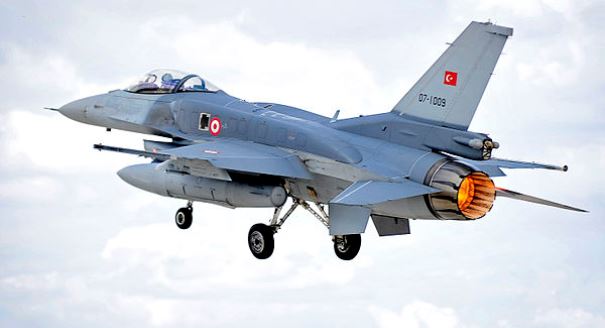
Now, Turkey has made a spectacular change of policy toward the Islamic State by allowing the coalition to use the country’s southeastern air bases. This is a genuine game changer: it will allow the coalition to deny the Islamic State easy access to the Turkish border, the group’s only gateway to the world, through which it transfers ammunition, jihadists, and smuggled oil.
Turkey’s new policy should be analyzed as the result not just of the U.S. administration’s strong insistence but also of Ankara’s determination to prevent YPG forces from controlling most of the Syrian border.
Cosmetically at least, the U.S.-Turkish agreement allows Ankara to claim that an Islamic State–free zone is being created between the Syrian Kurdish districts of Afrin and Kobanê. This area could in theory serve as a safe haven for Syrians fleeing an intensified battle for the Syrian city of Aleppo.
However, Turkey’s change of pace did not stop at the Islamic State. Simultaneously, the Turkish government launched multiple air strikes against its own Kurdish insurgency—the Kurdistan Workers’ Party (PKK)—which it declared a major threat to the country’s security after a number of armed incidents. Western analysts consider this massive response disproportionate, while Turkey’s conflation of the Islamic State with the PKK is seen as artificial.
Ankara’s move against the PKK is purely political. In the June 7 legislative election, the ruling Justice and Development Party (AKP) lost a large number of seats to the Kurdish HDP. Since then, the AKP has declared the PKK fundamentally hostile to the nation’s security, threatened to end the immunity of HDP members of parliament, and lambasted the Kurds in general. In doing so, the AKP hopes to make up its losses among the Kurds of Turkey in the rerun of the legislative election that is looming on the horizon.
The AKP’s goal is to regain the ability to form a single-party government that it lost in June. The best ultimate outcome for the president would be for the AKP to gain a three-fifths majority in the parliament, enabling a modification of the constitution and the introduction of an executive presidential regime. But that is a more elusive goal.
Western governments are perplexed by this dangerous tactical move against the PKK and have urged Turkey to preserve the peace process with its own Kurds. The July 28 meeting of NATO’s North Atlantic Council ended in a predictable show of solidarity with Turkey in the face of recent terrorist attacks, yet it seemed more like lip service. The council’s final statement was conspicuously brief and carefully avoided any reference to the PKK or to a safe zone in Syria.
By virtue of Turkey’s geography and the Islamic State’s rapid expansion, Ankara is facing a very serious threat, not least destabilization from within by followers of the militants. Turkey has now chosen its camp and has the backing of NATO.
Yet, the simultaneous decision to hammer the PKK is not seen in the West as a wise move: it puts Turkey’s long-term social cohesion, economic prosperity, and international credibility at great risk. In the short term, Erdoğan is playing dangerously high stakes.
Photo: SAC Helen Farrer RAF Mobile News Team/MOD, made available for reuse under the Open Government License.