

Commentary
Five countries staged the biggest political boycott in Eurovision history over Israel’s participation. With the FIFA World Cup and other sporting or cultural touchstones on the horizon, are boycotts effective?
Rym Momtaz, ed.
{
  "authors": [
    "Walid Haddouk"
  ],
  "type": "commentary",
  "blog": "Strategic Europe",
  "centerAffiliationAll": "",
  "centers": [
    "Carnegie Endowment for International Peace",
    "Carnegie Europe"
  ],
  "collections": [
    "Europe’s Southern Neighborhood",
    "Arab Awakening"
  ],
  "englishNewsletterAll": "",
  "nonEnglishNewsletterAll": "",
  "primaryCenter": "Carnegie Europe",
  "programAffiliation": "",
  "programs": [],
  "projects": [],
  "regions": [
    "Middle East",
    "North Africa",
    "Tunisia",
    "Southern, Eastern, and Western Africa"
  ],
  "topics": [
    "EU",
    "Foreign Policy"
  ]
}
Source: Getty
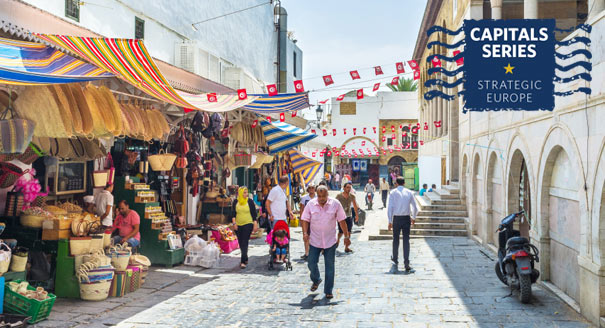
Despite over two decades of partnership, it is unclear whether the EU’s approach toward Tunisia has increased the country’s economic and social wealth.
Strategic Europe continues its Capitals Series exploring how EU foreign policy is viewed by ten countries in Europe’s Southern neighborhood. We have asked our contributors from each capital to give a candid assessment of the EU’s approach toward their country, with a ranking on a scale from “irrelevant” to “helpful.” This week, the spotlight is on Tunisia.
*
Tunisia’s relations with European Union countries, where roughly a tenth of Tunisians reside, are marked by deep historical links, opportunities, and challenges.

In 2010–2011, while Tunisians protested in the streets against Ben Ali’s rule, European policies toward Tunisia seemed if not complicit then at least contradictory. A few days before the fall of the Ben Ali regime in January 2011, then French foreign minister Michèle Alliot-Marie suggested France could help Ben Ali maintain order, even though the Tunisian police’s reaction to the protests resulted in a number of deaths and injuries.
But more important than the chronology of the European presence in Tunisia is the complex, historically charged, and ambivalent relationship between Tunisia and other Arab countries, on the one hand, and European states, on the other. The EU’s approach to Tunisia can be summed up as confused.

The key problem with this overall approach is that while more than twenty years have passed since the conclusion of the 1995 EU-Tunisia Association Agreement, there is no evidence of how free trade would boost Tunisia’s economic and social wealth. From an economic perspective, several studies have suggested that the deal has had no significant positive impact on productivity, employment, or manufacturing growth. Some observers and Tunisian business actors go so far as to argue that the failure of Tunisia’s economic model could be due to the trade liberalization that followed the 1995 agreement.
To be fair, the causes of Tunisia’s economic difficulties in recent decades are various, but to some extent, European support in the economic field seems inappropriate. For example, when it comes to the credit lines that are provided to Tunisian financial institutions, only large companies and, in the words of the World Bank, Tunisian “crony capitalism” seem to be the main beneficiaries.
As a matter of fact, access to the EU market and to its financial assistance is widely seen in Tunisia as an economic opportunity that is captured by well-connected people. It is as though European support were another form of rent in a country in which economic incentives are used as vehicles for rent creation. In the fall of 2015, small-scale farmers in Tunisia’s south protested during the harvesting season against big distribution chains and market monopolies and demanded fair access to export opportunities.
More broadly, EU programs in Tunisia are perceived as privileges granted to those who advocate a certain vision that is not necessarily inclusive—or, to be more precise, that should be subjected to an open, intrasocietal debate. This debate may also address religion, domestic politics, and other particularly sensitive social issues.
As for EU support for local civil society, many Tunisians consider such support as an attempt by Europeans to exercise cultural hegemony. To cite one example, during a focus group discussion with representatives of grassroots organizations in the south of the country, one question particularly drew my attention: “Why must we submit proposals to some donors, such as the European Commission, in French or English?” This is a question worth examining, considering that the official language of Tunisia is Arabic and that limiting the languages of funding proposals to French and English constitutes a major obstacle for many local civil society organizations that are keen to access EU opportunities but do not have sufficient command of either of these two languages. This example is not unique to the EU but applies to most foreign funders.
Tunisians look forward to a balanced framework for EU cooperation.Tweet This
In 2012, during an official meeting between former president Moncef Marzouki and former EU special representative for the Southern Mediterranean Bernardino León, in which I participated as a member of the presidential staff, León expressed his concern at a Tunisian initiative to resuscitate the Arab Maghreb Union, which comprises Tunisia and four other North African nations, and wondered whether this move would affect Tunisia’s relationship with EU countries. Although the concern was diplomatically expressed, I must confess my surprise at the time: What if a Tunisian official had raised concerns at improving relations between European countries?
Despite all of this, Tunisians look forward to a balanced framework for cooperation with EU countries. However, such a framework requires the EU, when dealing with common interests ranging from migration issues to economic cooperation programs, to consider the essence of the 2011 Tunisian Revolution: dignity.
Walid Haddouk is a Tunisian independent researcher, civil society activist, and former adviser to the Tunisian president.
Walid Haddouk
Walid Haddouk is a Tunisian political researcher and writer.
Carnegie does not take institutional positions on public policy issues; the views represented herein are those of the author(s) and do not necessarily reflect the views of Carnegie, its staff, or its trustees.
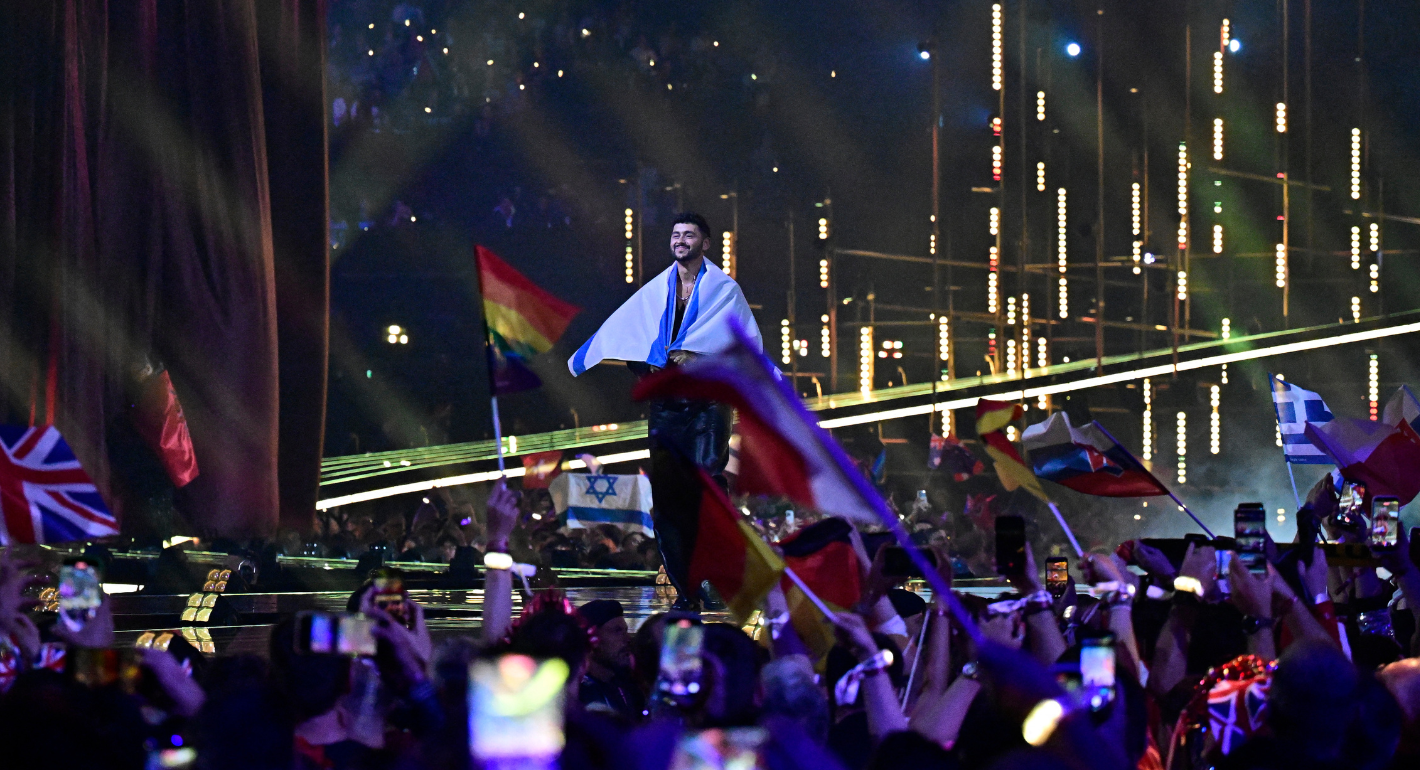
Five countries staged the biggest political boycott in Eurovision history over Israel’s participation. With the FIFA World Cup and other sporting or cultural touchstones on the horizon, are boycotts effective?

Rym Momtaz, ed.
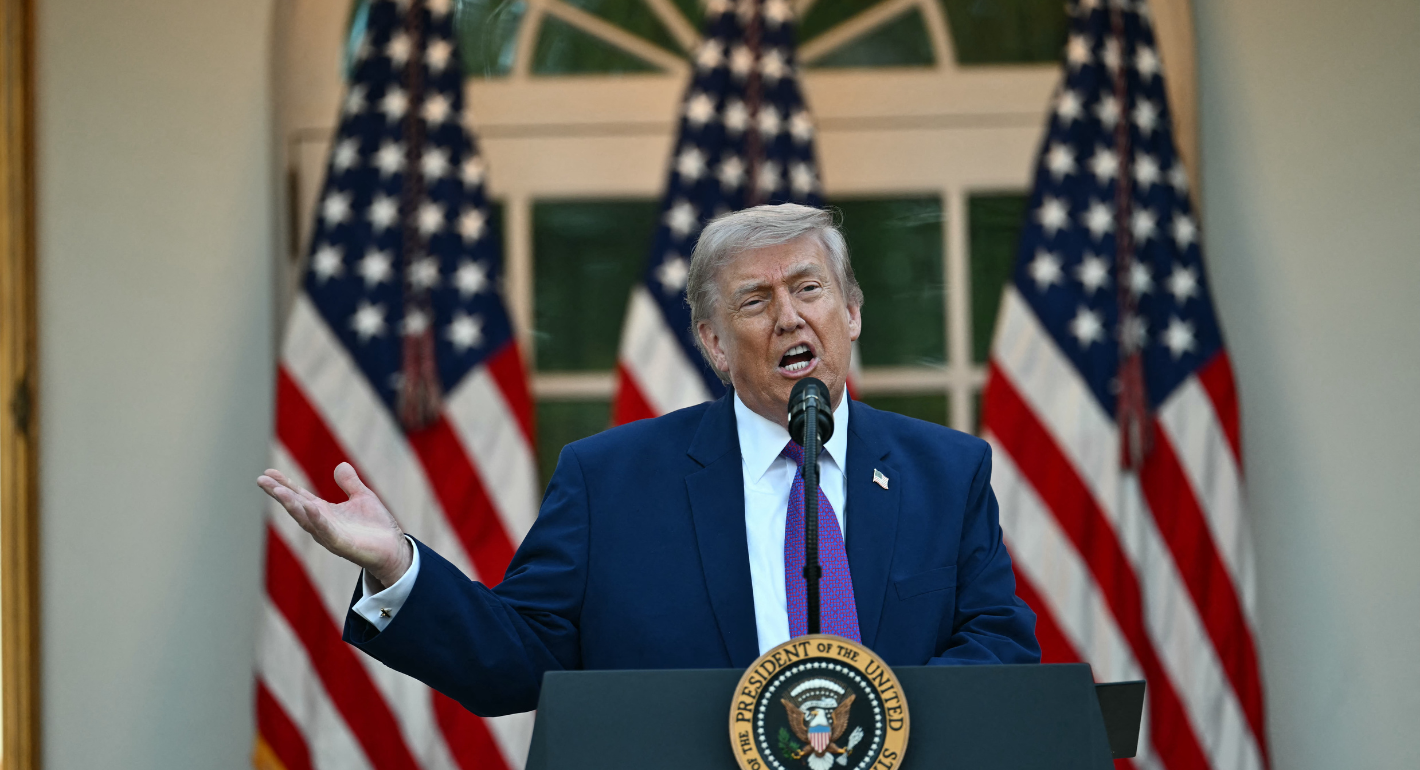
The full list of humiliations Europe has endured since Donald Trump returned to the White House makes for grim reading. But Washington’s adversarial approach to its allies undermines its own power base.
Rym Momtaz
The closure of the Strait of Hormuz has triggered a global energy crisis, but Europe is stuck in reaction mode. Without more strategic foresight, the EU will remain dependent on fossil fuels and will never be truly secure.


Milo McBride, Pauline Gerard
After spending much of 2025 trying to placate Donald Trump, some European leaders are starting to change posture. But is even a hostile Washington still so important to Europe that the U.S. president’s outbursts are worth putting up with?
Rym Momtaz, ed.
European leaders have now not only lost faith in Donald Trump’s U.S. presidency, but also in America’s hegemony as a whole. But short-term challenges make an immediate divorce unwise.
Rym Momtaz