

Commentary
Nathalie Tocci, Jan Techau
{
  "authors": [
    "Jan Techau"
  ],
  "type": "commentary",
  "blog": "Strategic Europe",
  "centerAffiliationAll": "",
  "centers": [
    "Carnegie Endowment for International Peace",
    "Carnegie Europe"
  ],
  "collections": [],
  "englishNewsletterAll": "",
  "nonEnglishNewsletterAll": "",
  "primaryCenter": "Carnegie Europe",
  "programAffiliation": "",
  "programs": [],
  "projects": [],
  "regions": [
    "Europe",
    "Western Europe"
  ],
  "topics": [
    "EU",
    "Democracy"
  ]
}
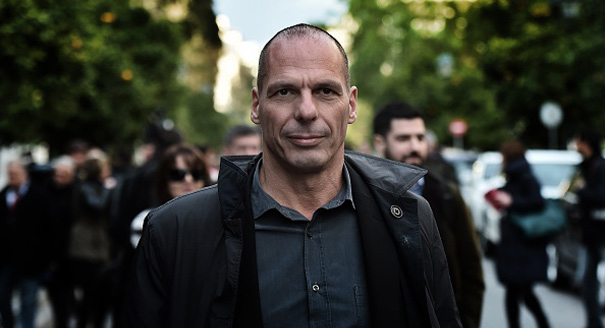
Source: Getty
A new political manifesto contains a decent idea for the future of Europe, but it is buried in ideological babble, conspiracy theories, and moral grandstanding.
It does not come as a surprise that Marxists know a thing or two about the opium of the people. In fact, they have always been the most gifted peddlers of utopian hope and quasireligious redemption from earthly ills.
If you want your dose of leftist snake oil, check in at the Volksbühne theater in Berlin tonight, where a merry band of Euro-revolutionaries from twelve countries will launch their new Democracy in Europe Movement (DiEM25). Tickets are €10 ($11) apiece, and what you will get in return is a good helping of anticapitalist comfort food, peppered with just enough truth to look nourishing, but heavily overseasoned with conspiracy theories and the stale but always tempting ingredient of faux common sense. Which is a shame, because there is actually a decent idea buried in what the group has to say.
The man who wants to become the champion of the new left in Europe is none other than Yanis Varoufakis, Greece’s former finance minister and self-styled anti-austerity hero. He is the main author of DiEM25’s political manifesto, which was published on February 4, and he is now set to become the principal face of the new movement, trying to put his fringe fame to use before it fades away completely.
Varoufakis and his limitations aside, the manifesto itself is quite interesting. As always with populist programs, it contains just enough truth to make sense on the surface and to speak to the disappointed half-informed to whom hope comes easily.
Yes, there is a democratic deficit in the EU. But that does not make the EU as a whole undemocratic, illegitimate, and authoritarian. Yes, Europe needs more solidarity, but solidarity does not mean accepting other people’s money while refusing to accept their oversight over how it is spent. Yes, too much austerity is counterproductive, but a painful dose of it is needed if European countries want to get back onto the path of financial sustainability. Yes, the so-called troika of the European Central Bank, the International Monetary Fund, and the European Commission, charged with providing and monitoring eurozone bailouts, has made mistakes. But it is not a hit squad. Yes, more transparency is needed, but not all things can be made public in political negotiations and the search for compromise unless one is interested in destroying the process.
The manifesto’s most important recurring motive is Democracy, spelled with a capital D to underline that the authors and their new movement have come to make the people’s voice the new gold standard for politics in Europe. To prove their goodwill, they pull all of the old Marxist canards out of the hat. The ruling class (oligarchs, governments, business cartels, EU bureaucrats, media moguls) fears nothing more than the demos and real democracy and therefore tries everything to perpetuate the corrupt status quo. “Secretive public agencies,” in the words of the manifesto, withhold the truth from the people.
Varoufakis and his allies know what the people really want. The fact that most of the movement’s members have failed as politicians in their own domestic contexts, that few of them have won elections, and that Varoufakis himself was too unbearable even for his own left-wing government comrades in Greece leaves the authors unperturbed. They do what the radical left always does: in the absence of a real, democratically sound political mandate, it conjures up a fictitious mandate for change, based on the assumed will of the oppressed masses who are currently unable to speak their minds because they have been blinded and seduced by a big conspiracy of powerful capitalists and their political and bureaucratic goons.
DiEM25’s condescending language badly damages what could be a constructive proposition for the future of Europe. At the heart of the manifesto is an idea that is as sound as it is politically ambitious: a plan to create, within ten years, a new legal foundation for the EU, built on a freely elected pan-European parliament that would cooperate with national legislatures to better represent the will of the people of Europe at the European level. The starting point of this foundation would be a new constitutional process conducted by a European assembly comprised of representatives of national, regional, and municipal delegates elected from across Europe.
This core idea is by no means a new one, and it has been promulgated in one way or another by many politicians (among them Varoufakis’s special friend, German Finance Minister Wolfgang Schäuble), think tankers (including myself), and academics. In this manifesto, the idea is outlined in one short paragraph, and it is here that the wannabe revolutionaries of DiEM25 should have included more detailed provisions and a more clear-sighted plan for how to bring all of this change about in Europe’s current, brutally hostile political environment.
Instead, the authors decided to drown a useful contribution to the debate over the future of Europe in ideological babble, conspiracy assertions, and moral grandstanding. If you rely on the rage of the people more than on the merits of your own idea, then your case is weak.
Maybe, after their vanity has been fed and their initial need for the limelight has been satisfied, those on the new European left can sit down, dispose of the old class-war nonsense, focus on the real issues, and start to work with those whom they now paint as enemies to build a less imperfect union in Europe. But as long as ideological noise is more important than compromise and hard work, all they do is sell what they know so much about: the opium of the people.
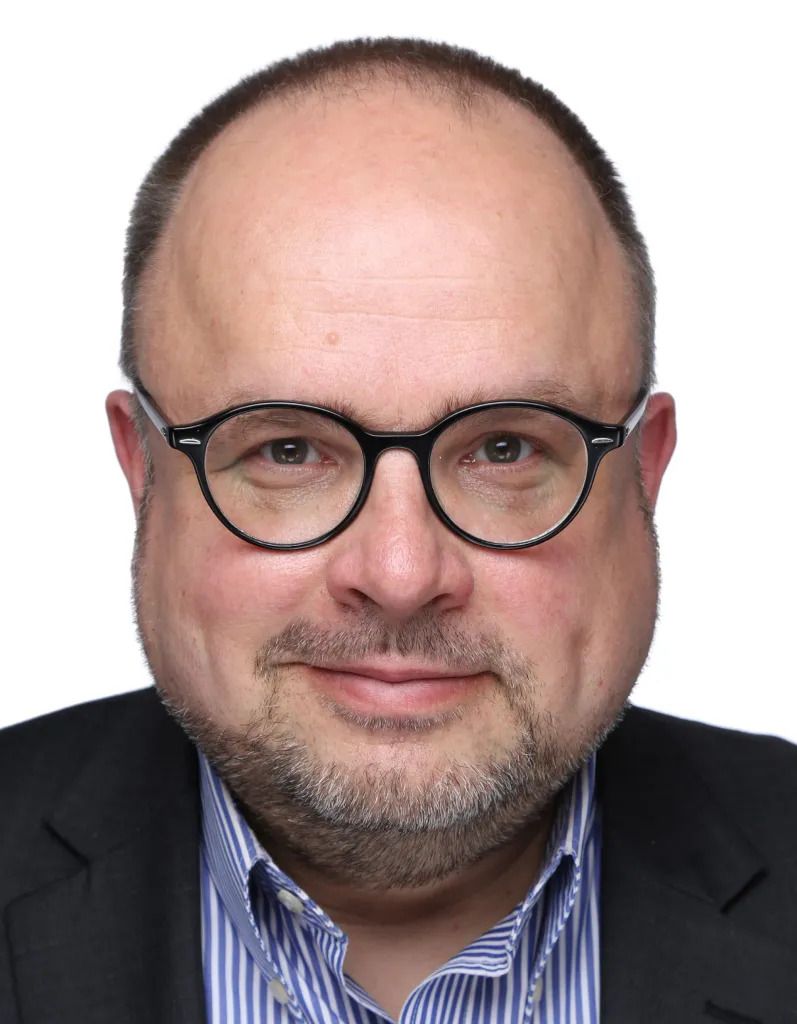
Director, Europe Team, Eurasia Group
Techau is director with Eurasia Group's Europe team, covering Germany and European security from Berlin. Previously, he was director of Carnegie Europe.
Recent Work

Nathalie Tocci, Jan Techau
Jan Techau
Carnegie does not take institutional positions on public policy issues; the views represented herein are those of the author(s) and do not necessarily reflect the views of Carnegie, its staff, or its trustees.

As we close out another season of Strategic Europe, it is worth taking stock of the deep shifts underway.

Rym Momtaz
The EU had to compromise to adopt a twenty-first sanctions package against Russia, exposing growing cracks in the union’s resolve. Is this latest, weaker round worth it to keep pressure on Moscow?
Rym Momtaz, ed.

Trump is distracted and Ukraine wants Europe to step up. The continent’s leaders must find their voice and assert it in talks with Russia.

Alissa de Carbonnel

Mounting economic strain and battlefield losses will not necessarily make the Kremlin less dangerous. They could instead push Moscow toward a more aggressive hybrid campaign designed to test NATO’s Eastern flank, exploit allied hesitation, and fracture European resolve.

Maksym Beznosiuk

Over the past ten years, NATO has held almost as many summits as it did during the entirety of the Cold War. Are they still useful, or is it time to stop holding annual meetings?
Rym Momtaz, ed.