

Commentary
Are Germany’s economic, industrial, and political struggles becoming a liability for the EU’s ability to rise to the geopolitical moment?
Rym Momtaz, ed.
{
  "authors": [
    "John R. Deni"
  ],
  "type": "commentary",
  "blog": "Strategic Europe",
  "centerAffiliationAll": "",
  "centers": [
    "Carnegie Endowment for International Peace",
    "Carnegie Europe",
    "Carnegie Russia Eurasia Center"
  ],
  "collections": [
    "Europe’s Eastern Neighborhood",
    "Transatlantic Cooperation"
  ],
  "englishNewsletterAll": "",
  "nonEnglishNewsletterAll": "",
  "primaryCenter": "Carnegie Endowment for International Peace",
  "programAffiliation": "",
  "programs": [],
  "projects": [],
  "regions": [
    "Europe",
    "North America",
    "United States",
    "Eastern Europe"
  ],
  "topics": [
    "Security",
    "Military"
  ]
}
Source: Getty
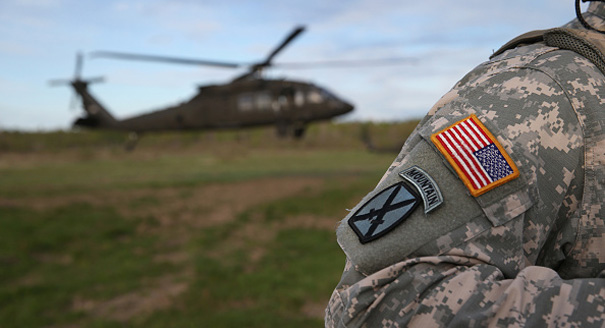
A plan to increase the U.S. military presence in Eastern Europe is welcome, but it is not enough to safeguard vital American interests.
Starting in 2017, Washington plans to begin heel-to-toe rotations of an armored brigade from the United States in Eastern Europe. In some respects, this represents a significant improvement over the assurance and deterrence steps taken by the United States and several of its NATO allies since 2014. Media accounts have somewhat breathlessly claimed the United States is “fortifying,” “beefing up,” and “significantly” increasing its military presence in Eastern Europe.
Although the administration’s plan is indeed a step in the right direction, it falls short of such hype. More broadly, the U.S. approach to reassurance and deterrence still suffers from some strategic shortcomings.
In its budget proposal for 2017, the administration of U.S. President Barack Obama requested a significant increase in funding for the European Reassurance Initiative (ERI), a program of enhanced measures announced in 2014 to reassure allies in response to Russian aggression. Under the 2017 proposal, the ERI would swell from roughly $789 million in fiscal year 2016 to just over $3.4 billion for fiscal year 2017. Much of this more-than-fourfold increase in funding would be used to pay for the rotational deployment of an armored brigade.
Previously, the ERI has been used to fund smaller-scale, shorter-duration deployments of U.S. forces to Eastern Europe for exercises and training events. Gaps between those deployments and the inconsistent presence of armored units potentially offered windows of opportunity for Russian adventurism in Eastern Europe.
Turning shorter-duration deployments into seamless rotations means the elimination of gaps between returning and deploying units, which is a welcome improvement from the perspective of U.S. allies. American allies also welcome the fact that the rotating brigade would include Abrams tanks and Bradley fighting vehicles. Over a decade ago, the congressionally mandated Overseas Basing Commission cautioned against a plan by the administration of then president George W. Bush to remove all U.S. armored units from Europe. That plan went forward anyway, and today the commission’s warning appears prescient.
More broadly, the proposed increase in ERI funding and U.S. military presence in Europe signals a growing understanding in Washington that the alliance needs to move toward a new normal in Eastern Europe, and that the United States must lead it there. The Poles and the Balts in particular want to see that the alliance has a medium-term plan to counter Russian belligerence, and the Obama administration’s ERI funding increase is a necessary first step in that process.
However, this move is not quite sufficient to safeguard Western interests, for five reasons. First, the size of the commitment—roughly 4,200 troops—pales in comparison to the tens of thousands of troops Russia can muster for its snap exercises. The brigade therefore does little to enable deterrence by denial and instead only reinforces the existing deterrence by punishment.
Second, the brigade would be split among six countries: Bulgaria, Estonia, Latvia, Lithuania, Poland, and Romania. This dispersed deployment would likely prevent the brigade from easily and quickly achieving mass and hence its full potential during a crisis. More importantly, the challenge Russia poses on the ground—and for which a U.S. brigade combat team may be an appropriate response—isn’t particularly salient for Bulgaria or Romania, given their distance from Russian territory, their strategic depth, and their lack of ethnic Russians. Rather, the problem is in the Baltic states, and the whole rotational brigade would be better located there.
Third, the ERI funding has not been included in the base budget of the U.S. Department of Defense. Instead, it is part of the overseas contingency operations budget. This somewhat arcane difference implies a lack of constancy in outlook, but more importantly it inhibits Department of Defense planning efforts for future budgeting.
Fourth, U.S. brigades in Europe lack a dedicated intermediate-level command-and-control element. That is, there is no U.S. divisional or corps-level command based in Europe, because of the deep, hasty drawdowns of the last fifteen years. Instead, the 4th Infantry Division maintains a roughly 100-person mission-command element in Germany, prepared to expand if and when necessary. However, some analyses have shown that a division headquarters sent from the United States may not arrive in time to make a difference in the case of an attack.
Fifth, the ERI plan failed to include a moratorium on further U.S. force drawdowns and facility closures in Europe. Admittedly, given the limited numbers of units and facilities left to cut, such a moratorium would have little practical impact. But it would provide an important political message to Europe that the United States is not overly distracted by the self-styled Islamic State or China and that Washington remains interested in protecting its vital interests on the continent.
Even if all of these shortcomings are addressed, it remains to be seen whether a rotationally deployed armor brigade is really the right solution for the challenges facing the Baltic states and Poland. A U.S. armored brigade is best suited to counter the worst-case scenario of a Russian conventional attack against allied forces. However, this catastrophe is highly unlikely. Although there are no guarantees that Russia will restrain itself, a forward-based heavy brigade—or two, or three—may be necessary as an insurance policy for the less likely, catastrophic case of a Russian invasion.
What is more likely to emanate from the Kremlin is a form of ambiguous or hybrid warfare, designed to help Moscow achieve political objectives in Europe without crossing the threshold of Article 5, NATO’s mutual defense clause. If so, a U.S. heavy brigade is unlikely to be of great utility. Instead, the ERI needs to be augmented with additional tools designed to build resilience in civil governance institutions, enhance military-civilian cooperation during a crisis, augment border observation and control, strengthen information operations, conduct offensive and defensive cyberoperations, and engage with adversaries across the entire electromagnetic spectrum.
In sum, the ERI plan, with the rotationally deployed armor brigade as its headline, is a step in the right direction. But to think that it alone is sufficient to effectively and efficiently safeguard vital U.S. interests in Europe and those of America’s allies is somewhat shortsighted.
John Deni is a research professor of joint, interagency, intergovernmental, and multinational security studies at the Strategic Studies Institute of the U.S. Army War College.

John R. Deni
Atlantic Council
John R. Deni is a research professor at the U.S. Army War College’s Strategic Studies Institute, a nonresident senior fellow at the Atlantic Council, and an associate fellow at the NATO Defense College. He is the author of NATO and Article 5. The views expressed are his own.
Carnegie does not take institutional positions on public policy issues; the views represented herein are those of the author(s) and do not necessarily reflect the views of Carnegie, its staff, or its trustees.

Are Germany’s economic, industrial, and political struggles becoming a liability for the EU’s ability to rise to the geopolitical moment?

Rym Momtaz, ed.

European Commission President Ursula von der Leyen is about to give her annual address on the state of the EU. Here’s what she won’t—but should—say.
Rym Momtaz

The aftermath of the Ceuta crisis shows Europe has drawn the wrong lessons. Rather than doubling down on failed migration policies, the EU needs to address the underlying roots of such episodes.

Richard Youngs

An overwhelming victory by a far-right-wing party in a small state in eastern Germany will have major repercussions for Chancellor Friedrich Merz’s coalition.

Judy Dempsey

Canadian Prime Minister Mark Carney has twice inspired praise for standing up to U.S. President Donald Trump: at the 2026 World Economic Forum in Davos and on Canada-U.S. trade negotiations. Is Carney showing a third way better than the EU has in dealing with the Trump administration?
Rym Momtaz, ed.