

Commentary
Judy Dempsey
{
  "authors": [
    "Judy Dempsey"
  ],
  "type": "commentary",
  "blog": "Strategic Europe",
  "centerAffiliationAll": "",
  "centers": [
    "Carnegie Endowment for International Peace",
    "Carnegie Europe"
  ],
  "collections": [],
  "englishNewsletterAll": "",
  "nonEnglishNewsletterAll": "",
  "primaryCenter": "Carnegie Europe",
  "programAffiliation": "",
  "programs": [],
  "projects": [],
  "regions": [
    "Europe",
    "Western Europe",
    "Germany"
  ],
  "topics": [
    "EU",
    "Democracy"
  ]
}
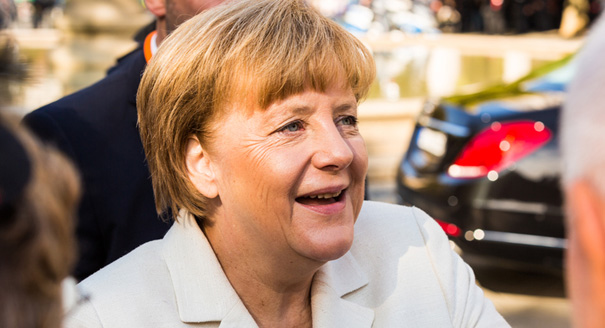
Source: Getty
Closer European integration and decent leadership instead of closed borders or political correctness could rescue the EU’s liberal system.
In her New Year’s address to the nation, German Chancellor Angela Merkel looked ahead to the coming months, which just might give Europeans the political will to pull together. Failing that, the EU risks further disintegration driven in part by abysmal and detached leadership in Brussels.
Merkel’s address took place a mere thirteen days after a terrorist attack in Berlin that killed twelve people and injured dozens, many critically. Then and in her New Year’s address, Merkel warned that Germany would become a target for Islamist terrorists.
Her speech focused on Europe—not on Vladimir Putin, the Russian president, nor on Donald Trump, the incoming U.S. president. Both leaders have scant regard for the West’s liberal values. Precisely because of their views, Merkel chose to home in on Europe and her own country.
The implication of her address was that Germans, first and foremost, and Europeans in general must look to themselves to defend their values, their way of life, and their democracy. There’s little point in blaming others for Europe’s helplessness, looking to the United States to keep the continent safe, or doubting Putin’s intentions. The era of self-denial is over.
“Many people . . . associate the year 2016 with a feeling that the entire world has fallen to pieces or that things that were long considered to be finished achievements have now been called into question. The European Union, for example,” Merkel said. Also under attack was parliamentary democracy, “which purportedly does not attend to the interests of citizens, but rather serves to benefit only a few. What distorted pictures,” Merkel added.
Merkel has no magic wand for rescuing Europe from populists who undermine parliamentary democracy or from terrorists who through their attacks seek to instill fear in open societies with the goal of weakening the values of tolerance and decency that underpin democracy.
In response to both threats, Merkel said that the state had to do everything possible to guarantee security and freedom for its citizens. “All of this is reflected in our democracy, in our government based on the rule of law, and in our values,” she added.
And here is the first challenge facing the Europe of 2017: its leaders have to find ways to reconcile security with values and not pander to a culture of political correctness that challenges the need for more security.
There can never be 100 percent security. But all EU countries, together, can do far more to pool resources to protect the bloc’s external borders. They can also do far more to pool intelligence. If migrants have entered Europe after committing crimes in their own countries or have committed crimes in an EU member state, such information must be shared. The case of Anis Amri, the Tunisian responsible for the December 2016 Berlin attack, showed the haphazard way in which intelligence agencies operate throughout Europe and in Germany.
If intelligence services are not overhauled, the inevitable outcome will be the reimposition of border controls or, at a minimum, checks on trains.
Some political parties would balk at such controls or checks. On New Year’s Eve, police in the German city of Cologne stopped and checked groups of North African men who were on their way to the celebrations. The last thing the police wanted was a repeat of the previous year’s festivities, when the authorities were too slow in protecting or even reacting to women who had been sexually assaulted by groups of men, many of North African origin according to the police. But when the police acted this time round, there was an outcry from sections of the opposition Green party and human rights organizations. Some accused the police of racial profiling. Here was a clash between political correctness, the defense of values, and the protection of citizens.
The second challenge facing Germany, as well as the Netherlands and France, in this election year is how to deal with the insidious propaganda emanating from the Kremlin. Germany’s security services have had plenty of experience of Russian hackers and the Kremlin’s disinformation campaigns aimed at discrediting Merkel in particular and democracy in general. And because Merkel is one of the few remaining European leaders who want to keep economic sanctions on Russia, she is a prime target of Putin’s propaganda machine. This is a danger to German democracy.
That is why all German political parties should unite in countering Russian propaganda and disinformation. The top echelons of the Social Democrats and the Left party still pine after the so-called good old days of the special German-Russian relationship, but that relationship depended on U.S. security. In addition, European democracy was strong and confident. Today, it is the opposite. Political parties and the media should come together to expose the Kremlin’s goals and lies.
The way leaders respond to these two challenges—defending citizens against terrorism and countering disinformation—will show the strength and durability of Europe’s democracy and values. Merkel cannot do it alone.

Nonresident Senior Fellow, Carnegie Europe
Judy Dempsey is a nonresident senior fellow at Carnegie Europe
Recent Work
Judy Dempsey
Judy Dempsey
Carnegie does not take institutional positions on public policy issues; the views represented herein are those of the author(s) and do not necessarily reflect the views of Carnegie, its staff, or its trustees.

Trump is distracted and Ukraine wants Europe to step up. The continent’s leaders must find their voice and assert it in talks with Russia.

Alissa de Carbonnel

Mounting economic strain and battlefield losses will not necessarily make the Kremlin less dangerous. They could instead push Moscow toward a more aggressive hybrid campaign designed to test NATO’s Eastern flank, exploit allied hesitation, and fracture European resolve.

Maksym Beznosiuk

Over the past ten years, NATO has held almost as many summits as it did during the entirety of the Cold War. Are they still useful, or is it time to stop holding annual meetings?

Rym Momtaz, ed.
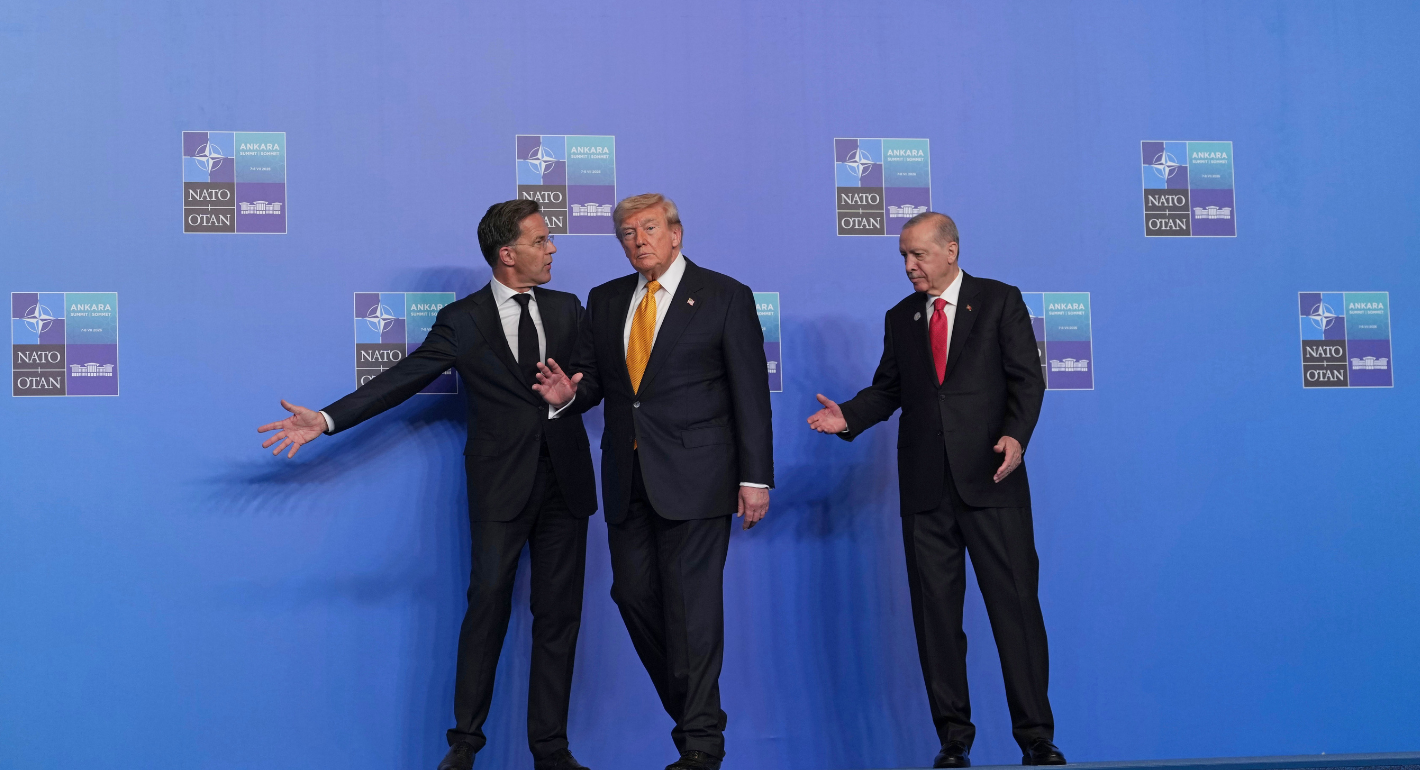
Nearly a year and a half after Europeans leaned into sucking up to Trump, the strategy has produced some benefits when it comes to Ukraine.
Rym Momtaz
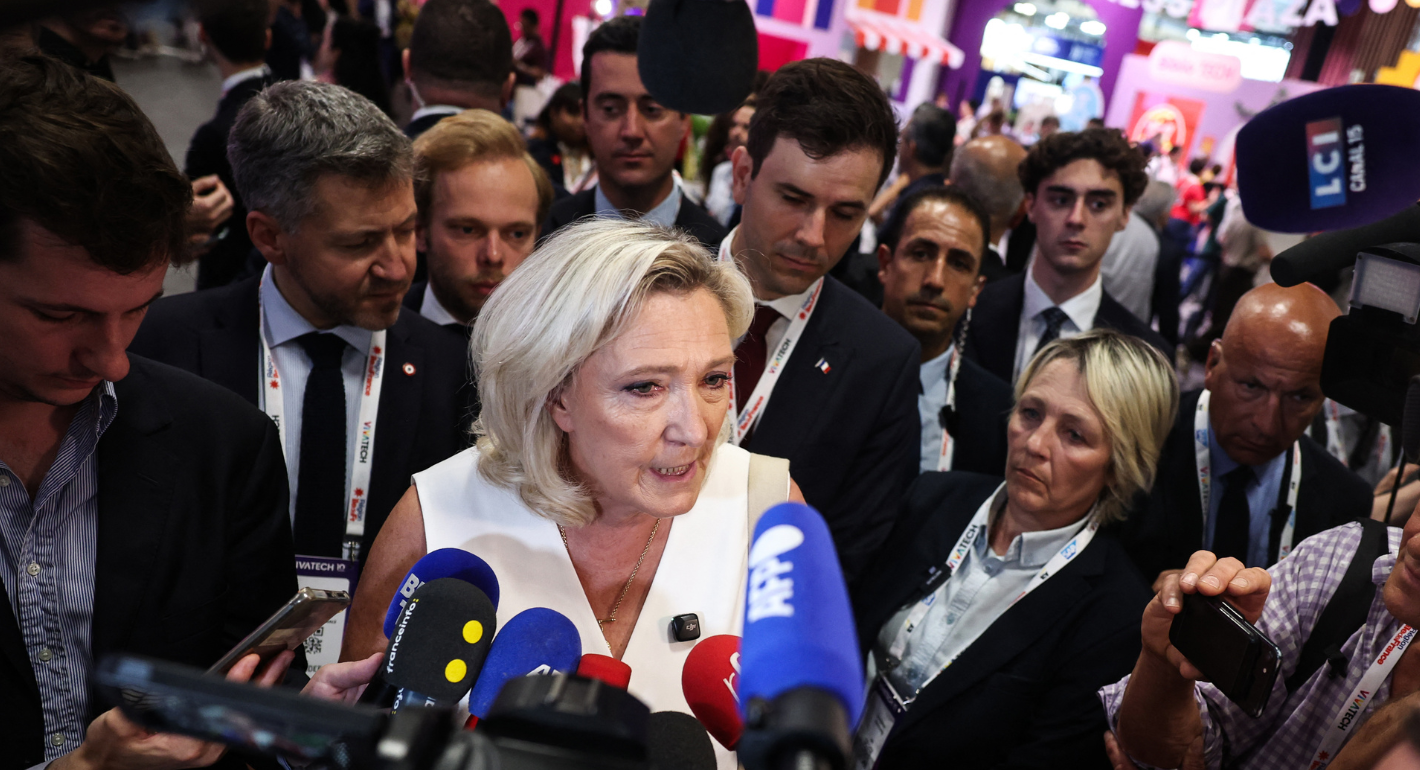
Far-right leader Marine Le Pen can—and will—run in France’s next presidential election. What does the outcome of her appeal against a 2025 embezzlement conviction mean for the country’s political future?
Catherine Fieschi