

Commentary
Trump is distracted and Ukraine wants Europe to step up. The continent’s leaders must find their voice and assert it in talks with Russia.
Alissa de Carbonnel
{
  "authors": [
    "Andreas Umland"
  ],
  "type": "commentary",
  "blog": "Strategic Europe",
  "centerAffiliationAll": "",
  "centers": [
    "Carnegie Endowment for International Peace",
    "Carnegie Europe"
  ],
  "collections": [
    "Europe’s Eastern Neighborhood"
  ],
  "englishNewsletterAll": "",
  "nonEnglishNewsletterAll": "",
  "primaryCenter": "Carnegie Europe",
  "programAffiliation": "",
  "programs": [],
  "projects": [],
  "regions": [
    "Russia",
    "Europe",
    "North America",
    "Eastern Europe",
    "United States"
  ],
  "topics": [
    "Security",
    "Foreign Policy",
    "EU"
  ]
}
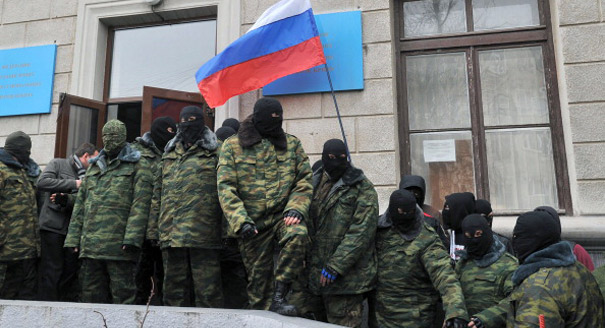
Source: Getty
Washington’s acceptance of Russia’s annexation of Crimea would have far-reaching implications for the world’s nuclear nonproliferation regime.
A major foreign policy challenge for the incoming U.S. administration will be how to deal with Russia’s new international assertiveness and foreign military adventures. Some signs in recent weeks, especially regarding the ongoing confrontation between Russia and Ukraine, point to a friendlier U.S. approach toward Moscow. Such a shift would have very serious consequences for the rest of the world.
A new rapprochement between Washington and Moscow may go far beyond the attempt by the administration of outgoing U.S. President Barack Obama to reset Russian-U.S. relations after the Russian-Georgian War in 2008. Supposedly, a dovish American approach toward the Kremlin would put U.S. concerns before those of countries and peoples currently in conflict with Russia.
To be sure, a number of probable members of the new administration, like Rex Tillerson, Mike Pompeo, and James Mattis, have voiced hawkish views on Russian imperialism. Yet apparently, U.S. President-elect Donald Trump and some of those advising him specifically on Russia, like Michael Flynn, Paul Manafort, and Carter Page, hope that U.S. tolerance of Russian freedom of movement in the former Soviet space—in particular, in Ukraine—would make the Kremlin more cooperative in other fields, such as the fight against Islamist terrorism, and in other regions, such as Syria or the Arctic.
However, one wonders whether Trump and other so-called Putinversteher in the incoming administration fully understand the stakes. The risks do not only concern the fundamental national interests of such pro-American countries as Ukraine, Estonia, Georgia, or Poland. The U.S. administration’s tolerance of Russia’s violation of Ukrainian territorial integrity would have larger implications for the future of humanity.
In view of the security assurances that the United States gave Ukraine under the 1994 Budapest Memorandum, a move by Washington to appease Moscow would be another crack in the splintering international nuclear nonproliferation regime. Acquiescence to Russia’s territorial gains in Ukraine would further undermine the already-shattered 1968 Nuclear Non-Proliferation Treaty (NPT), one of the world’s most important multilateral agreements.
Under the Budapest Memorandum, three official nuclear-weapons states under the NPT—Russia, the UK, and the United States—assured the inviolability of Ukraine’s borders. In two simultaneous but separate declarations, the other two official nuclear-weapons states, China and France, also expressed their respect for Ukraine’s political sovereignty. This was the core of a shrewd deal between the five guarantor states of the NPT and Ukraine (as well as Belarus and Kazakhstan), which had inherited parts of the Soviet nuclear arsenal. In exchange for Kyiv’s readiness to give up its weapons of mass destruction and join the NPT, the world’s five major nuclear powers explicitly acknowledged their obligation to observe and protect Ukraine’s territorial integrity.
But since 2014, if not before, Moscow has manifestly violated the Budapest Memorandum. As the agreement forms an important annex to the NPT, its violation through continuing Russian occupation of Ukraine’s territory undermines the logic of the international mechanism to prevent the spread of atomic weapons. That not only harshly punishes a country that voluntarily agreed to give up its nuclear weapons in exchange for security assurances. It also demonstrates how an official nuclear-weapons state can use its nuclear deterrence potential to implement and secure territorial expansion with military means.
Worse, two other official nuclear powers, Beijing and Paris, have implicitly assisted Russia in its subversion of the nonproliferation regime. Despite having expressed its respect for Ukraine’s territorial integrity, China did not support a 2014 UN General Assembly resolution against Russia’s annexation of Crimea. And several prominent French center-right parliamentarians have visited Crimea since its annexation by Russia, even though the French government that in 1994 declared its respect for Ukraine’s sovereignty was also a center-right administration (albeit under Socialist president François Mitterrand).
U.S. appeasement of Russia regarding its annexation of Crimea and interference in Ukraine’s eastern Donbas region would compound the effects of these earlier aberrations. The United States would be disregarding its earlier statements about Ukraine’s accession to the NPT and voluntary nuclear disarmament. The UK would be the only guarantor state of the NPT left that behaves more or less in line with the logic of the world’s nonproliferation regime with regard to Ukraine.
To be sure, against the background of other international crises, nuclear proliferation is currently not a salient topic of international affairs. Yet, preventing the spread of atomic weapons is one of the most sensitive issues for preserving world peace and securing human survival. The long-term repercussions of U.S. acquiescence to Russia’s annexation of Crimea for the international order would be grave.
Andreas Umland is a senior research fellow at the Institute for Euro-Atlantic Cooperation in Kyiv.

Andreas Umland
Carnegie does not take institutional positions on public policy issues; the views represented herein are those of the author(s) and do not necessarily reflect the views of Carnegie, its staff, or its trustees.

Trump is distracted and Ukraine wants Europe to step up. The continent’s leaders must find their voice and assert it in talks with Russia.

Alissa de Carbonnel

Mounting economic strain and battlefield losses will not necessarily make the Kremlin less dangerous. They could instead push Moscow toward a more aggressive hybrid campaign designed to test NATO’s Eastern flank, exploit allied hesitation, and fracture European resolve.

Maksym Beznosiuk

Over the past ten years, NATO has held almost as many summits as it did during the entirety of the Cold War. Are they still useful, or is it time to stop holding annual meetings?

Rym Momtaz, ed.
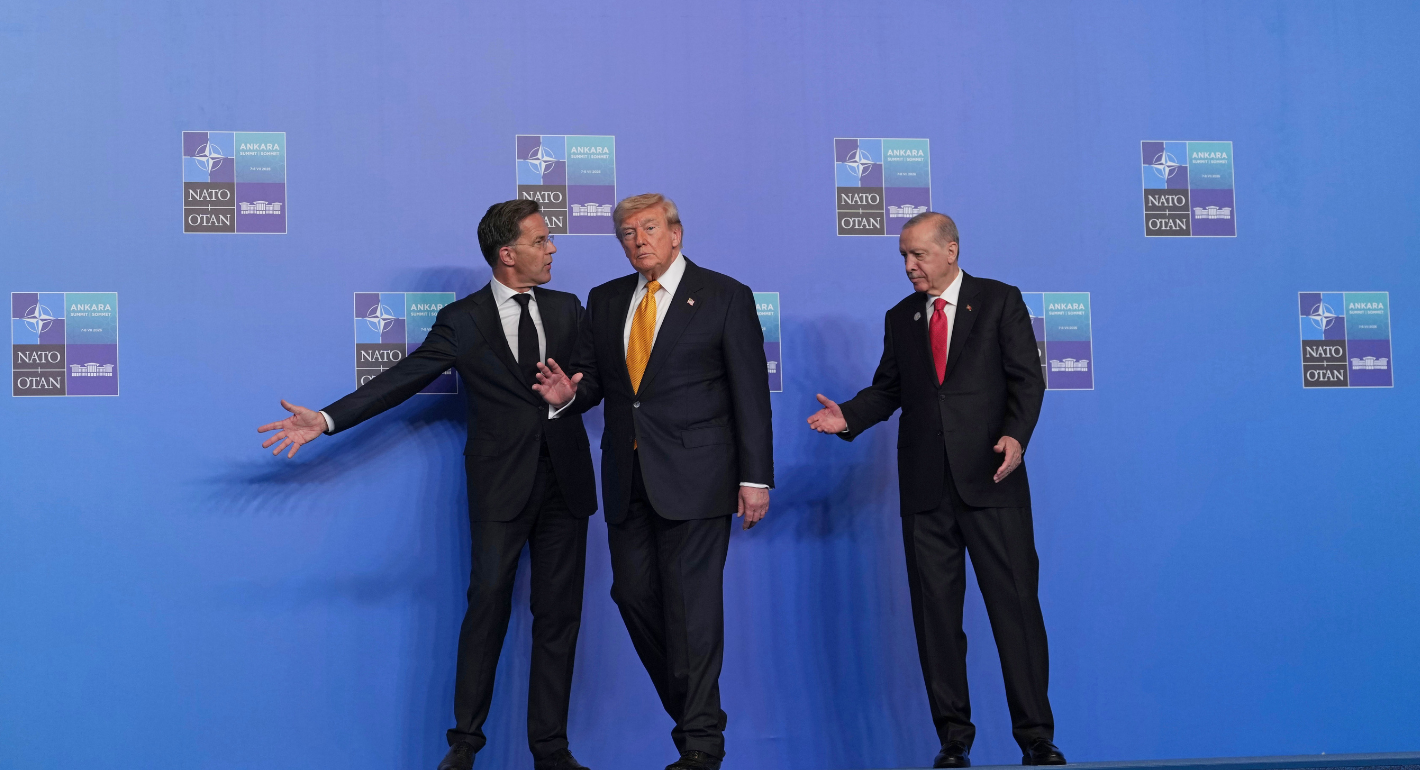
Nearly a year and a half after Europeans leaned into sucking up to Trump, the strategy has produced some benefits when it comes to Ukraine.
Rym Momtaz
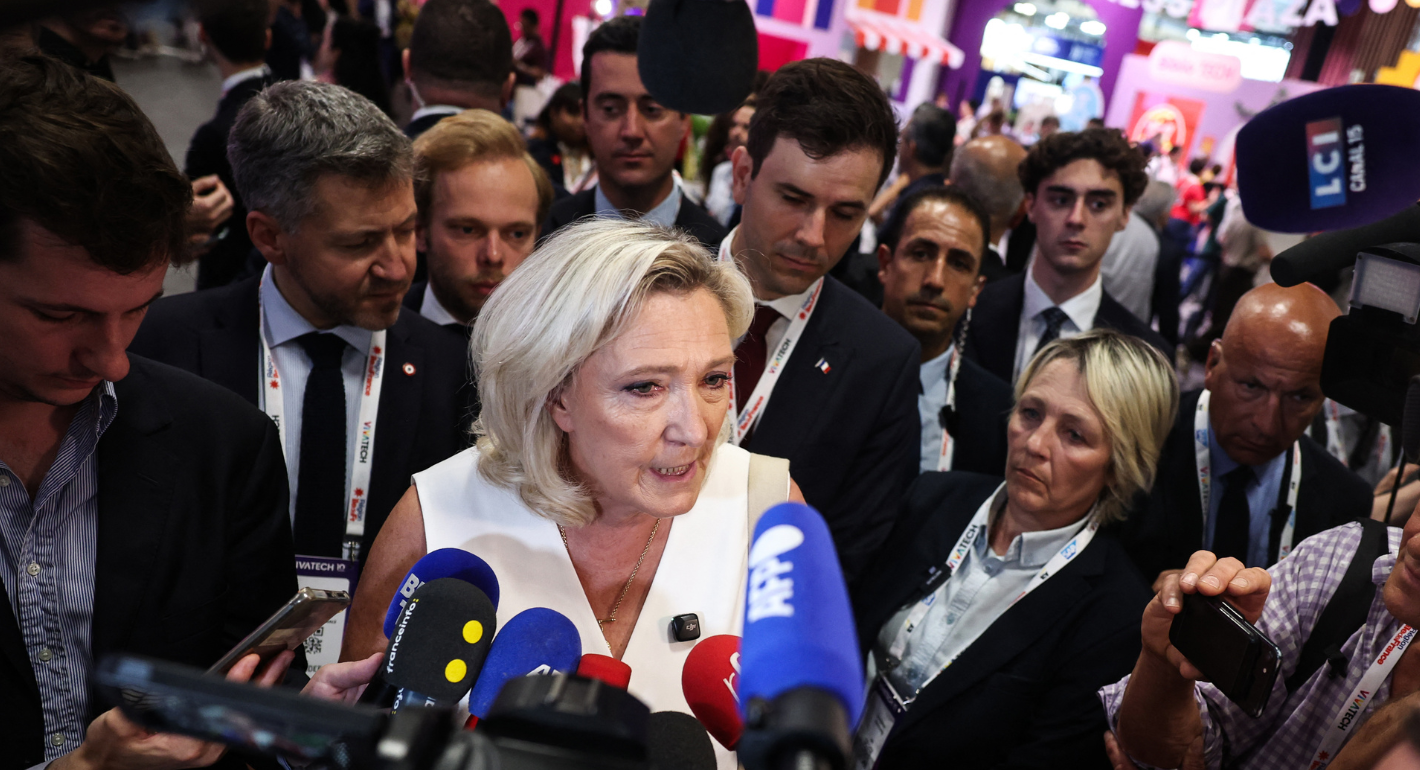
Far-right leader Marine Le Pen can—and will—run in France’s next presidential election. What does the outcome of her appeal against a 2025 embezzlement conviction mean for the country’s political future?
Catherine Fieschi