

Commentary
Judy Dempsey
{
  "authors": [
    "Judy Dempsey"
  ],
  "type": "commentary",
  "blog": "Strategic Europe",
  "centerAffiliationAll": "",
  "centers": [
    "Carnegie Endowment for International Peace",
    "Carnegie Europe"
  ],
  "collections": [],
  "englishNewsletterAll": "",
  "nonEnglishNewsletterAll": "",
  "primaryCenter": "Carnegie Europe",
  "programAffiliation": "",
  "programs": [],
  "projects": [],
  "regions": [
    "Europe",
    "Western Europe",
    "Germany"
  ],
  "topics": [
    "EU",
    "Migration"
  ]
}
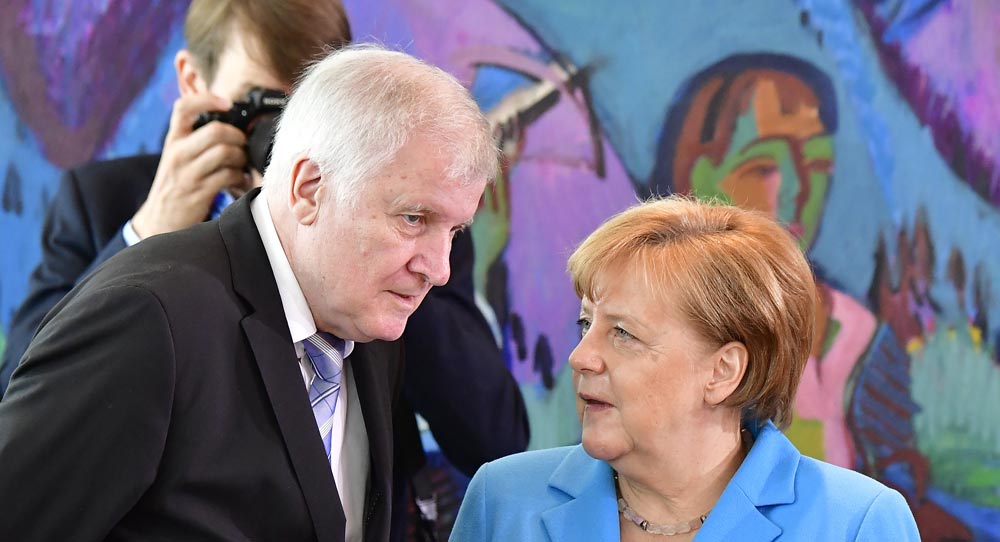
Source: Getty
A late-night and last-ditch compromise over Germany’s refugee policy leaves Angela Merkel—and Europe—weaker.
A blistering row between the German chancellor and her interior minister was diffused late Monday night after Angela Merkel and Horst Seehofer struck a compromise over the country’s asylum policy.
But don’t think for a moment that this ends what has turned into a bitter, personal dispute between these two politicians.As leader of the Christian Social Union (CSU), based in Bavaria, Seehofer might have done enough to persuade voters to stick to his party ahead of October’s state elections. And the compromise that was hatched might buy Merkel some time. But the months of squabbling between Merkel’s Christian Democratic Union party and the CSU, its sister party, has left the chancellor weaker. Europe is weaker as a result.
The compromise means that Germany will establish transit zones along the country’s southern border. There, deportations of refugees not entitled to settle in Germany will be speeded up. Were it as simple as that. There are several sticking points.
First, Merkel wasn’t able to strike a bilateral agreement with Italy or Austria during last week’s summit of EU leaders. So if a refugee was originally settled in either country, Germany will not have the automatic right to send this person back to Austria or Italy.
Second, it’s not clear if Merkel’s other coalition partner, the Social Democrats, will go along with the compromise. The party already rejected a similar proposal that Merkel suggested some time ago.
And third—leaving aside Seehofer’s personal animosity toward Merkel, his threats to resign, the backstabbing against the chancellor, combined with the CSU’s desperate standing in the polls—this dispute has another, wider implication for Europe.
It confirms that French President Emmanuel Macron’s ambitions to reform the eurozone are almost certainly on hold. During the June European Council Summit, his bold plans were eclipsed by the refugee and asylum crisis. Until the latter is resolved it’s hard to see Macron’s proposed reforms gaining traction. Indeed, the CSU has already rejected the idea of a banking union and other reforms of the eurozone.
In short, even if Merkel did want to embrace Macron’s reforms, she is hobbled by the CSU, hobbled by an unstable coalition, and hobbled by the electoral timetable. These are constraints that couldn't come at a worse time for a European Union that on the one hand is saddled with several populist/nationalist governments and on the other is having its very existence being questioned by U.S. President Donald Trump.
Elections to the European Parliament take place next year. Until now, the European People’s Party (EPP), which consists of the EU’s conservative parties, has traditionally been the largest bloc in the parliament. This has given its leaders in the Parliament and back home considerable leverage over selecting the EU’s unelected commissioners. The Commission’s term ends next year as well.
But this time round, the EPP is weaker and divided. This explains why the EPP’s top brass is extremely reluctant to expel or suspend Hungary’s Fidesz party from the group. This is despite how the government in Budapest, led by Prime Minister Viktor Orbán, passed a law essentially taking nongovernmental organizations to court if they advise or help refugees. Given Merkel’s domestic woes, it’s hard to see her sanctioning Orbán when he holds talks with the chancellor in Berlin on July 5.
All the above begs the question about the stability of the German coalition and Merkel’s future.
Even though Markus Söder—Bavaria’s prime minister, who kept escalating the dispute between Seehofer and Merkel—said that the CSU was committed to the union with the CDU, and by implication to the coalition, that pledge carries little weight. There’s plenty of scope for another crisis inside the conservative bloc.
For now, no party in Merkel’s coalition can walk away from it. The Social Democrats have no money to finance a new election. Also, their standing in the opinion polls is miserable. And the leadership has still to decide what exactly it stands for.
The CSU, which has had the absolute majority in Bavaria, are fixated on the October elections and are determined to see off the far-right Alternative for Germany. That’s why Söder and Seehofer latched onto the asylum issue—even though over the past year the number of asylum seekers has plummeted.
As for the Christian Democrats, Merkel has won another day. But another crisis is around the corner—this time from U.S. President Donald Trump.
Trump recently sent a letter to several NATO members, castigating them for not spending enough on defense. He singled out Merkel, even blaming her for undermining the alliance.
Continued German underspending on defense undermines the security of the alliance and provides validation for other allies that also do not plan to meet their military spending commitments, because others see you as a role model,” he wrote. The tone has been set for next week’s NATO summit in Brussels and another crisis in the transatlantic relationship. That’s all that Merkel needs.

Nonresident Senior Fellow, Carnegie Europe
Judy Dempsey is a nonresident senior fellow at Carnegie Europe
Recent Work
Judy Dempsey
Judy Dempsey
Carnegie does not take institutional positions on public policy issues; the views represented herein are those of the author(s) and do not necessarily reflect the views of Carnegie, its staff, or its trustees.

The EU’s new migration policy is not suited to today’s realities. With climate change increasingly becoming a driver of displacement, Europe needs to rethink its deterrence-focused approach.

Shana Tabak
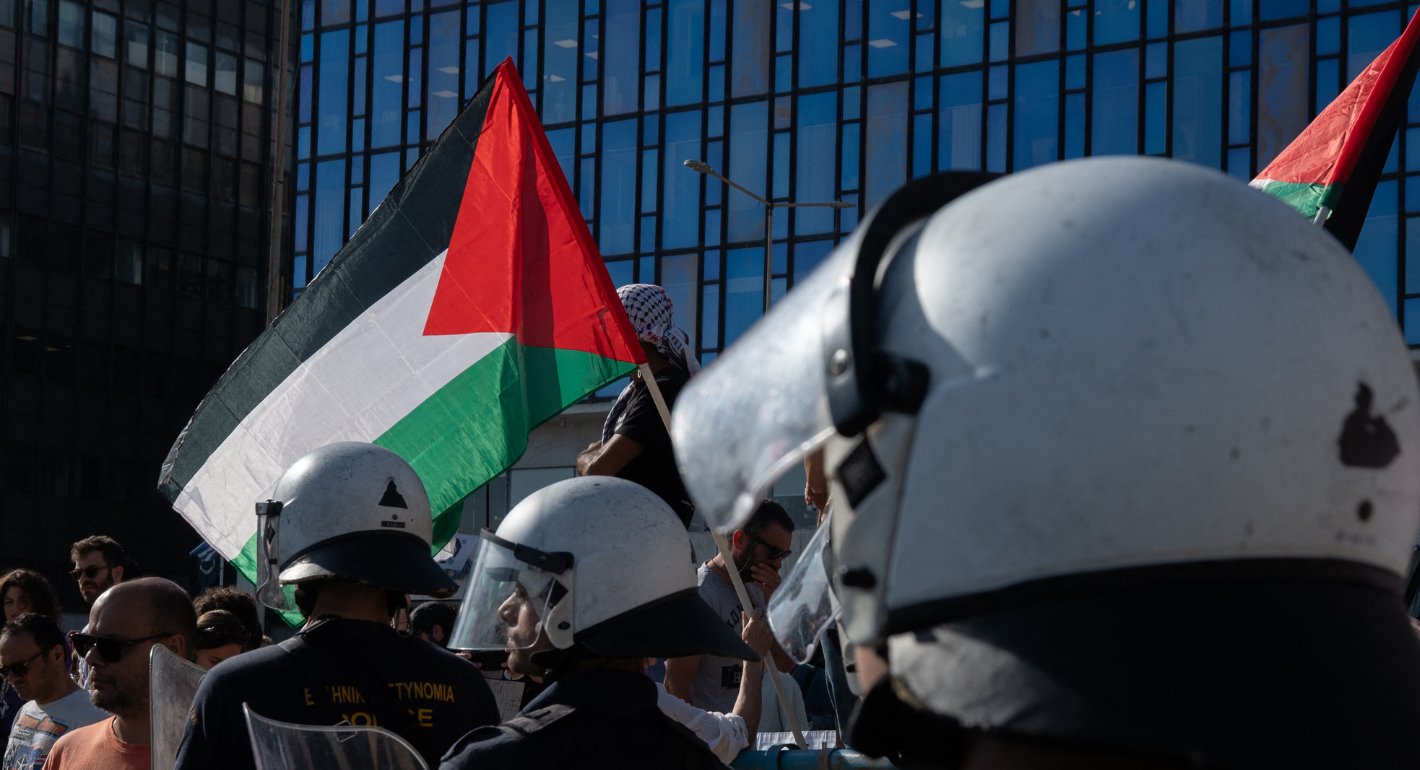
The battle over free speech has taken center stage since U.S. Vice President JD Vance accused Europe of censorship. From travel bans to social media regulation, especially around the Israel-Palestine conflict, are liberal democratic governments weaponizing free speech?

Rym Momtaz, ed.
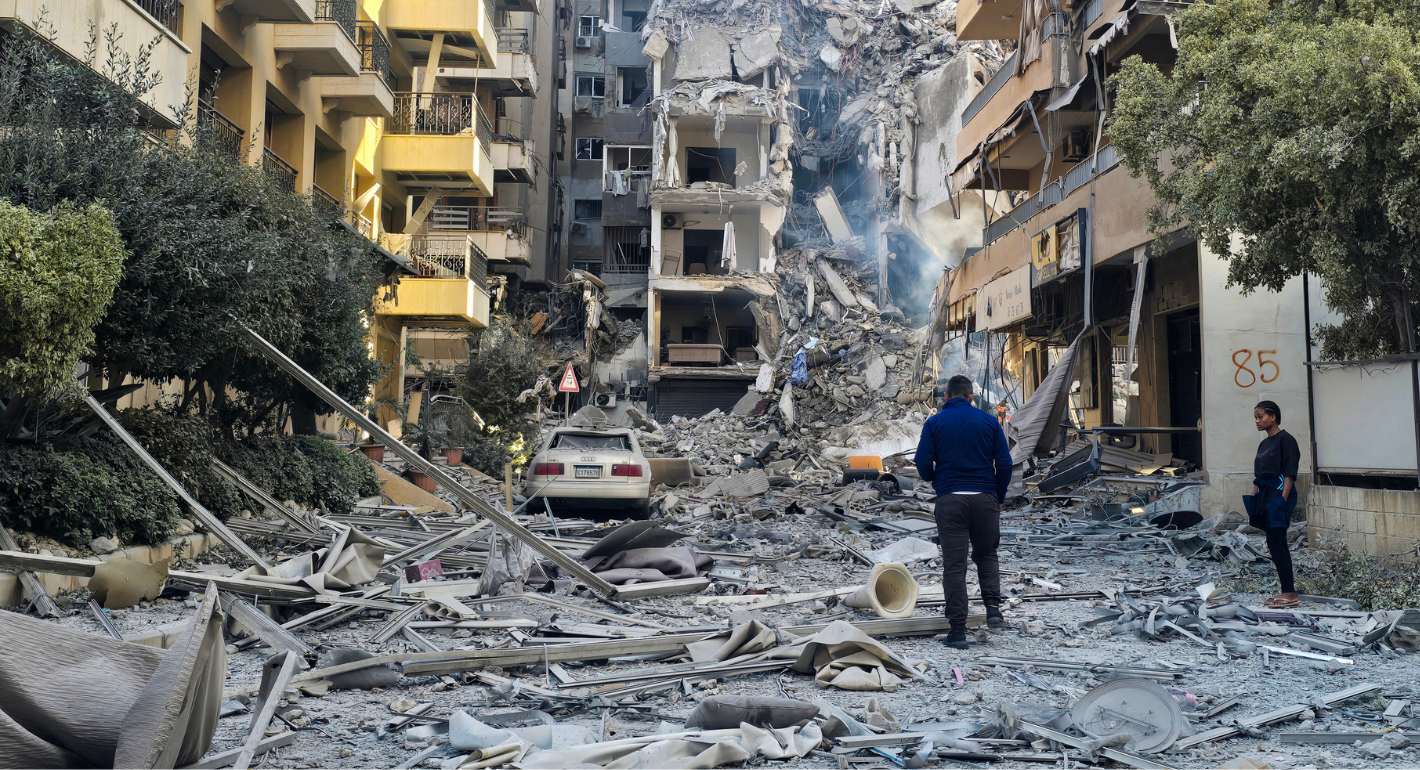
Europe seems to have accepted its sidelining in the Middle East. The EU must reassert its support for the international rules-based order and step up engagement.
Rym Momtaz
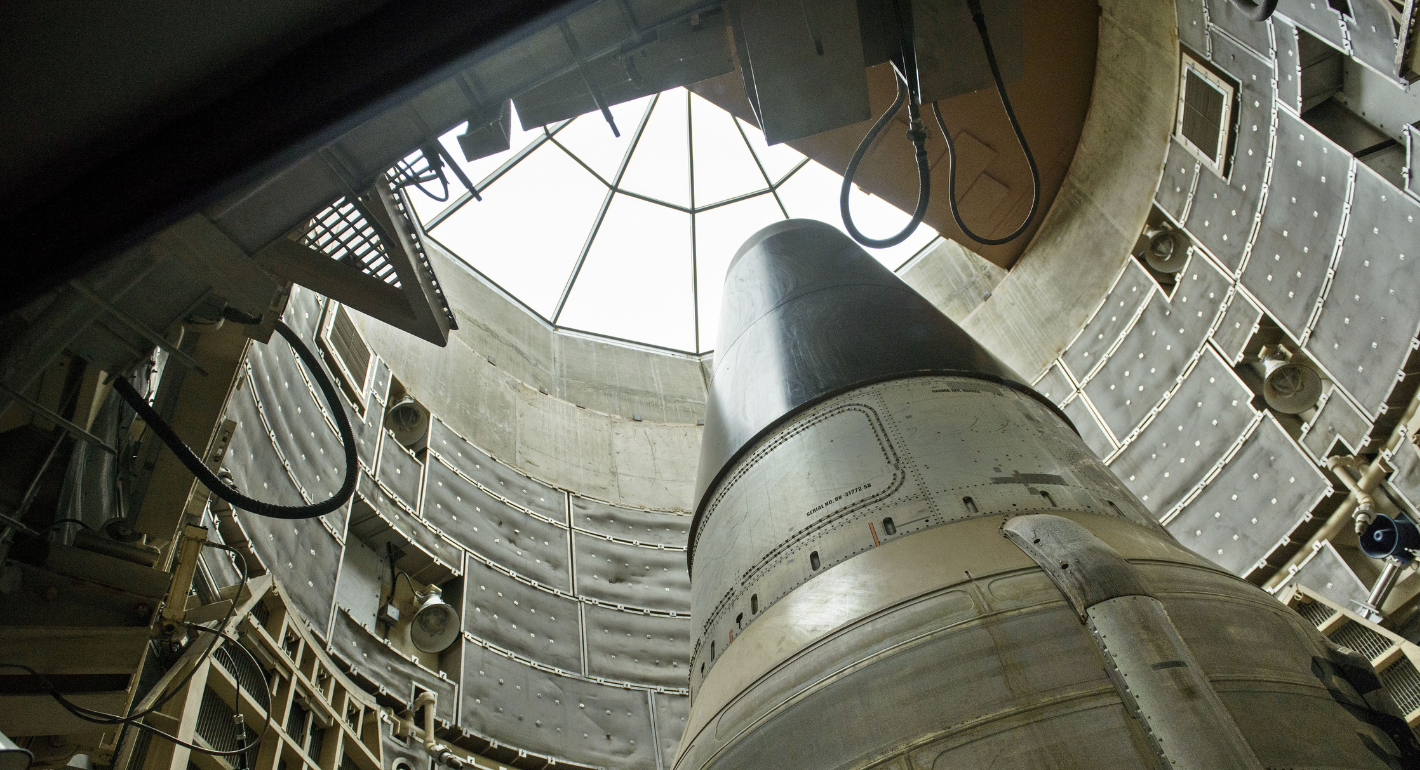
Amid uncertainty caused by the Iran war, the global drive for nonproliferation has stalled. With Europe diplomatically marginalized and countries reassessing their nuclear options, efforts to curb the spread of nuclear weapons risk becoming irrelevant.

Jane Darby Menton
Preparing candidate countries for EU membership is no longer enough. As the enlargement process becomes a reality, the union must also prepare its own societies.

Iliriana Gjoni