

Commentary
Judy Dempsey
{
  "authors": [
    "Judy Dempsey"
  ],
  "type": "commentary",
  "blog": "Strategic Europe",
  "centerAffiliationAll": "",
  "centers": [
    "Carnegie Endowment for International Peace",
    "Carnegie Europe"
  ],
  "collections": [
    "EU Integration and Enlargement",
    "Brexit and UK Politics"
  ],
  "englishNewsletterAll": "",
  "nonEnglishNewsletterAll": "",
  "primaryCenter": "Carnegie Europe",
  "programAffiliation": "",
  "programs": [],
  "projects": [],
  "regions": [
    "Europe",
    "Western Europe",
    "United Kingdom"
  ],
  "topics": [
    "EU",
    "Political Reform"
  ]
}
Source: Getty
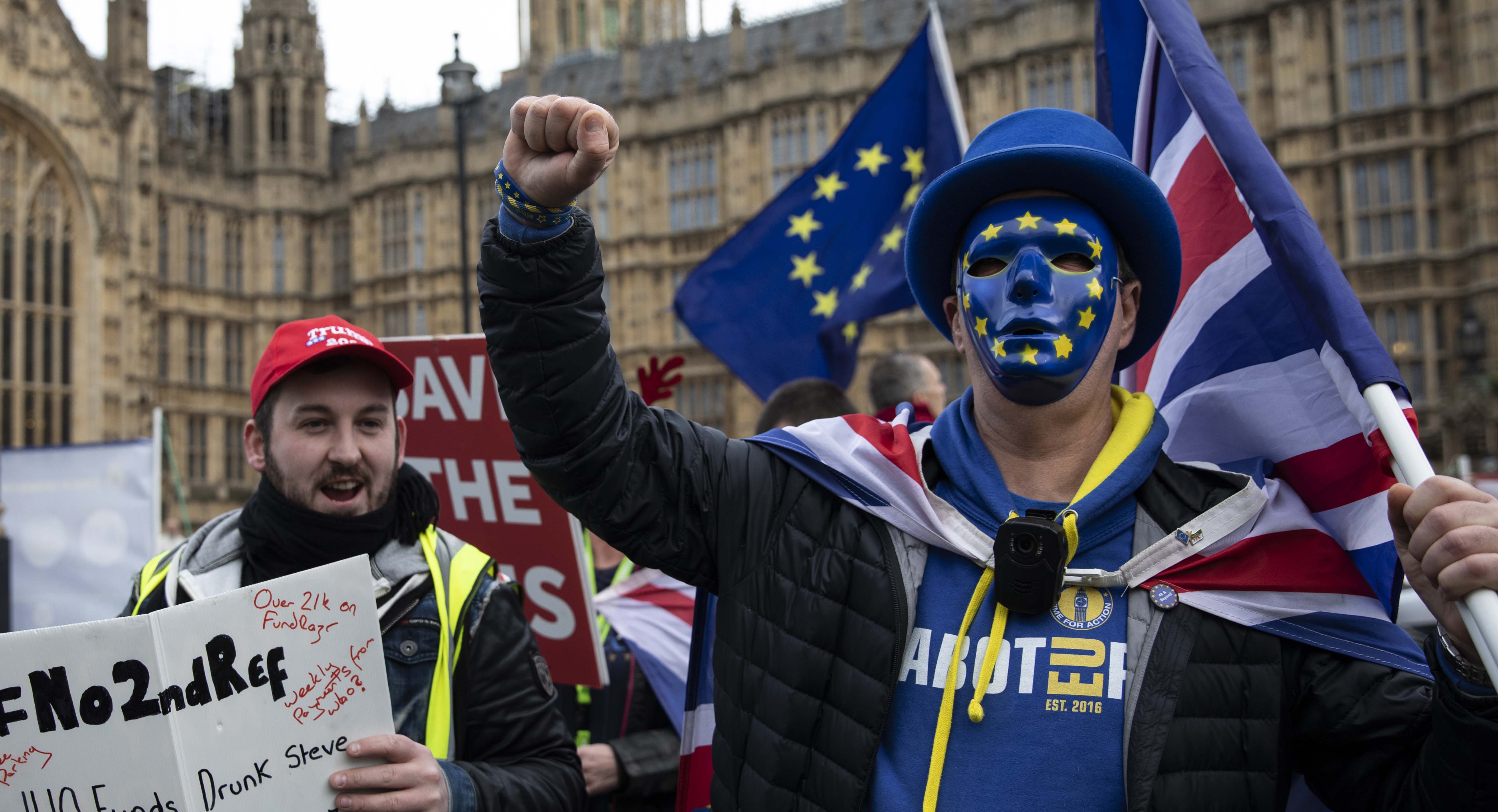
The disruption caused by Britain failing to agree an orderly exit from the European Union is immense—and dangerous for the bloc’s future stability.
The European Union is often miserable in dealing with the day after and sticking together.
Brexit, however, has changed everything.
Ever since the British voted in a referendum in 2016 to leave the EU by March 2019, the other 27 member states have presented a strong and united front in their negotiating stance with London. The shock of a key country quitting the EU has had a galvanizing effect.
Since the referendum, negotiators in Brussels have worked around the clock to try to reach an agreement with British Prime Minister Theresa May on an orderly exit from the union. They soon discovered that their interlocutors in London had been unprepared, ignorant, and arrogant about the implications of Brexit for Britain, for Ireland, and for Europe as a whole. It’s as if the British negotiators could not appreciate, or even wish to understand, just how integrated the UK was in the EU and how strategically and legally difficult it would be to extricate the country from it.
And the degree of incompetence, of uncertainty, of Brussels simply often not knowing what the British government wanted—not to forget the bitter disunity inside May’s cabinet, in the UK Parliament, and among the public—are all coming home to roost. The EU is now preparing for the day after Brexit if there is no deal; if Britain crashes out of the bloc.
The European Commission has drawn up a “no deal” Contingency Action Plan that will be implemented on March 30, the day the UK is scheduled to leave the EU. The British and Irish governments have also drawn up plans.
The commission’s package, fleshed out in Strasbourg on November 13 and spelt out in Brussels on December 19, is not aimed at piling the pressure on Theresa May to reach a deal. She is in no position to deliver. She’s too hobbled back home.
The plans in Brussels are about protecting “the vital interests of the EU” because a no-deal scenario would create major disruption for citizens and businesses in the EU-27.
The scale of the disruption cannot be underestimated. The commission’s plans involve a package of fourteen measures, ranging from financial services, air transport, and citizens’ rights to customs and climate policy. The measures will be temporary and limited in scope. They will be adopted unilaterally by the EU.
The commission texts are essential reading because they get to the heart of the immense danger a no-deal poses to the EU. In a nutshell, the contingency measures, particularly those related to the financial sector, are about safeguarding “the financial stability in the EU-27.”
Financial instability haunts the EU, whether member states belong to the eurozone or not. Having overcome the financial crises in Greece, Spain, Ireland, and Portugal, the EU is now facing financial and political uncertainty in Italy, one of the founding members of the EU.
In Rome, the euroskeptic, anti-immigrant Northern League party—led by Matteo Salvini, who is also interior minister—has jumped in the opinion polls from the 17 percent it won in parliamentary elections last March to over 30 percent today. Support for the EU is plummeting as Italians blame Brussels for their economic woes, not decades of poor economic governance by Rome.
Salvini, who is de facto Italy’s leading politician, wants to increase spending, which will put even more pressure on the country’s large budget deficit and break eurozone fiscal rules. So far, the European Commission and Rome have avoided a major confrontation after a compromise was agreed. That deal might be temporary. The point is that if market sentiment and investor confidence in Italy were to completely collapse, there would be a new and bigger assault on the credibility of the euro.
Furthermore, if there is a Brexit crash, the commission has no illusions about how the markets would react—which is why they have adopted a battery of contingency measures in order to deal with unpredictability and a financial crisis that could rock the foundations of the EU.
The political circumstances are just as dangerous for the EU. Apart from the deep anxiety about the future status of the border between Northern Ireland and the Irish Republic, populist parties are revving up for the European Parliament elections next year. At every opportunity they blame Brussels for taking away “control,” for migration, for uncertainty, for weak growth, and for high levels of youth unemployment.
No wonder the commission wanted to complete negotiations for the EU’s next budget for 2021-2027 before the European Parliament elections in May. It knew full well how Brexit and the new composition of the parliament would complicate these discussions. But it failed to make progress and has postponed the issue until next year.
Heaven knows what will happen in Britain over the coming weeks and months. One thing seems certain. EU leaders realize they have to protect the union for any eventuality. They cannot afford to crash either.
Dear readers: Greetings! This is the last Strategic Europe blog post of what has been another extraordinary and unpredictable year in the EU and across the globe. We wish all our authors, friends, and colleagues a very happy Christmas and a peaceful New Year. We look forward to welcoming you back on Tuesday, January 8.

Nonresident Senior Fellow, Carnegie Europe
Judy Dempsey is a nonresident senior fellow at Carnegie Europe
Recent Work
Judy Dempsey
Judy Dempsey
Carnegie does not take institutional positions on public policy issues; the views represented herein are those of the author(s) and do not necessarily reflect the views of Carnegie, its staff, or its trustees.

European Commission President Ursula von der Leyen is about to give her annual address on the state of the EU. Here’s what she won’t—but should—say.

Rym Momtaz

The aftermath of the Ceuta crisis shows Europe has drawn the wrong lessons. Rather than doubling down on failed migration policies, the EU needs to address the underlying roots of such episodes.

Richard Youngs
An overwhelming victory by a far-right-wing party in a small state in eastern Germany will have major repercussions for Chancellor Friedrich Merz’s coalition.
Judy Dempsey

Canadian Prime Minister Mark Carney has twice inspired praise for standing up to U.S. President Donald Trump: at the 2026 World Economic Forum in Davos and on Canada-U.S. trade negotiations. Is Carney showing a third way better than the EU has in dealing with the Trump administration?
Rym Momtaz, ed.

The EU’s responses to two recent incidents expose the gulf between European perceptions and capabilities. Unless the union can bridge that gap, it will never become a real geostrategic power.
Rym Momtaz