

Commentary
Judy Dempsey
{
  "authors": [
    "Judy Dempsey"
  ],
  "type": "commentary",
  "blog": "Strategic Europe",
  "centerAffiliationAll": "",
  "centers": [
    "Carnegie Endowment for International Peace",
    "Carnegie Europe"
  ],
  "collections": [
    "EU Integration and Enlargement",
    "Brexit and UK Politics"
  ],
  "englishNewsletterAll": "",
  "nonEnglishNewsletterAll": "",
  "primaryCenter": "Carnegie Europe",
  "programAffiliation": "",
  "programs": [],
  "projects": [],
  "regions": [
    "Europe",
    "Western Europe"
  ],
  "topics": [
    "Foreign Policy",
    "EU",
    "Security",
    "Political Reform"
  ]
}
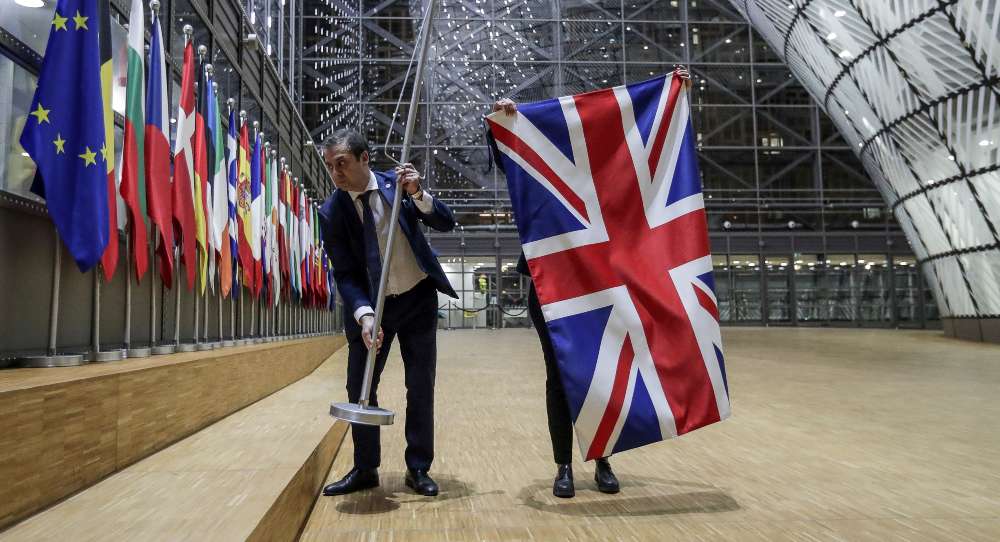
Source: Getty
For the European Union to become a global player without Britain, there must be a major shift of alliances and direction inside the bloc.
The blame game is over. Britain’s exit from the European Union leaves the bloc without any excuses to decide what it wants to become.
For years, differences dogged the relationship between Brussels and London over a plethora of issues, from migration and asylum policy to defense and security issues. But those issues are also sources of continuing bitter disputes inside the EU, regardless of Britain’s status.
And the role of Berlin and Paris, which have been at odds since Emmanuel Macron became French president back in May 2017, hasn’t helped matters. This duo has provided little leadership inside a bloc struggling with its internal problems—whether it’s about agreeing a common policy toward China, dealing with an international liberal order under siege from within and from without, and coming to terms with a fractured transatlantic relationship.
Above all, the EU has completely underperformed as a diplomatic player and as a bloc committed to defending human rights.
Against this inauspicious background, Macron, who’s not the most gifted politician in reaching out to other EU countries to get support for one of his major reform projects—more political and economic EU integration—may be slowly realizing that the EU without Britain inevitably means reshaping alliances. His visit to Warsaw on February 3 showed a leader intent on rebuilding a relationship that has slipped into suspicion and mistrust over the past few years.Macron spoke about Europe’s willingness to defend its members. Calling for more military integration inside the EU, Macron, flanked by Polish President Andrzej Duda, said: “I’ll be happy the day Polish people can tell each other: ‘The day I’m attacked, I know Europe can protect us.’ Because that day, the sense of European belonging will be indestructible.”
Macron also tried to play down his recent bid to reset relations with Russia, an attempt that did not go down well with the Poles. “France is neither pro-Russian nor anti-Russian, it is pro-European,” Macron said. Duda acknowledged that: “Today, France is definitely a power on a European scale, and France’s role after Brexit will without doubt grow.”
Will it? Not on its own.
Without Paris working much more closely with Warsaw and Berlin, its influence will not grow, and nor will the EU’s. If these three countries cannot work together over a range of issues—Russia and China, defense and security, and, closer to home, internal reforms on migration and the future role of subsidies for European agriculture (which Paris and Warsaw want continued)—Brexit will have further weakened the EU.
Poland too has to change tack. Apart from the way the governing Law and Justice (PiS) party is intent on undermining the rule of law and an independent judiciary (adding to the incongruity of the party’s name), Poland needs a foreign policy. Being anti-Russian and eurosceptic is not enough.
As it is, under PiS, Poland has been too weak, if not indifferent, toward championing further enlargement—something which Macron opposes, in contrast to German Chancellor Angela Merkel and her erstwhile counterparts in London. Poland too has been indifferent to internalizing how the differences in the transatlantic relationship have repercussions for Europe’s own ability to defend itself. Brexit should be a catalyst for Poland to make a difference inside the EU.
That’s why a new Franco-German-Polish triangle is long overdue. But even that won’t be enough to make the difference that is needed for the EU to capitalize on Brexit.
The EU as a bloc (and its member states) faces two major choices.
First, it either continues down the path of individual governments defending their national interests, or it understands the need to promote human rights and democracy—and backs it up with concrete and forceful measures. This surely is the time to give new impetus to the Community of Democracies, which was established in Warsaw back in 2000 to advance and protect democratic values and institutions around the world, but has been slow to make a real impact.
In practice, this is about other non-European democracies working much more closely together with the EU, not just to preserve the liberal order but to reinvigorate it by acting against human rights violations and defending human rights activists struggling against repression in authoritarian or semi-authoritarian countries.
Second, the EU either continues to enjoy and defend the rule of law, individual liberties, and way of life that has emerged since 1945, or it cedes to nondemocratic influences. That shouldn’t be a hard choice. But somehow, with or without Brexit, the will of the EU and the member states to defend that order is declining.
Going down that path can only be welcomed by authoritarian and aspiring authoritarian regimes, which have long feared the influence of EU values. Their fear may be diminishing as the EU weakens its commitment to its roots.

Nonresident Senior Fellow, Carnegie Europe
Judy Dempsey is a nonresident senior fellow at Carnegie Europe
Recent Work
Judy Dempsey
Judy Dempsey
Carnegie does not take institutional positions on public policy issues; the views represented herein are those of the author(s) and do not necessarily reflect the views of Carnegie, its staff, or its trustees.
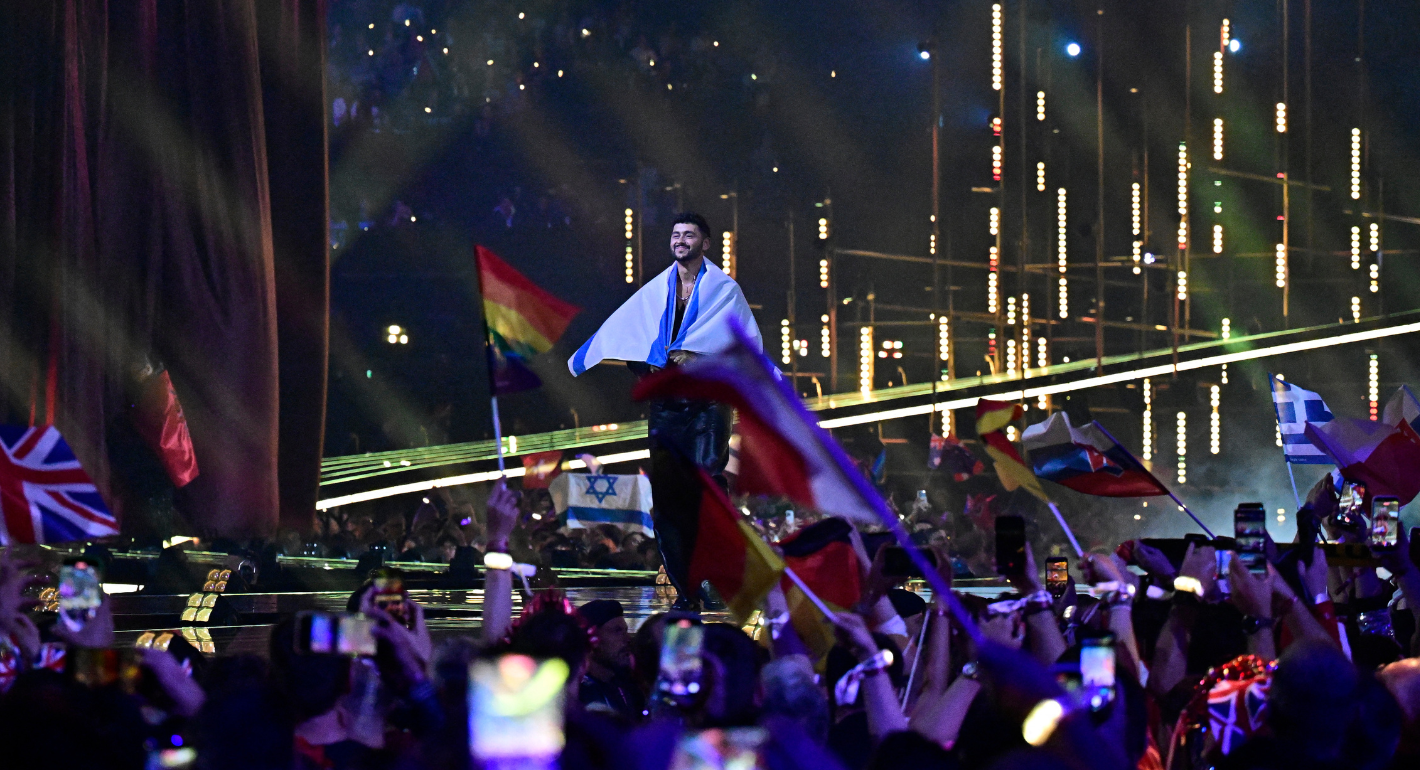
Five countries staged the biggest political boycott in Eurovision history over Israel’s participation. With the FIFA World Cup and other sporting or cultural touchstones on the horizon, are boycotts effective?

Rym Momtaz, ed.
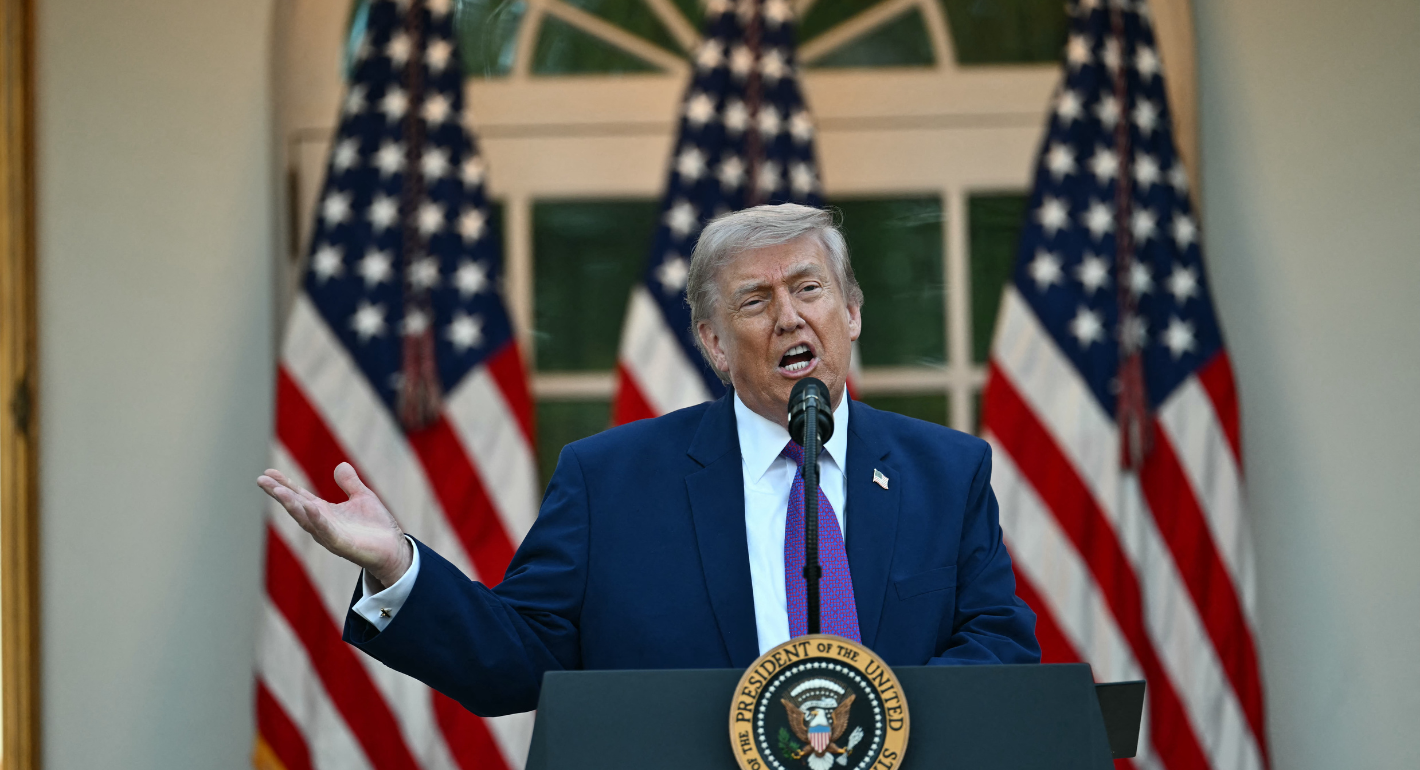
The full list of humiliations Europe has endured since Donald Trump returned to the White House makes for grim reading. But Washington’s adversarial approach to its allies undermines its own power base.
Rym Momtaz
The closure of the Strait of Hormuz has triggered a global energy crisis, but Europe is stuck in reaction mode. Without more strategic foresight, the EU will remain dependent on fossil fuels and will never be truly secure.


Milo McBride, Pauline Gerard
After spending much of 2025 trying to placate Donald Trump, some European leaders are starting to change posture. But is even a hostile Washington still so important to Europe that the U.S. president’s outbursts are worth putting up with?
Rym Momtaz, ed.
European leaders have now not only lost faith in Donald Trump’s U.S. presidency, but also in America’s hegemony as a whole. But short-term challenges make an immediate divorce unwise.
Rym Momtaz