

Commentary
The European Commissioner for Trade is headed to China. But after President Xi’s bridge-building visit to Washington, can a more isolated EU overcome Beijing’s stranglehold on critical raw materials? Who will blink first?
Rym Momtaz, ed.
{
  "authors": [
    "Saime Özçürümez"
  ],
  "type": "commentary",
  "blog": "Strategic Europe",
  "centerAffiliationAll": "",
  "centers": [
    "Carnegie Endowment for International Peace",
    "Carnegie Europe"
  ],
  "collections": [
    "EU Integration and Enlargement",
    "Coronavirus"
  ],
  "englishNewsletterAll": "",
  "nonEnglishNewsletterAll": "",
  "primaryCenter": "Carnegie Europe",
  "programAffiliation": "",
  "programs": [],
  "projects": [],
  "regions": [
    "Europe",
    "Western Europe"
  ],
  "topics": [
    "EU",
    "Migration",
    "Political Reform"
  ]
}
Source: Getty
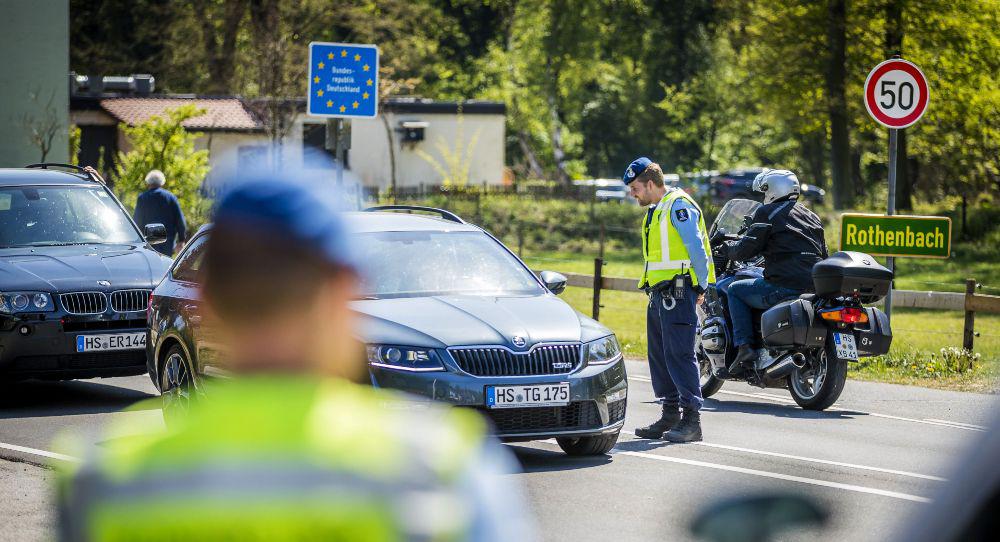
The silver lining to the uncertainty and chaos of the coronavirus pandemic is that EU member states are more aware than ever of the need for cooperation.
This blog is part of EU-LISTCO, an innovative and timely project that investigates the challenges facing Europe’s foreign policy. A consortium of fourteen leading research institutions and universities aims to identify risks connected to areas of limited statehood and contested orders—and the EU’s ability to respond.
***
In April 2020, UN Secretary General António Guterres launched a Call for Action on Human Rights in response to the coronavirus pandemic. “We are all in this together,” he said. “The threat is the virus, not people.”
In Europe, Ylva Johansson, the European commissioner for home affairs, echoed the same sentiments. “Border controls and travel restrictions . . . are not really about borders, but about the virus,” she explained.
Across the globe, physical distancing, self-isolation, and strict hygiene are promoted as essential practices to limit human-to-human contact, prevent further spread of the virus, and save lives. Yet there is a clear danger for vulnerable people in diverse communities. While meaningful social interaction promotes social cohesion, a lack of social contact fuels stigmatization and discrimination.
Building cohesion in this pandemic requires urgent innovative thinking everywhere—particularly in Europe, where foundational commitments to the EU’s motto of “united in diversity” have been facing challenges at the ballot box and on the streets.
Indeed, the current strategy to fight the virus has been to ensure human immobility and isolation. But the emerging challenge from a perspective of human rights and international mobility is to make sure that this approach does not become a permanent strategy.
Back in January 2020, the World Health Organization (WHO) regional director for Europe, Hans Kluge, stated that “the global nature of travel exempts no country from infectious disease spread . . . no country can afford postponing the establishment of all necessary measures to protect their people.” Many states seem to have taken this statement to mean “each country for itself.” EU member states proceeded to repatriate their citizens to the supposed safety of theirnational health systems before planes were grounded.
Yet after months of border closures, epidemiologists now warn of new waves of infection with no hope of eradicating the coronavirus in any state anytime soon. As more medical evidence surfaces, the clear warning is that everyone needs to act in solidarity against the virus. Not one scholarly work cites border closures as an effective antidote to the spread of the virus. In fact, WHO research suggests that border closures not only are ineffective against the virus but also risk jeopardizing the functioning and cross-border collaboration of national health systems.
Why, then, did the EU and its member states immediately respond to the pandemic by shutting borders, restricting travel, and repatriating their citizens? And for whom did these policies of closure and repatriation obstruct the spread of the virus? Certainly not for the forcibly displaced and the countries where they are stranded in their millions.
Indeed, border closures suspended the lives of refugees and migrants in existential uncertainty. They halted asylum applications and resettlement prospects. They hampered social cohesion initiatives. They woefully exacerbated existing vulnerabilities of poverty, overcrowded housing, lack of access to education, gender-based violence, and, of course, poor health.
Refugee-hosting nations outside Europe were as susceptible to the virus as those at Europe’s heart. Yet there were no efforts by those countries to violate the principle of no return—a basic tenet of international law that forbids a state from returning asylum seekers to a country where they would be in danger of persecution.
The intensely national character of the responses to the pandemic also raises questions about the prospects for European integration.
On Europe Day 2020, Europeans celebrated the “genius of European integration” to “stop fighting over where the borders are and instead focus on making them irrelevant,” in the words of the EU’s foreign policy chief, Josep Borrell.
Twenty-five years after the Schengen Agreement was signed to abolish internal border checks in the EU, coordination efforts to regulate human mobility are still seriously challenged. This begs the question of why interstate coordination is so hard to achieve in the face of an unprecedented cross-border public threat.
The decisions by EU member states to resort to national strategies went against the union’s institutional design for crisis preparedness, which highlights the importance of cooperation and coordination among the member states and internationally. These structures have been in place to prevent and control communicable diseases for more than a decade and coped with the 2009 swine flu pandemic and the 2018–2020 Kivu Ebola epidemic.
Before implementing measures in response to the coronavirus pandemic, the international community had slowly been warming to the idea of worldwide cooperation on migration governance. Debates on the Global Compact for Migration, a globally negotiated agreement under UN auspices, were picking up pace. Talks focused on protecting the safety, dignity, and fundamental freedoms of all migrants and on supporting countries that host large numbers of migrants and refugees.
To rekindle its resolve to safeguard free movement, the EU needs to focus on restoring internal mobility as quickly as possible and advancing the stalled debates on the global compact.
The silver lining to the uncertainty and chaos of the pandemic is that EU member states are more aware than ever of the need for cooperation. All they need to do is put the existing EU framework for cooperation into sincere practice—even if this means foregoing national preferences—for the common good of the EU and the wider world.
Together, European nations may still avoid a bleak future for migrants, refugees, and their host communities and prevent the erosion of their dignity.
Saime Özçürümez is an associate professor in the Department of Political Science and Public Administration and associate dean in the Faculty of Administrative, Economic, and Social Sciences at Bilkent University in Ankara, Turkey.

Saime Özçürümez
Özçürümez is an associate professor at the Bilkent University in Ankara.
Carnegie does not take institutional positions on public policy issues; the views represented herein are those of the author(s) and do not necessarily reflect the views of Carnegie, its staff, or its trustees.

The European Commissioner for Trade is headed to China. But after President Xi’s bridge-building visit to Washington, can a more isolated EU overcome Beijing’s stranglehold on critical raw materials? Who will blink first?

Rym Momtaz, ed.

The domestic impacts of how long it is taking to end the war in Ukraine have pushed the French electorate to the political extremes and compromised the country’s diplomatic capacity.
Rym Momtaz

Before the next wave of EU enlargement takes place, the union needs to grapple with thorny questions of how power is distributed among its members.


Emil Sondaj Hansen, Ditte Brasso Sørensen

Are Germany’s economic, industrial, and political struggles becoming a liability for the EU’s ability to rise to the geopolitical moment?
Rym Momtaz, ed.

European Commission President Ursula von der Leyen is about to give her annual address on the state of the EU. Here’s what she won’t—but should—say.
Rym Momtaz