

Commentary
A summer of escalation in the Black Sea has hurt Ukraine economically and is exacerbating world food security. A truce is needed—as is a broader reframing of Europe’s Ukraine strategy.
Thomas de Waal
{
  "authors": [
    "Maria Domańska"
  ],
  "type": "commentary",
  "blog": "Strategic Europe",
  "centerAffiliationAll": "",
  "centers": [
    "Carnegie Endowment for International Peace",
    "Carnegie Europe"
  ],
  "collections": [],
  "englishNewsletterAll": "",
  "nonEnglishNewsletterAll": "",
  "primaryCenter": "Carnegie Endowment for International Peace",
  "programAffiliation": "",
  "programs": [],
  "projects": [],
  "regions": [
    "Russia",
    "Eastern Europe"
  ],
  "topics": [
    "Political Reform"
  ]
}
Source: Getty
The Russian regime is weaponizing history for political goals. Yet it does not have the monopoly on interpreting the past: grassroots’ demands for alternative memory offer hope for the future.
The Kremlin’s saber-rattling over Ukraine has stolen the spotlight and the West’s attention from what is happening in Russia.
While NATO, the United States, and the EU warn Russian President Vladimir Putin that they will impose stringent sanctions if he invades Ukraine again, they already missed the opportunity to take a tougher stance on the Kremlin’s consistent crackdown on human rights and civil society.
Just recall how 2021 was marked by unprecedented political repression. It started with the imprisonment of Alexei Navalny, Russia’s most prominent oppositionist. In December, Russian courts ordered the closure of the International Memorial Society (Memorial International) and the Memorial Human Rights Center.
These verdicts represent a clear break with the legacy of former Soviet leader Mikhail Gorbachev’s glasnost and perestroika. They invoke totalitarian traits. They reflect how the Kremlin is seeking a monopoly on shaping the historical discourse, including that of Ukraine.
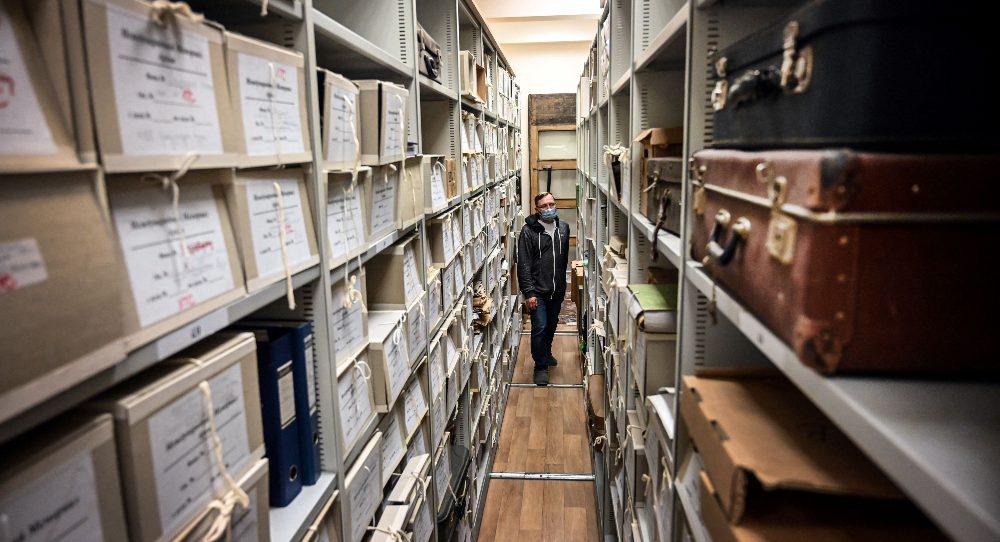
Memorial Society, founded in late 1980, was renowned for documenting the Stalinist terror. Officially, it has been liquidated for repeated violations of Russia’s law on “foreign agents.” However, the prosecutor explicitly pointed to its real “crimes”: “distorting of historical memory” and “creating a false image of the USSR as a terrorist state.”
The more the Kremlin’s legitimacy wanes publicly, the more Russia’s leadership justifies its authoritarian grip on power through appeals to the country’s imperial past and the eternal fight against enemies. The government views “righteous” interpretations of history as an essential element of national security in an ideological warfare with the West.
Russia’s threats against Ukraine play into that script. As Putin wrote in July 2021, “Russians and Ukrainians were one people—a single whole.”
Top Russian state officials go as far as to whitewash the Soviet repressive apparatus, including those responsible for the mass terror. To this day, many victims remain anonymous and personal data of executioners of the NKVD—the precursor to the KGB, Russia’s Committee of State Security—are classified or erased from archives. This approach seems to presage the same unlimited guarantees of impunity to those who now persecute the Russian opposition.
Despite this ideological and selective view of the past, there is a real yearning for alternative memory. It is a growing albeit still a marginal trend that can be observed in recent years among certain segments of the public, including the youth.
Alternative memory focuses on the fate of individuals or local communities rather than the “glorious” empire and “big” politics. The tragic chapters of the Stalinist terror get uncovered through the prism of individual dramas. Sometimes it leads to the unearthing of painful family secrets. In many families, there were both victims and executioners.
Memorial International is one of the institutional pillars of this trend.
Its decades-long research into mass terror allowed for the names of many victims and executioners to be revealed. Moreover, it has invoked the universal experience of totalitarian oppression shared by Soviet and non-Soviet citizens, regardless of their ethnicity, religion, or nationality.
This process of restoring suppressed memory has been tremendously facilitated by widespread access to the Internet. It is an effective platform for networking and historical education projects.
Indeed, in 2016, there was a symbolic act of reconciliation that widely resonated across the Russian Internet. The granddaughter of one of the Great Terror executioners reached out to the great-grandson of one of the victims and thanked him for publishing the “difficult truth” about her grandfather’s involvement in repression.
Despite the negative feedback he got from many “patriots,” her letter brings a glimmer of hope for the future confrontation with the totalitarian past in Russia itself and in its relations with neighbors.
Along with the Baltic states and Czechia, Poland has become a major target of the Kremlin’s historical propaganda. It is portrayed as an aggressive and inherently Russophobic state that falsifies history.
Moscow draws on long-debunked Soviet lies regarding the Molotov-Ribbentrop Pact, the Katyń massacre, and the post-war occupation—or, in the eyes of many Russians, liberation—of Polish territory. It leads to bilateral memory wars that add to a fundamental conflict of the two states’ strategic interests.
Yet even though the Kremlin weaponizes history to justify its great-power ambitions, grassroots cooperation between Polish and Russian historians, which began in Soviet times, has proved fruitful. So have several intergovernmental initiatives.
In 1989, Memorial Society launched a Polish program that invaluably contributed to investigating Soviet crimes against Poles.
Joint research of archives and collective publications devoted to the victims of Soviet totalitarianism are just some of the many examples of constructive cooperation in this field. Needless to say, the liquidation of Memorial caused indignation among Polish politicians and the public.
The presidency of Dmitri Medvedev in 2008–12, marked by relative pluralism in domestic historical discourse, brought a détente in bilateral relations. Historians discussed contentious issues within the Polish-Russian Group on Difficult Matters.
Since 2010, the Centre for Polish-Russian Dialogue and Understanding based in Warsaw has successfully promoted academic research and dialogue between societies, including youth, about the two nations’ history and culture. However, due to Russia’s policy, the space for such initiatives is shrinking.
It would be naive to expect Russians to forget about their imperial identity. Nor should they. Pride in Russia’s historical greatness remains a prevailing attitude in society.
What is at issue is the antagonistic nature of the official discourse, which is being challenged. Shutting down Memorial will not shut down the grassroots’ quest for historical truth.
Maria Domańska is a senior fellow at the Centre for Eastern Studies (OSW) in Warsaw, Poland. She has a PhD in political science from the University of Warsaw.
Maria Domańska
Maria Domańska is a senior fellow at the Centre for Eastern Studies (OSW) in Warsaw, Poland. She has a PhD in political science from the University of Warsaw.
Carnegie does not take institutional positions on public policy issues; the views represented herein are those of the author(s) and do not necessarily reflect the views of Carnegie, its staff, or its trustees.

A summer of escalation in the Black Sea has hurt Ukraine economically and is exacerbating world food security. A truce is needed—as is a broader reframing of Europe’s Ukraine strategy.

Thomas de Waal

European Commission President Ursula von der Leyen is about to give her annual address on the state of the EU. Here’s what she won’t—but should—say.

Rym Momtaz

The EU’s responses to two recent incidents expose the gulf between European perceptions and capabilities. Unless the union can bridge that gap, it will never become a real geostrategic power.
Rym Momtaz

In supporting Europe’s far-right, MAGA and Russia both want the same thing: a weaker EU. Europe must defend itself without abandoning the openness these forces exploit.

Armida van Rij

As we close out another season of Strategic Europe, it is worth taking stock of the deep shifts underway.
Rym Momtaz