

Commentary
Rosa Balfour
{
  "authors": [
    "Rosa Balfour"
  ],
  "type": "commentary",
  "blog": "Strategic Europe",
  "centerAffiliationAll": "",
  "centers": [
    "Carnegie Endowment for International Peace",
    "Carnegie Europe"
  ],
  "collections": [
    "Europe’s Eastern Neighborhood",
    "EU Integration and Enlargement"
  ],
  "englishNewsletterAll": "",
  "nonEnglishNewsletterAll": "",
  "primaryCenter": "Carnegie Europe",
  "programAffiliation": "",
  "programs": [],
  "projects": [],
  "regions": [
    "Russia",
    "Europe",
    "Eastern Europe",
    "Western Europe"
  ],
  "topics": [
    "Foreign Policy",
    "Security",
    "Economy",
    "EU",
    "Climate Change"
  ]
}
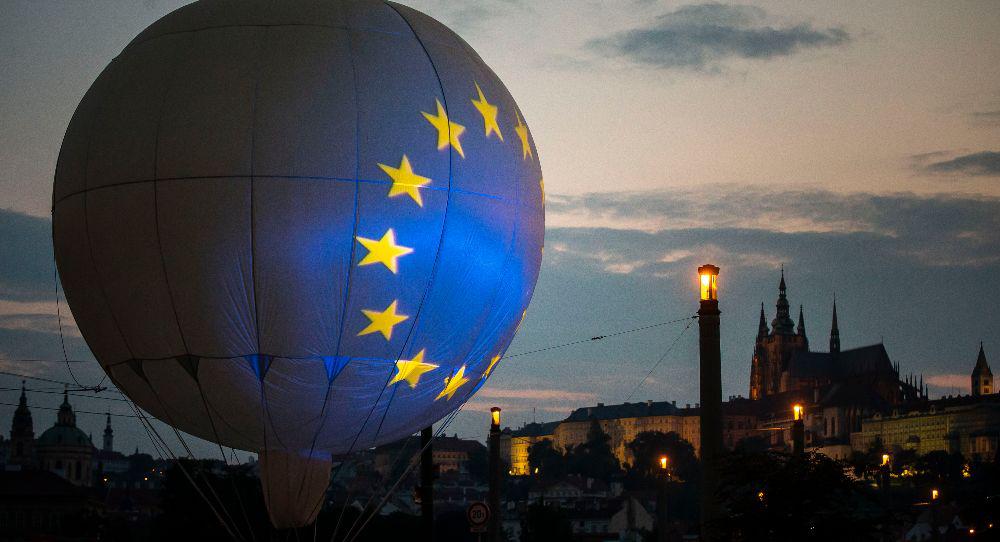
Source: Getty
The coming winter promises to be dark and difficult. But doomsters may be proven wrong in anticipating that the war effort in Ukraine’s support will divide the EU.
Across Europe, politicians and policymakers are bracing for a winter of discontent caused by spiraling energy prices and high inflation due to the double whammy of the costs of the pandemic and Russia’s invasion of Ukraine.
If most political leaders had hitherto chosen a low-key narrative to justify the war effort, Europeans returning from their holidays are hearing another message: that the war could break the recently found unity in the EU and in NATO.
We have been here before: as the past years of crisis have repeatedly shown, the brink of disaster has sowed paralyzing nationalist and Eurosceptic populism, with the EU emerging progressively weaker and divided. Pro-Russian populists, somewhat quietened by the scale of the atrocities committed in Ukraine, are still a political force in Europe.
Would-be autocrat Viktor Orbán consolidated his hold on Hungary in the April election; Marine Le Pen’s National Assembly tripled its numbers in the French Assembly in the June parliamentary election; Italy’s forthcoming election of September 25 is likely to result in a right-wing coalition government led by a far-right nationalist party Brothers of Italy, heir to the post-fascist party, and two pro-Russian parties. Coupled with likely cost of living protests, governments across Europe will find it hard to justify their continued financial, military, and humanitarian support to Ukraine.
But there are reasons for cautious optimism that the EU, NATO, and its members will stick to their resolve. It has belatedly sunk in—and changed the mindset of European politicians in government—that Russian President Vladimir Putin’s strategy is to divide Europe. This is now also a war tactic.
And with this, the gap between European Kremlin hawks and doves has shrunk out of necessity, even if it still exists in public opinion. February 24, 2022, did lead to a cognitive change in understanding Russia.
Aside from strategic perceptions, there are some very concrete reasons why EU unity can endure.
Firstly, as the Ukraine Support Tracker of the Kiel Institute for the World Economy shows, the military and financial support still relies heavily on the United States in terms of leadership and material support. This will not end in the foreseeable future.
Within the EU, the countries most invested in supporting Ukraine—Estonia, Poland, Latvia, Lithuania, in this order—are not going to buckle in a cost of living crisis. For them, this war is existential. So there is a disconnect between the countries driving the EU’s support and those that fear social unrest.
This week, EU diplomats staved off yet another Hungarian threat to the continuation of sanctions. This is a familiar pattern since 2014, when Russia first invaded Ukraine, but Brussels has never reversed its sanctions policy. Insofar as supporting Ukraine is concerned, Europe as a whole looks set to remain committed.
Secondly, the type of whole-of-government response that the EU has adopted entails locking in interdependence between policies and among EU members. Policymakers are, as I write, engaged in highly complicated negotiations over the complex and so far insufficiently integrated energy market. The solutions they will find are likely to strengthen mutual solidarity in the energy field, potentially laying the foundations of a belated energy union of sorts. Weaning Europe off Russian gas and accelerating the transition towards green energy cannot be reversed at the obstruction of one member state. These are structural and material shifts.
Thirdly, these policy choices are whole-of-government because of their spillover into other policy areas. The war has prompted a series of interconnected responses—energy and climate, migration and temporary protection of refugees, security and defense, food security and agriculture. In and of themselves, they may not be “game changers,” but they each contribute to locking in cooperation, making it harder to press the rewind button. This follows similar interdependencies that the EU’s response to the coronavirus pandemic underscored.
Without tracking the progress of each of these areas of EU activity, there is one common denominator that could sustain cooperation by necessity: footing the bill. The costs of the pandemic, the war effort, and the reconstruction of Ukraine will be exorbitant, and public debt is suddenly no longer a taboo. If the EU institutions and member states can use the opportunity to address the disjuncture between its monetary union and fiscal policies, it is even possible to imagine a strengthened EU emerging from the horrors of this war.
It goes without saying that there are plenty of counter-arguments, risks, and some wishful thinking. Europe is still dependent on the United States, despite its significant decisions on security and defense. The EU has made the historical commitment to accept, eventually, Ukraine and Moldova, but its track record in the Balkans is far from a continent-wide policy of transformation such as that developed after the Second World War.
Alongside the challenge of becoming a regional power is the need to reach out to the rest of the world, which is on the chess board of geopolitical actors and no longer that attracted to the West. And, perhaps most importantly, it is not yet a given that the EU will manage to use the war effort as a vehicle to promote a green transition.
One final thought: it is possible that the shape of the union that will emerge from this will not be to our liking. It may be more protectionist than liberals will like, more interventionist than democrats will like, it may lose some members pushing back on greater integration, it may be more inward-looking than internationalists would like. But as long as the diversity of opinion between left and right, nationalists and internationalists, federalists and intergovernmentalists lasts, it will still be a good place.

Director, Carnegie Europe
Rosa Balfour is the director of Carnegie Europe. Her fields of expertise include European politics, institutions, and foreign and security policy.
Recent Work
Rosa Balfour

Rosa Balfour, Stefan Lehne, Elena Ventura
Carnegie does not take institutional positions on public policy issues; the views represented herein are those of the author(s) and do not necessarily reflect the views of Carnegie, its staff, or its trustees.
French President Emmanuel Macron has unveiled his country’s new nuclear doctrine. Are the changes he has made enough to reassure France’s European partners in the current geopolitical context?

Rym Momtaz, ed.
European reactions to the war in Iran have lost sight of wider political dynamics. The EU must position itself for the next phase of the crisis without giving up on its principles.

Richard Youngs
Europe isn’t as weak in the new geopolitics of power as many would believe. But to leverage its assets and claim a sphere of influence, Brussels must stop undercutting itself.

Dimitar Bechev
Europe’s reaction to the war in Iran has been disunited and meek, a far cry from its previously leading role in diplomacy with Tehran. To avoid being condemned to the sidelines while escalation continues, Brussels needs to stand up for international law.

Pierre Vimont
France and Germany’s failure to agree on the Future Combat Air System (FCAS) raises questions about European defense. Amid industrial rivalries and competing strategic cultures, what does the future of European military industrial projects look like?
Rym Momtaz, ed.