

Research
- +5
Alper Coşkun, Fatih Ceylan, Tacan İldem, …
{
  "authors": [
    "Sinan Ülgen"
  ],
  "type": "commentary",
  "blog": "Strategic Europe",
  "centerAffiliationAll": "",
  "centers": [
    "Carnegie Endowment for International Peace",
    "Carnegie Europe"
  ],
  "collections": [
    "Turkey’s Transformation"
  ],
  "englishNewsletterAll": "",
  "nonEnglishNewsletterAll": "",
  "primaryCenter": "Carnegie Europe",
  "programAffiliation": "",
  "programs": [],
  "projects": [],
  "regions": [
    "Türkiye",
    "Middle East",
    "Europe"
  ],
  "topics": [
    "Foreign Policy",
    "Economy",
    "Democracy",
    "Political Reform",
    "EU",
    "Climate Change"
  ]
}
Source: Getty
The Turkish polity must examine and overhaul the rules and institutions that have failed to effectively mitigate the human cost of this tragedy. The next wave of earthquakes could hit Istanbul with even more disastrous consequences.
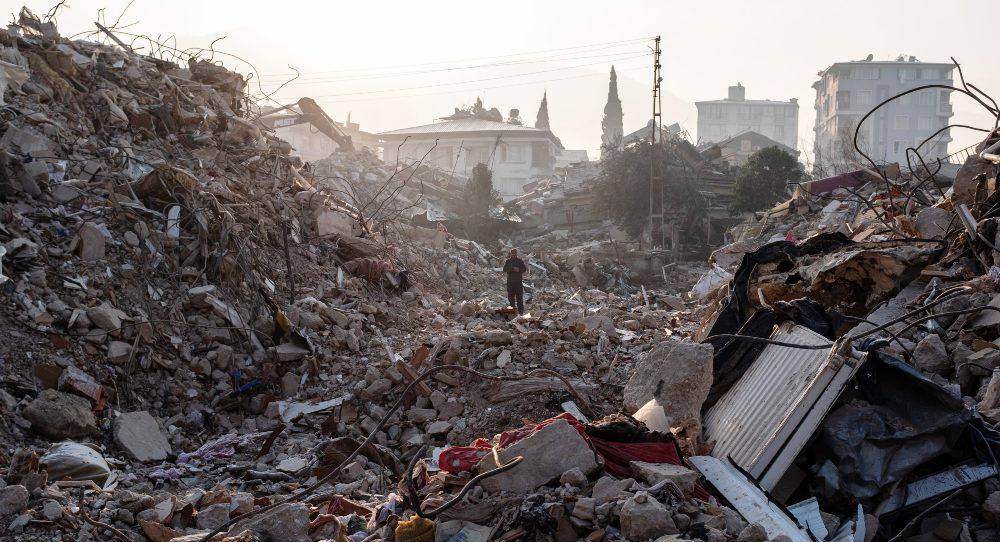
It has now been a week since the earthquake disaster struck the southeast of Türkiye and northern Syria. The human toll of the tragedy is very heavy. At the time of writing, the number of casualties has surpassed 35,000. In addition, more than 40,000 buildings have either collapsed or become uninhabitable, leaving at the very least hundreds of thousands of people without shelter. The calamity will rank as the largest ever for this century.
Although in deep mourning, Türkiye needs to face some uncomfortable truths. The earthquake was the largest ever recorded in the country, and yet its consequences did not need to be this dire. There are many other countries like Japan or Taiwan, living on top of fault lines and therefore disaster-prone, that have been able to mitigate these risks through better governance.
The first conclusion therefore is that this tragic outcome is policy-induced; it is the end-product of an inadequate governance framework. Earthquakes will always happen, but governments can take measures to mitigate the destructive power of natural disasters. This lesson is all the more important considering Istanbul, that imperial city, the commercial and cultural capital of modern-day Türkiye, is likely to experience a major earthquake in the years to come.
The opposition has criticized the Justice and Development Party (AK Party) government for having been ineffective in responding to the disaster. It is true that the response could have been more effective. For instance, the disaster relief capacity of Türkiye’s large and well-endowed military could have been used in a timelier manner. But ultimately, given the size of the calamity and the extent of the affected geography and population, the response was in all likelihood going to be deemed inadequate either way. Domestic capacities do indeed pale in comparison with the size of the challenge.
In reality, deliberations need to be centered on the ex-ante instead of the ex-post. In other words, the Turkish polity needs to examine and overhaul the rules and institutions that have not been effective in mitigating the human cost of this tragedy. I see two major areas of discussion.
The first relates to the lack of enforcement. In other words, the lack of resilience, so tragically demonstrated, is essentially the consequence of ineffective enforcement. In fact, Türkiye has strong regulations for the construction industry. They were imposed after the 1999 Marmara earthquake. In return, it suffers from poor enforcement. One reason for this state of affairs is the prevailing network of corruption that links contractors to local regulatory institutions, including municipal governments. Unscrupulous contractors seek to maximize their gains by capturing regulators who then turn a blind eye to sub-standard construction that do not comply with the stringent construction code.
The regular adoption in the Turkish Parliament of amnesty laws for unlicensed and mostly unsecure buildings is another major liability. There have been more than twenty such bills since 1946 when Türkiye transitioned to parliamentary democracy. In the last two decades, under AK Party rule, seven such bills were adopted.
This streak of populism creates perverse incentives. It gives certainty to contractors that their sub-standard buildings will be licensed come election time, increasing the stock of unsafe buildings over time. But the Turkish electorate is also to be blamed for supporting these legal motions that essentially trade safety for short-term economic advantage. Had the electorate penalized similar initiatives in the past, governments would not be eager to pass amnesty laws.
The second issue has to do with top-level governance. The constitutional change of 2017 has introduced a presidential system with few checks and balances and a hyper concentration of power at the top. The system was advertised as an institutional design allowing for faster decisionmaking. Be that as it may, the cost of weakening checks and balances, for instance by disempowering the legislative to the advantage of the executive, has nurtured a climate of non-accountability.
The government has, for example, been—justifiably—criticized for a lack of transparency over the spending of the earthquake relief fund that was launched after the 1999 Marmara earthquake. The proceeds were to be used exclusively for increasing the resilience of earthquake-prone provinces. The excessive centralization of power has also visibly been an impediment to disaster relief efforts. The leadership of the Disaster and Emergency Management Authority (AFAD), the disaster relief agency, was unable to fully leverage the capabilities of Türkiye’s civil society as they were unable to adopt a vastly more decentralized model of decisionmaking that would have rapidly empowered local stakeholders and aid workers.
In conclusion, Türkiye needs to have a critical domestic debate on governance reform and disaster management. This is all the more important considering the next wave could hit Istanbul with possibly even more tragic consequences. This is a deliberation for the Turkish electorate exclusively.
The EU, for its part, could and should help Türkiye address its financial needs related to disaster recovery, which are growing by the day. In the weeks to come, the union could espouse an anchoring role in channeling international aid, thereby acting as a force multiplier.

Senior Fellow, Carnegie Europe
Sinan Ülgen is a senior fellow at Carnegie Europe in Brussels, where his research focuses on Turkish foreign policy, transatlantic relations, international trade, economic security, and digital policy.
Recent Work

Alper Coşkun, Fatih Ceylan, Tacan İldem, …
Carnegie does not take institutional positions on public policy issues; the views represented herein are those of the author(s) and do not necessarily reflect the views of Carnegie, its staff, or its trustees.
Excitement is in the air following Aleksandar Vučić’s defeat in Serbia. To build a truly democratic state, the movement that unseated the former president must learn from the mistakes of the past.

Ivan Vejvoda

The EU can impose sanctions but struggles to enforce them without the United States. With Washington increasingly disinterested in backing European interests, the bloc must now fend for itself.


Nicu Popescu, Tiago Antunes

Russia is testing the waters of NATO’s mutual defense clause. What do strikes in Romanian territorial waters mean for the alliance’s posture toward Moscow?

Dimitar Bechev

With its public finances in shambles, the far right polling at 35 percent ahead of the 2027 presidential election, and a growing protest movement, is France’s crisis a threat to the EU’s geopolitical awakening?

Rym Momtaz, ed.

Ahead of a tough winter for Ukraine, Donald Trump’s swing back toward Russia bodes ill. But instead of panicking, Kyiv’s European allies are focusing on action.
Rym Momtaz