

Commentary
Judy Dempsey
{
  "authors": [
    "Judy Dempsey"
  ],
  "type": "commentary",
  "blog": "Strategic Europe",
  "centerAffiliationAll": "",
  "centers": [
    "Carnegie Endowment for International Peace",
    "Carnegie Europe"
  ],
  "collections": [
    "Europe’s Eastern Neighborhood"
  ],
  "englishNewsletterAll": "",
  "nonEnglishNewsletterAll": "",
  "primaryCenter": "Carnegie Europe",
  "programAffiliation": "",
  "programs": [],
  "projects": [],
  "regions": [
    "Europe",
    "North America",
    "Eastern Europe",
    "Ukraine",
    "Western Europe"
  ],
  "topics": [
    "Foreign Policy",
    "Security",
    "Democracy",
    "EU"
  ]
}
Source: Getty
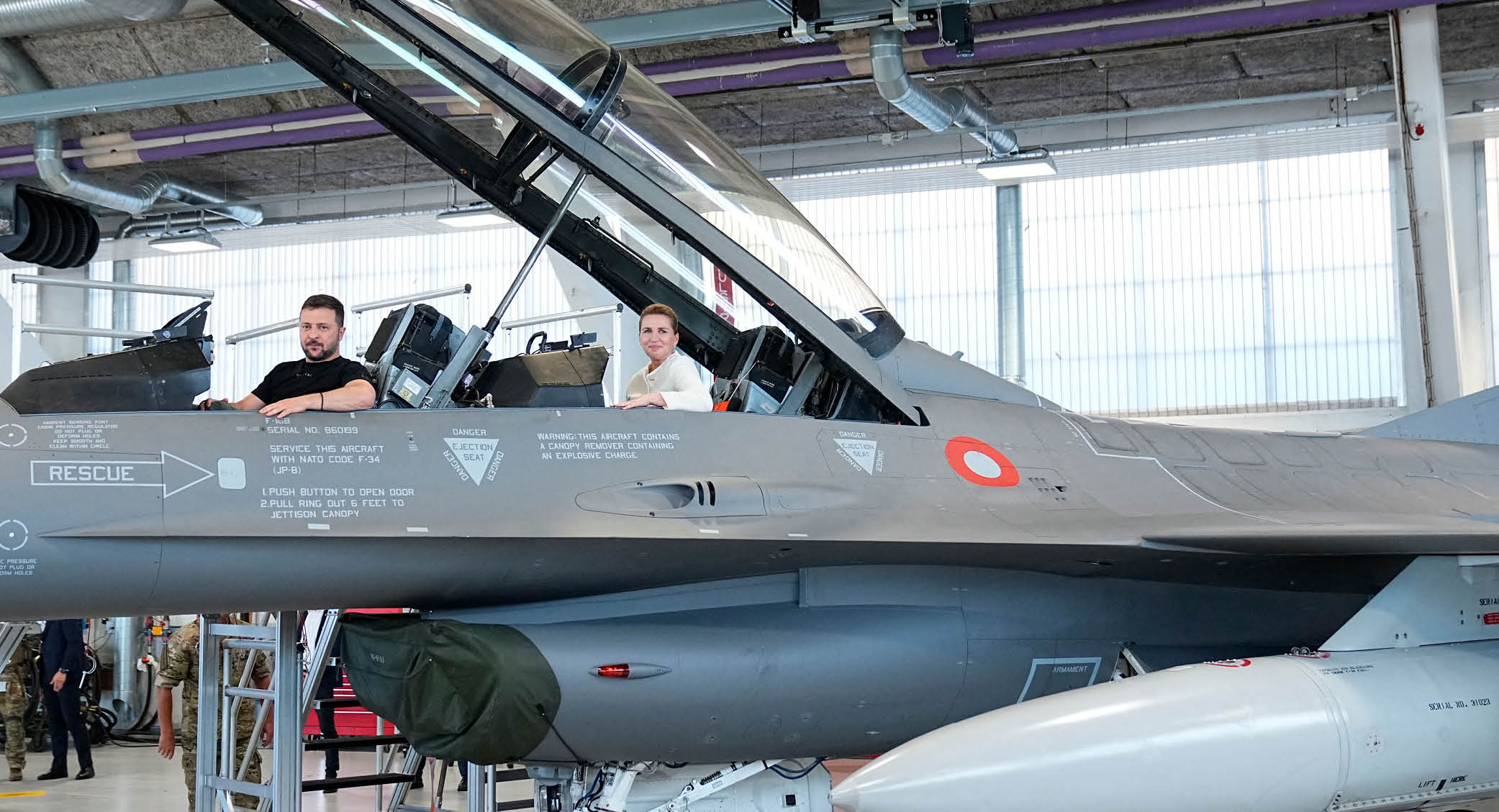
Europe needs to rapidly increase its military support for Ukraine to ensure victory for Kyiv. A failure to do so would threaten the EU’s security and credibility—and embolden Moscow.
The Europeans cannot afford to let the war in Ukraine drag on.
The longer it continues, the more casualties and destruction will increase. Entire villages, towns, and cities have already been reduced to smithereens. Millions of Ukrainians have been displaced or have left the country. Large swathes of the eastern regions have been turned into mine fields.
As the EU’s institutions get back to work after the summer break, its leaders and European governments cannot afford to accept the war in Ukraine as the new normal. Nor can the West—and that includes NATO—consider it is time for negotiations between Kyiv and Moscow even though a certain war fatigue may be setting in.
Negotiations can only begin if Ukraine’s President Volodymyr Zelensky is in a strong enough position to set the terms. Those terms are not just about restoring Ukraine’s territorial integrity. They are about ensuring that Russia does not attack or threaten Kyiv again. An end to the war is about ending Russia’s imperial ambitions in this part of Europe.
Without those goals in mind, the European continent will be unstable, divided, and weak. It will be unable to act strategically. And it will be unable to deal with the immense challenges exacerbated by Russia’s two invasions of Ukraine in 2014 and 2022.
One of those challenges is how to deal with Europe’s security deficit. It was bad enough during the war in the former Yugoslavia, which elicited a weak and divided European response. The Europeans simply didn’t have the military capacity to end it. And despite endless complaints by the United States about Europe’s unwillingness to spend more on defense and integrate its military structures, little has since been achieved.
More than that, former U.S. President Donald Trump never tired of criticizing the Europeans for taking America’s security guarantees for granted and for not spending enough on their own defense. (As a matter of fact, Pentagon chiefs, whether serving under Republican or Democrat presidents have also not minced their words about the parlous state of European defense.)
Trump’s tenure should have given Europeans the ideal opportunity to start taking their security seriously. They didn’t jump. Moreover, Russia’s war in Ukraine shows once again that many European countries still fail to understand that their own security is at risk.
This is the other aspect of the war. It has left the Europeans increasingly dependent on the United States for supporting Ukraine. And it has still not inculcated among Europeans a strategic culture that is based on security and hard power. Without a strong, integrated security infrastructure, Europe will remain vulnerable regardless of who is elected the next president of the United States in 2024.
It is hard to see which EU country is going to take the lead in pushing forward this strategic culture. Certainly not Germany, given how Chancellor Olaf Scholz’s coalition is watering down the Zeitenwende that was aimed at making Berlin a serious defense and security player through higher spending and a modernization of the armed forces.
It is also hard to understand why the EU—with the exception of Poland, the Baltic States, the Czech Republic, and Romania—does not see why a Ukrainian victory would make Europe more stable and secure.
The other challenge facing the Europeans, and this includes NATO, is the need for conviction.
It is not enough for leaders and defense ministers to say ad nauseam that they will support Ukraine “for as long as it takes” or that Ukraine must win. How is that going to happen if the country is not provided with the essential military equipment? And if there are mutterings in some Europeans capitals and in Washington that the Ukrainian offensive has not been quick enough or effective enough, the reason is that Ukraine lacks the military support to achieve it.
This is where the role of conviction comes into play.
If NATO and the EU are committed to Ukraine, then they should match their words with actions. During the Vilnius summit in July, NATO threw away the opportunity to act courageously and with conviction. Ukraine should have been offered membership there and then. The security guarantees that were offered instead have not been ironed out.
The United States and Germany led the opposition to Ukraine joining NATO on the grounds that it would lead to more escalation by Russia, or even to a world war. As it is, Russia’s invasion of Ukraine already has global implications, for energy, for food supplies, and for global alliances, including China’s support for Russia. In short, the war in Ukraine is not confined to Ukraine.
This is the other, bigger challenge. The war is a test for Europe in particular and the West in general. It is about security, conviction, and trying to uphold values based on the pursuit of democracy. Ultimately, that’s what the Ukrainians are fighting for.
A fudged compromise will damage the West and appease—indeed embolden—Russia and its supporters.

Nonresident Senior Fellow, Carnegie Europe
Judy Dempsey is a nonresident senior fellow at Carnegie Europe
Recent Work
Judy Dempsey
Judy Dempsey
Carnegie does not take institutional positions on public policy issues; the views represented herein are those of the author(s) and do not necessarily reflect the views of Carnegie, its staff, or its trustees.

The European Commissioner for Trade is headed to China. But after President Xi’s bridge-building visit to Washington, can a more isolated EU overcome Beijing’s stranglehold on critical raw materials? Who will blink first?

Rym Momtaz, ed.

The domestic impacts of how long it is taking to end the war in Ukraine have pushed the French electorate to the political extremes and compromised the country’s diplomatic capacity.
Rym Momtaz

Before the next wave of EU enlargement takes place, the union needs to grapple with thorny questions of how power is distributed among its members.


Emil Sondaj Hansen, Ditte Brasso Sørensen

A summer of escalation in the Black Sea has hurt Ukraine economically and is exacerbating world food security. A truce is needed—as is a broader reframing of Europe’s Ukraine strategy.

Thomas de Waal

Are Germany’s economic, industrial, and political struggles becoming a liability for the EU’s ability to rise to the geopolitical moment?
Rym Momtaz, ed.