

Paper
Paul Salem
{
  "authors": [
    "Paul Salem"
  ],
  "type": "legacyinthemedia",
  "centerAffiliationAll": "dc",
  "centers": [
    "Carnegie Endowment for International Peace",
    "Malcolm H. Kerr Carnegie Middle East Center"
  ],
  "collections": [],
  "englishNewsletterAll": "menaTransitions",
  "nonEnglishNewsletterAll": "",
  "primaryCenter": "Malcolm H. Kerr Carnegie Middle East Center",
  "programAffiliation": "MEP",
  "programs": [
    "Middle East"
  ],
  "projects": [],
  "regions": [
    "Levant",
    "Lebanon",
    "Syria",
    "Middle East",
    "Israel"
  ],
  "topics": [
    "Political Reform",
    "Security"
  ]
}
Source: Getty
The possibility of peace between Syria and Israel in 2009 is a serious one. Both countries have a strategic interest in peace, and have been pursuing indirect negotiations under Turkish auspices for a year.
Source: Al Hayat

Syria and Israel undertook extensive peace talks throughout the 1990s, almost coming to agreement in 1996 and again in 1999-2000. The outlines of an agreement are largely known to both sides, although in past negotiations some differences remained over details. The peace agreement would be based on full Israeli withdrawal from the Golan, and would include detailed agreements over borders, water, security arrangements, and diplomatic relations. The agreement would be implemented in phases over several years, with the Syrians insisting on full withdrawal first, before normalization of relations; while the Israelis insist on phased withdrawal and early diplomatic relations.
With regard to olther issues such as Syrian support for Hizbollah and Hamas and its close relations with Iran, it is a matter of the cart before the horse. Israel argues that Syria must abandon these policies before agreement can be reached, while Syria argues that if Syria did not promote these hard-line alliances, Israel would never have come to the negotiating table. Regardless of the timing, the U.S. will insist—and Syria is aware of this—that at some phase in the implementation of a peace agreement, Syria must adjust its regional policies. Syria has argued that in the context of peace, it will encourage Lebanon to open peace talks with Israel as well—a development that would dramatically alter Hizbullah’s situation in Lebanon—and that it would no longer need to be overly dependent on Iran.
Vis a vis Lebanon, peace between Syria and Israel is the country’s only hope for regaining its long lost sovereignty and stability. Lebanon has been an open arena for proxy war between Syria and Israel for 40 years. The Golan was occupied in 1967; Lebanon began to collapse in 1968, and signed away its sovereignty in the Cairo Agreement in 1969—Lebanon has not regained its sovereignty since then. The Doha Agreement was just the latest document to acknowledge the existence of armed groups outside the Lebanese state’s control and authority.
The point is for Lebanon to benefit from Syrian Israeli peace, and not to be the victim of it. if Syria and Israel are left to negotiate on their own, Israel will urge Syria to resume a larger role in Lebanon in order to manage the threat from Hizbollah; for this reason, it is important that the U.S. take a leading role in the negotiations, because the U.S. has a commitment to Lebanese sovereignty that Israel and Syria do not. The U.S. should manifest this position by reaffirming its support for the Lebanese state and army, for UN resolutions 1559 and 1701, and for the international tribunal connected to the assassination of former prime minister Rafik Hariri and other Lebanese figures. It is also important that Turkey and other regional and international players be given some presence in the process in order to give the process more depth and sustainability.
While both Syria and Israel are keeping their options open and need not reach a final peace deal, they both recognize a strategic interest in peace. The return of the Golan to Syria will be painted as a historic achievement by the regime of Bashar al Assad—an achievement that even his father was not able to reach. The regime will also gain long term regime security, because every Arab regime that signs a peace treaty with Israel immediately gets a long term insurance policy from the U.S. and the international community. Syria also stands to get serious economic benefits through entry into the world trade organization and a rise in international and Arab foreign direct investment.
With regard to Israel, most of Israel’s political and security elite has long recognized the value of a peace treaty with Syria. it is all the more valuable now that Israel faces a growing threat from Iran, and from Hizbollah and Hamas. Most Israelis, however, have grown comfortable with their occupation of the Golan, and any Israeli prime minister will have a political challenge to sell a peace treaty with Syria to the Israeli people; however, most Israeli prime ministers since Rabin have pursued peace negotiations with Syria and have believed that a deal was possible. Although we cannot be sure, it is likely that the next Israeli prime minister will pursue peace talks with Syria.
It is important to recognize that peace between Syria and Israel would represent a major breakthrough in the peace process; it would lead to Lebanese Israeli talks and might lead to new opportunities on the Israeli Palestinian track as well. The Arab countries should encourage Syria along this track, and Lebanese leaders should prepare Lebanon’s negotiating position in order to take advantage of the opportunity for peace if and when it arises.

Senior Fellow at the Middle East Institute
Paul Salem is a senior fellow at the Middle East Institute.
Recent Work
Paul Salem
Paul Salem
Carnegie India does not take institutional positions on public policy issues; the views represented herein are those of the author(s) and do not necessarily reflect the views of Carnegie, its staff, or its trustees.

In any defense establishment, change is an ongoing process. However, despite the best of intentions, existing bureaucracies, bound by habit and years of socialization, have their limits in implementing transformative change.

Anit Mukherjee

After the chill in ties between 2020 and 2024 that brought India–China relations to their lowest point in several decades, the two countries have engaged each other afresh. This paper argues that there are predominantly four imperatives guiding India’s approach to China, and they exist in an order of priority.

Saheb Singh Chadha

This piece argues that the present Indian strategy, based on opportunistic diversification and utilization of limited strategic reserves, remains inadequate when confronting supply disruptions. It evaluates India’s options in the short, medium, and long terms.

Vrinda Sahai

This piece examines India’s response to U.S. sanctions and tariffs, specifically assessing the immediate market consequences, such as alterations in import costs, and the broader strategic implications for India’s energy security and foreign policy orientation.
Vrinda Sahai
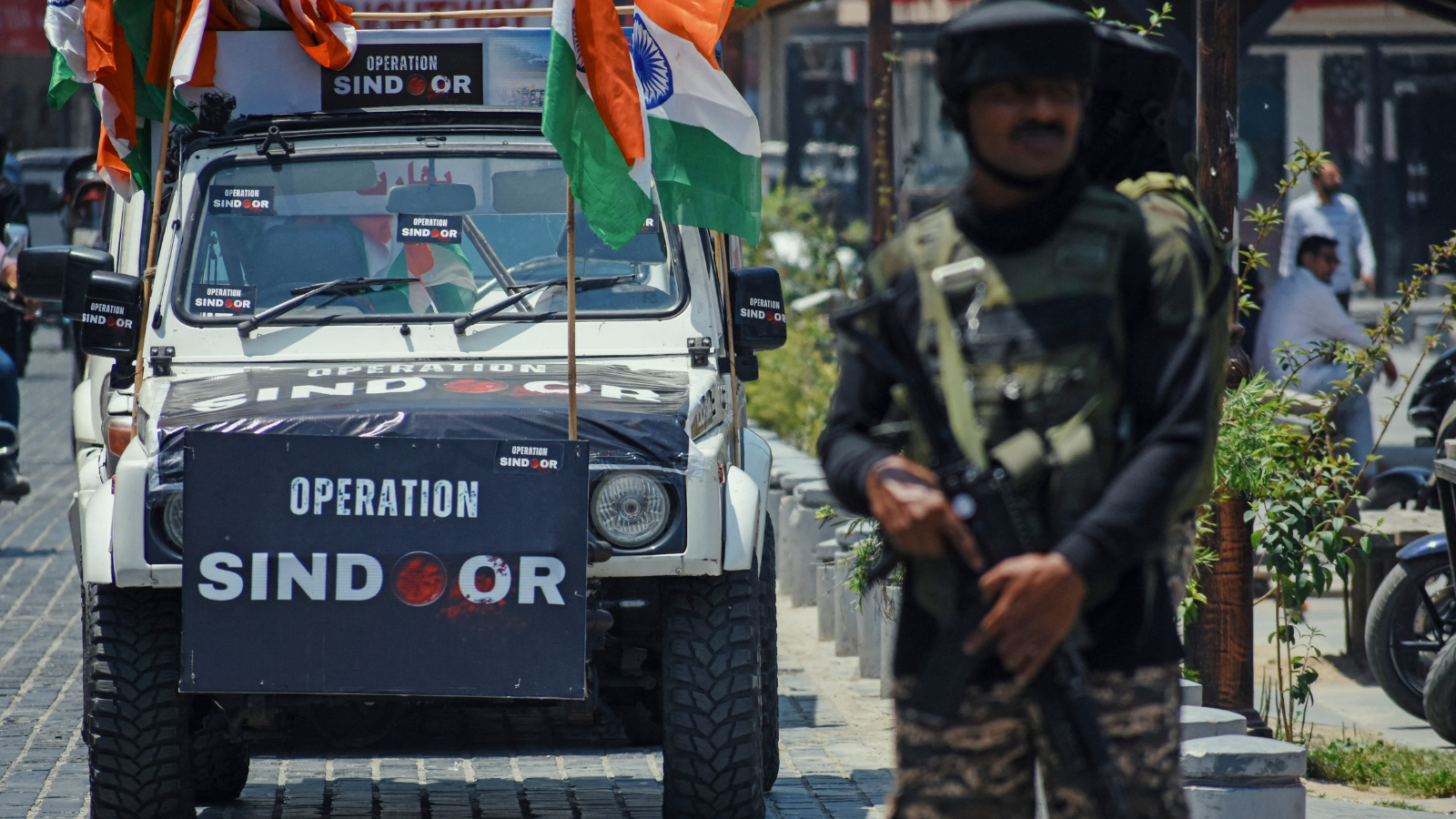
The India-Pakistan conflict that played out between May 6 and May 10, 2025, offers several military lessons. This article presents key takeaways from Operation Sindoor and breaks down how India’s preparations shaped the outcome and what more is needed to strengthen future readiness.

Dinakar Peri