

Paper
Paul Salem
{
  "authors": [
    "Paul Salem"
  ],
  "type": "legacyinthemedia",
  "centerAffiliationAll": "",
  "centers": [
    "Carnegie Endowment for International Peace",
    "Malcolm H. Kerr Carnegie Middle East Center"
  ],
  "collections": [],
  "englishNewsletterAll": "",
  "nonEnglishNewsletterAll": "",
  "primaryCenter": "Malcolm H. Kerr Carnegie Middle East Center",
  "programAffiliation": "",
  "programs": [],
  "projects": [],
  "regions": [
    "Egypt",
    "Gulf",
    "Levant",
    "Maghreb",
    "Middle East",
    "North Africa"
  ],
  "topics": [
    "Political Reform",
    "Security",
    "Economy"
  ]
}
Source: Getty
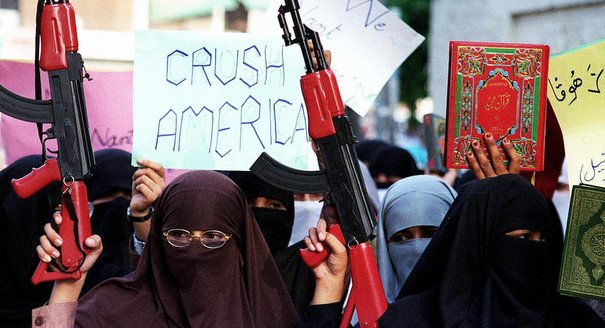
At the beginning of the second decade of the twentieth century, the Arab world faces a number of significant political, economic, cultural, and social challenges that must be overcome.
Source: Al-Hayat

The world enters the second decade of this century with much uncertainty. The global economic recovery from the crisis of 2008 has been slow. Unemployment and poverty will remain high, although growth in Asia will be much higher than in the West. In international politics, the UN will enter its seventh decade still unable to provide international stability and with a growing disconnect between the composition of the Security Council and the real distribution of political and economic power in the world today. The Obama administration, that promised to rebuild international stability after the dangerous presidency of George Bush, has been seriously weakened by its loss in the midterm elections. The rise of China is a potentially positive development, but if the process is not managed smoothly it could unleash serious tensions in Asia related to Taiwan, Japan, South Korea, India, and other states. Meanwhile the population of the world will reach 7 billion, problems of massive poverty will persist, and global warming will gather momentum causing cycles of drought and flood, and creating rising numbers of environmental refugees.
On the positive side, the experience of the G-20 as a new form of global cooperation has been a positive one, relations between the great powers has improved in the past two years, and even talks about global warming made some progress in recent international meetings.
In the Middle East, the prospects are unpromising. Although some regional economies weathered the global economic crisis reasonably well, economic growth has only benefited a small minority, the gap between the rich and poor is widening, and unemployment, especially among the youth, has remained dangerously high. The public revolt in Tunisia has illustrated that the pace of economic development and inequalities in distribution, coupled with high levels of political repression and corruption, are not a sustainable combination.
In regional politics three main confrontations will persist: the Arab Israeli conflict seems still far from resolution, and tensions might ignite into renewed conflict on the west bank and Gaza or involving Lebanon and other regional players. The tensions between Iran and other countries in the region and the world over its nuclear program and its policies in general appear set to continue; they have already contributed to serious security and sectarian tensions, and could lead to developments that could further destabilize the region. The American military deployments in Iraq and Afghanistan, as well as ongoing military operations by undercover means and unmanned aircraft, will keep the flame of conflict between radical Islam and the West alive from Pakistan, through Yemen, all the way to the deserts of North Africa.
Politically the impression of stability given by the persistence of authoritarian political regimes has been shattered by the events in Tunisia. There is cause for hope that events there will dramatically increase the level of public demand for political participation and social justice in other Arab countries, and that Arab regimes will take more seriously the need to allow meaningful political participation and provide higher levels of public accountability and transparency.
There are concerns about dynastic succession in major Arab monarchies, including Saudi Arabia, as well as in republics such as Egypt, Yemen, and Libya. The Arab world’s largest country, Sudan, is splitting in two and at risk of splitting even further. The process has begun peacefully but might well deteriorate into renewed warfare over borders and oil resources.
In the countries without powerful authoritarian regimes—Iraq, Lebanon and Palestine—political divisions and infighting has failed to take advantage of the potential for democratization and political participation. The country to watch is Tunisia: if it manages to build from its spontaneous uprising a functioning democracy, its example could well exert inexorable pressure on other societies from Morocco to Algeria, Egypt, Jordan and Syria.
Environmental and climate change concerns continue to be largely ignored by regional leaders. This although Yemen’s capital is already running out of water, as are parts of Syria and other Arab countries; and global warming threatens to dangerously affect an already very arid and desertified region. The impact of unpredictable rain fall and rising sea levels on low lying areas, such as the Egyptian delta, is still regarded by many as science fiction, despite devastating recent floods such as those in Bangladesh and Pakistan.
Culturally, the region has also failed to renew itself. The creative ideas of the Arab Nahda in the late 19th century, and the transformative political conceptions of political and cultural movements in the middle of the last century, have given way to religious fundamentalism or shallow consumerism and disengagement. While the Arabs led the world in knowledge a millennium ago, today there is hardly any Arab university that ranks among the first 500 in the world.
The first decade of this century began with at least some serious reflection about the challenges facing the Arab world, and how to try to face them; some of these reflections were captured in the Arab human development report of 2002 that emphasized the deficits in freedom, gender equality, and information. One sees very little serious reflection at the beginning of this second decade. Perhaps we have been distracted by the wars and confrontations of the past years; perhaps we are sidetracked by multiple security, political and socio-economic crises.
But we cannot afford to drift blindly into the next decade. Underlying problems of politics, socio-economics and culture, will be not solved by themselves. Nor will jumping from crisis to crisis amount to a strategy for shaping long-term events. History waits for no one, and unless we take a sober look at the underlying dysfunctions in our societies and systems, the Arab world will continue to lag behind the rest of the world in terms of the security and quality of life of its people.
Senior Fellow at the Middle East Institute
Paul Salem is a senior fellow at the Middle East Institute.
Recent Work
Paul Salem
Paul Salem
Carnegie India does not take institutional positions on public policy issues; the views represented herein are those of the author(s) and do not necessarily reflect the views of Carnegie, its staff, or its trustees.

In any defense establishment, change is an ongoing process. However, despite the best of intentions, existing bureaucracies, bound by habit and years of socialization, have their limits in implementing transformative change.

Anit Mukherjee

After the chill in ties between 2020 and 2024 that brought India–China relations to their lowest point in several decades, the two countries have engaged each other afresh. This paper argues that there are predominantly four imperatives guiding India’s approach to China, and they exist in an order of priority.

Saheb Singh Chadha

A partnership between India, a country of subcontinental size, and Africa, a continent of fifty-four countries, may seem asymmetric until one notes that both are home to nearly the same number of people—1.4 billion. This essay spells out the existing challenges to the partnership, its optimal potential, and the possible pathways to realize it over the next quarter-century.

Rajiv Bhatia

On March 10, 2026, India’s Union Cabinet approved amendments to Press Note 3, a regulation that mandated government approval on all foreign direct investment (FDI) from countries sharing a land border with India. This amendment raises questions primarily about whether its stated benefits will materialize and if the risks have been adequately weighed. This piece will address the same.

Konark Bhandari

This piece argues that the present Indian strategy, based on opportunistic diversification and utilization of limited strategic reserves, remains inadequate when confronting supply disruptions. It evaluates India’s options in the short, medium, and long terms.

Vrinda Sahai