• Research
  • About
  • Experts
Carnegie India logoCarnegie lettermark logo
{
  "authors": [
    "Amr Hamzawy"
  ],
  "type": "legacyinthemedia",
  "centerAffiliationAll": "",
  "centers": [
    "Carnegie Endowment for International Peace",
    "Carnegie Europe",
    "Malcolm H. Kerr Carnegie Middle East Center"
  ],
  "collections": [
    "Arab Awakening"
  ],
  "englishNewsletterAll": "",
  "nonEnglishNewsletterAll": "",
  "primaryCenter": "Carnegie Endowment for International Peace",
  "programAffiliation": "",
  "programs": [],
  "projects": [],
  "regions": [
    "North Africa",
    "Egypt",
    "Middle East"
  ],
  "topics": [
    "Political Reform"
  ]
}
Source: Getty

In The Media

A Transition to Democracy Must Include Egyptians

Egyptian citizens must participate in rebuilding their country’s institutions throughout the current transition, in order to secure a democratic transformation and institute a society of social justice and equal opportunity.

Link Copied
By Amr Hamzawy
Published on Feb 16, 2011

Source: National

A Transition to Democracy Must Include Egyptians
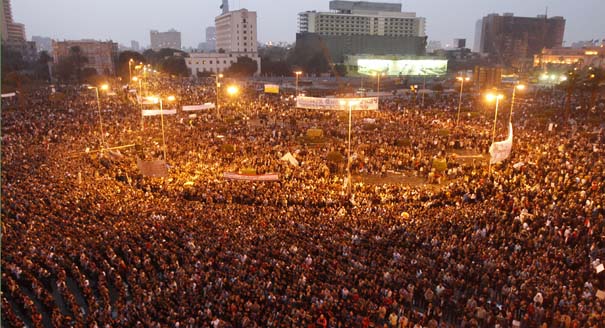
A few days after President Hosni Mubarak left office, Egypt entered a transitional phase led by the military. But now all Egyptians bear great responsibilities. This is a rare moment of comprehensive communal and political change with implications not only for Egypt but for the rest of the Arab world.
 
The first responsibility for Egyptians is to participate in this transitional phase so that a democratic transformation is guaranteed and a society of social justice and equal opportunity emerges. While Egypt's military is leading this transitional phase, it did not come to the fore after a coup but as a result of a popular revolution. The popular element is what gave the revolution its legitimacy. That must now be respected and activated in new constitutional, legal and political contexts. This can be done now that the armed forces have protected the state institutions from the irresponsible actions of the political leadership and Mr Mubarak's authoritarian regime, which could have caused them to collapse.
 
The military has clear ideas for accomplishing this mission and a framework for committing to "the legitimacy that the people desire". I expect that the military will soon, after dialogue with the main social forces, announce its vision for the constitution.
 
Such an announcement should address these questions: will we see a constituent assembly writing a new constitution for the country, or amendments to the current constitution? What will the timing of the presidential elections be now that Mr Mubarak has stepped down? What will be done regarding the laws that have long afflicted Egyptians by constraining their political and civil liberties, such as the Emergency Law, the Law on the Exercise of Political Rights, the Parties Law, and others?
 
However, it is incumbent on us, the citizens of Egypt - and that is a sincere translation of the January 25 revolution's democratic essence - to become involved immediately, acting in parallel with the military and not in opposition to it, forming our ideas for the transition phase and raising them within a national dialogue.
 
I believe that we need a constituent assembly to draft a parliamentary constitution that prevents the repetition of the Pharaonic presidential model that the current constitution had entrenched, giving the president limitless powers. The parliamentary regime is also the most suitable regime for re-engineering political life in a pluralistic way, guaranteeing the representation of various forces. A parliamentary regime can also guarantee that the legislative and judicial authorities hold the powers and regulatory tools that can safeguard Egypt from the frightening encroachment of the executive authority from which it has suffered since 1952.
 
The new constitution must also contain an affirmation of the civil nature of the state and politics in Egypt - civil as distinct from militarised or religious politics. The second article of the current constitution, with its reference to Islamic Sharia law as a basic source for legislation, must also be re-examined. Such an examination is necessary in order to move toward complete constitutional equality among society's members - Muslims and Christians.
 
The decision to dissolve the parliament is welcome because the body is a product of rigged elections. New elections must be held after the electoral system is amended in order to move toward a proportional list system with a margin for individual seats. Effective judicial supervision must also be established for the elections. This does not have to take the form of having a judge present at every ballot box if a truly independent supervisory commission is established.
 
The interior ministry must be distanced from the details of the electoral process, and domestic and international supervision over the elections must be codified. These pre-election measures must also include the removal of ill-reputed laws such as the Emergency Law and the Parties Law, the abolition of the commissions related to them, and permission for political parties to obtain licenses via declaration.
 
We also face the problem of the role of current government and the National Democratic Party. My vision is that this government be dismissed in favour of a national salvation government of technocrats and independent experts who will administer the executive missions of the transitional phase alongside the armed forces. As for the National Democratic Party, the party of hereditary transmission of power, staffed by corrupt businessmen, and thugs - it must be dissolved and expelled from political life in Egypt. This must be its fate and that of its members, both those who tried to jump from the sinking ship during the past few days and those who did not.
 
We also need, after the new constitution has been drafted, a specific time horizon for the transitional phase to end with presidential and parliamentary elections. This can be the deadline for the departure of the military from the political landscape after it has guaranteed a democratic transition. My belief is that six months is sufficient to administer the transition phase and establish a new Egypt with a parliamentary democratic regime.

About the Author

Amr Hamzawy

Director, Middle East Program

Amr Hamzawy is a senior fellow and the director of the Carnegie Middle East Program. His research and writings focus on governance in the Middle East and North Africa, social vulnerability, and the different roles of governments and civil societies in the region.

    Recent Work

  • Commentary
    Iran Is Pushing Its Neighbors Toward the United States

      Amr Hamzawy

  • Paper
    U.S. Peace Mediation in the Middle East: Lessons for the Gaza Peace Plan
      • Sarah Yerkes

      Amr Hamzawy, Sarah Yerkes, Kathryn Selfe

Amr Hamzawy
Director, Middle East Program
Amr Hamzawy
Political ReformNorth AfricaEgyptMiddle East

Carnegie India does not take institutional positions on public policy issues; the views represented herein are those of the author(s) and do not necessarily reflect the views of Carnegie, its staff, or its trustees.

More Work from Carnegie India

  • Article
    Risk and Retaliation: Israel, Iran, and the Evolving Situation in West Asia

    An Israeli response to Iran’s October 1 attack is imminent. The key question is of its intensity and potential fallout, both within Iran, in terms of nuclear security policy changes, and across the broader region. The coming days are likely to reshape West Asia irreversibly.
      Gaddam Dharmendra
  • Paper
    India’s Sustained Economic Recovery Will Require Changes to Its Bankruptcy Law

    As India’s economy recovers from the coronavirus pandemic, Indian businesses need efficient financial structures to regain their ground. Key reforms to India’s Insolvency and Bankruptcy Code could fill these gaps.

      Anirudh Burman

  • Paper
    Cross-Border Data Access for Law Enforcement: What Are India’s Strategic Options?

    Access to cross-border data is an integral piece of the law enforcement puzzle. India is well placed to lead the discussions on international data agreements subject to undertaking necessary surveillance reforms.
      Smriti Parsheera, Prateek Jha
  • Article
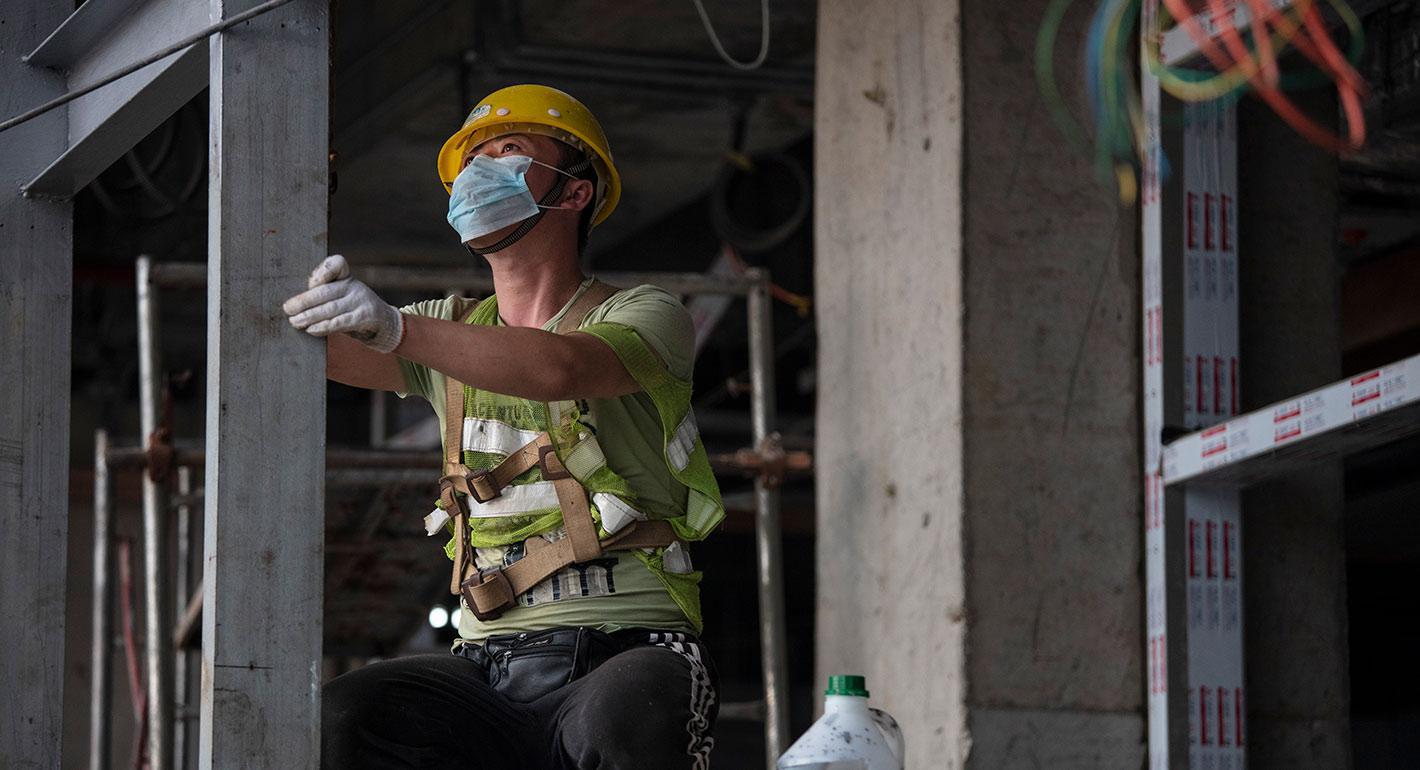
    The BRI in Post-Coronavirus South Asia

    After the coronavirus pandemic wanes, how will China’s reorientation of the Belt and Road Initiative to address global health concerns influence its relationships with South Asian countries?
      Deep Pal, Rahul Bhatia

  • Commentary
    India’s Unheeded Coronavirus Warning

    Early in the outbreak, government researchers forecast several high-risk scenarios that were downplayed or ignored in public messaging.

      Gautam I. Menon

Get more news and analysis from
Carnegie India
Carnegie India logo, white
Unit C-4, 5, 6, EdenparkShaheed Jeet Singh MargNew Delhi – 110016, IndiaPhone: 011-40078687
  • Research
  • About
  • Experts
  • Projects
  • Events
  • Contact
  • Careers
  • Privacy
  • For Media
Get more news and analysis from
Carnegie India
© 2026 Carnegie Endowment for International Peace. All rights reserved.