

Research
- +10
Rosa Balfour, Frances Z. Brown, Yasmine Farouk, …
{
  "authors": [
    "Moisés Naím"
  ],
  "type": "legacyinthemedia",
  "centerAffiliationAll": "dc",
  "centers": [
    "Carnegie Endowment for International Peace"
  ],
  "collections": [
    "Arab Awakening"
  ],
  "englishNewsletterAll": "ctw",
  "nonEnglishNewsletterAll": "",
  "primaryCenter": "Carnegie Endowment for International Peace",
  "programAffiliation": "SAP",
  "programs": [
    "South Asia",
    "Middle East"
  ],
  "projects": [],
  "regions": [
    "Middle East",
    "North Africa",
    "South Asia",
    "Afghanistan",
    "Pakistan"
  ],
  "topics": [
    "Political Reform",
    "Security",
    "Military"
  ]
}
Source: Getty
While al-Qaeda remains a global threat, regional changes and the erosion of government support have left it diminished. It is likely to be replaced by ideas and causes that are more aligned with the realities of the twenty-first century.
Source: Huffington Post

Of course, the spectacular attacks of 2001 and the recent killing of Osama occurred in this century, but the ideas and the circumstances that shaped him and his organization were formed in the twentieth century. In the decade since 9/11, much has changed in the world and within al Qaeda: the structure of the group and its leaders, the source of its members and funding, the main theaters of operations, the tactics, and even its enemies and rivals.
The original al Qaeda was an operational organization and all its cells were subject to a significant degree of centralization. Who, how, and when to attack, where and how to raise funds, how to spend them, the recruitment and promotion of leaders, and all the most-important decisions were made by bin Laden, his second in command Ayman al Zawahiri, and a small group of lieutenants.
In contrast, the new al-Qaeda is more of a franchise than an organization which is acting upon orders from headquarters. Its influence and its future no longer reside in its organizational structure, but in its ability to inspire new jihadists to train, plot, plan, and act autonomously against targets that they themselves have selected.
This does not mean that the "old" al Qaeda is gone. In the coming days and months it will no doubt try to show the world that bin Laden's death does not mean the death of the institution he created. And we know that until his final days bin Laden was occupied planning new attacks. Recently, German police arrested a Moroccan immigrant, who, thanks to al-Qaeda, had traveled to the border between Pakistan and Afghanistan for training in the use of explosives.
Surely there are more like him. But this is not the ideal candidate for the post bin Laden al-Qaeda. Their ideal terrorist was born and still lives in America, Europe, or Asia and is acting on his own, without ever having had direct contact with the organization. Yet, this person will no doubt pop up and plant a bomb on behalf of al Qaeda in a crowded place in a major city.
On the other hand, the supply of these spontaneous terrorists may have dwindled. Al Qaeda is now facing surprising and more inspirational competitors: the anti-dictator movements in the Arab world.
Before the Arab Spring the al Qaeda message was as powerful as it was easy to convey: we fight against the repressive, impious, and unjust dictators in the Arab world who keep their people in poverty while they enrich themselves thanks to their collusion with the hated and even more impious American Empire. For a young man with no job, no future, and no other way to channel his energy, frustrations, and hopes, this call to battle used to be irresistible. Today, that same young man has the choice to go out and fight, not by killing innocents in faraway countries but by making a difference in his own. And the rewards can be obtained here and now -- not in some future paradise shared with suicide martyrs promised by al Qaeda.
The other problem confronting al-Qaeda is that it has to repair its brand in the Islamic world. An organization that has killed more Muslims than Americans or Europeans has much to explain. A further handicap is that while in the twentieth century al-Qaeda could have relied on the enthusiastic support of some countries -- Afghanistan under the Taliban, for example -- or funding from certain governments, that has now become more difficult.
Being openly allied with al Qaeda has become prohibitively costly for any government. The Pakistani government's contortions in trying to explain its ignorance of bin Laden's lair, or the contradictions among the leaders of Hamas in discussing al Qaeda, show just how toxic the group has become. In the case of Hamas, its leader Ismail Haniyeh denounced the attack on bin Laden, saying he ''condemned the killing of any holy Muslim warrior" even though days earlier he had ordered a similar attack against an al-Qaeda cell in Gaza, killing two of its members.
The erosion of government support for al Qaeda does not mean that its geographical scope has been reduced. From Algeria to Chechnya and from Somalia to Indonesia the globalization of al Qaeda cells has continued, although less and less aided by governments or its allies within them.
In short, al Qaeda remains a threat. But it is diminished, discredited, and faces more competition than ever before. It will eventually be replaced by ideas and causes that are more aligned with the realities of the twenty-first century.

Distinguished Fellow
Moisés Naím is a distinguished fellow at the Carnegie Endowment for International Peace, a best-selling author, and an internationally syndicated columnist.
Recent Work



Rosa Balfour, Frances Z. Brown, Yasmine Farouk, …
Moisés Naím
Carnegie India does not take institutional positions on public policy issues; the views represented herein are those of the author(s) and do not necessarily reflect the views of Carnegie, its staff, or its trustees.

In any defense establishment, change is an ongoing process. However, despite the best of intentions, existing bureaucracies, bound by habit and years of socialization, have their limits in implementing transformative change.

Anit Mukherjee

After the chill in ties between 2020 and 2024 that brought India–China relations to their lowest point in several decades, the two countries have engaged each other afresh. This paper argues that there are predominantly four imperatives guiding India’s approach to China, and they exist in an order of priority.

Saheb Singh Chadha

A partnership between India, a country of subcontinental size, and Africa, a continent of fifty-four countries, may seem asymmetric until one notes that both are home to nearly the same number of people—1.4 billion. This essay spells out the existing challenges to the partnership, its optimal potential, and the possible pathways to realize it over the next quarter-century.

Rajiv Bhatia
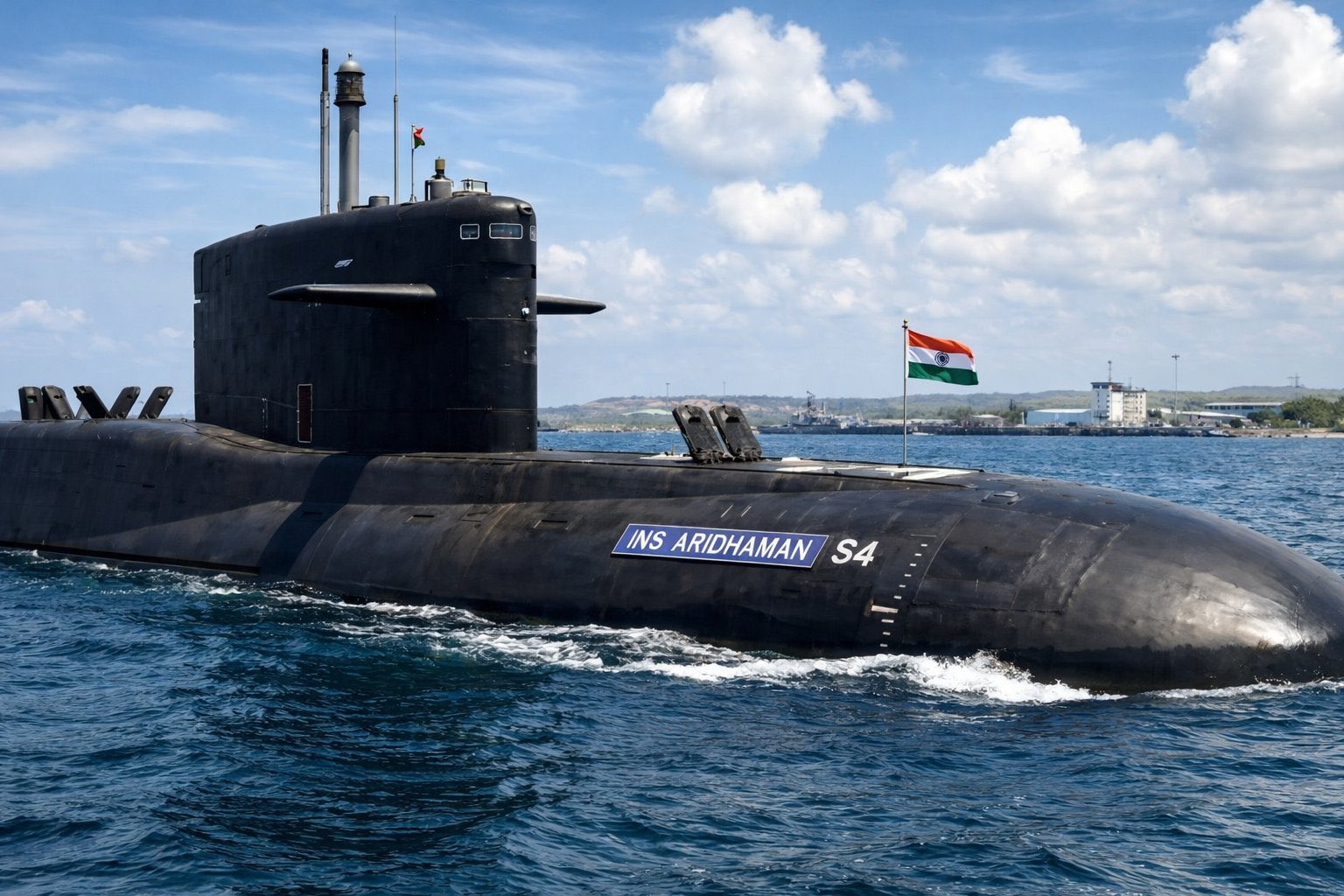
The induction of INS Aridhaman, which features several technological enhancements, now gives India the third nuclear ballistic missile submarine to ensure continuous at-sea deterrent.

Dinakar Peri

This piece argues that the present Indian strategy, based on opportunistic diversification and utilization of limited strategic reserves, remains inadequate when confronting supply disruptions. It evaluates India’s options in the short, medium, and long terms.

Vrinda Sahai