


• Research
  • About
  • Experts
Carnegie India logoCarnegie lettermark logo
AI
{
  "authors": [
    "Michael D. Swaine",
    "M. Taylor Fravel"
  ],
  "type": "legacyinthemedia",
  "centerAffiliationAll": "dc",
  "centers": [
    "Carnegie Endowment for International Peace"
  ],
  "collections": [],
  "englishNewsletterAll": "asia",
  "nonEnglishNewsletterAll": "",
  "primaryCenter": "Carnegie Endowment for International Peace",
  "programAffiliation": "AP",
  "programs": [
    "Asia"
  ],
  "projects": [],
  "regions": [
    "North America",
    "United States",
    "East Asia",
    "South Korea",
    "China",
    "Taiwan",
    "Japan",
    "Southeast Asia"
  ],
  "topics": [
    "Political Reform",
    "Security",
    "Military",
    "Foreign Policy"
  ]
}

Source: Getty

In The Media

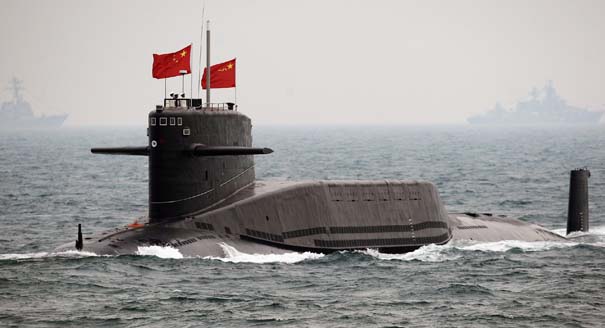
China's Assertive Behavior—Part Two: The Maritime Periphery

While China's behavior in its surrounding seas has become more assertive in recent years, its basic strategy of avoiding conflict in favor of negotiation and cautious management, while defending against attempts by others to undermine its position, remains the same.

Link Copied
By Michael D. Swaine and M. Taylor Fravel
Published on Jun 24, 2011

Source: China Leadership Monitor

This China Leadership Monitor (CLM) will examine Chinese actions along China’s entire maritime periphery, from the Yellow Sea to the South China Sea, with regard to both disputed and undisputed maritime areas, as well as those recent official diplomatic statements and legal submissions from the People's Republic of China (PRC) of relevance to such maritime behavior.

The primary purpose of such an examination is: a) to assess whether, to what degree, and in what major ways China has become more assertive along its maritime periphery in recent years; b) to examine the external and internal forces motivating China to become more or less assertive over time; and c) to assess the prospects for Chinese assertiveness with regard to maritime sovereignty issues in the future.

The essay will examine what have been regarded by outside observers as the most potentially troubling Chinese actions and diplomatic or legal statements with regard to territorial issues taken along China’s maritime periphery since approximately 2007–2008, when concern with a more “assertive” China was emerging in the West and elsewhere (see CLM 32). These encompass five major issue areas: 1) legal and diplomatic submissions, statements, and governmental actions with regard to the South China Sea; 2) diplomatic statements and governmental actions with regard to the East China Sea; 3) legal statements and actions concerning China’s maritime Exclusive Economic Zone (EEZ); and 4) diplomatic, official, and media statements and actions with regard to the Yellow Sea.

For each issue area, the essay will: 1) provide as accurate a summary as possible from open sources of the major relevant Chinese behavior that has occurred since 2007–2008; 2) assess whether such behavior represents an increase or decrease in frequency and type or intensity compared to earlier years; and 3) examine the larger external and domestic context surrounding such Chinese behavior, to determine the apparent motives and objectives at work and the reasons for apparent changes in level and intensity over time. The essay will conclude with an assessment of the significance of and future prospects for Chinese assertiveness in the maritime realm derived from the preceding analysis.

About the Authors

Michael D. Swaine

Former Senior Fellow, Asia Program

Swaine was a senior fellow at the Carnegie Endowment for International Peace and one of the most prominent American analysts in Chinese security studies.

M. Taylor Fravel

M. Taylor Fravel is the Arthur and Ruth Sloan Professor of Political Science and Director of the Security Studies Program at the Massachusetts Institute of Technology. Taylor studies international relations, with a focus on international security, China, and East Asia. His books include, Strong Borders, Secure Nation: Cooperation and Conflict in China’s Territorial Disputes, (Princeton University Press, 2008) and Active Defense: China's Military Strategy Since 1949 (Princeton University Press, 2019). His other publications have appeared in International Security, Foreign Affairs, Security Studies, International Studies Review, The China Quarterly, The Washington Quarterly, Journal of Strategic Studies, Armed Forces & Society, Current History, Asian Survey, Asian Security, China Leadership Monitor, and Contemporary Southeast Asia. Taylor is a graduate of Middlebury College and Stanford University, where he received his PhD. He also has graduate degrees from the London School of Economics and Oxford University, where he was a Rhodes Scholar. In 2016, he was named an Andrew Carnegie Fellow by the Carnegie Corporation. Taylor is a member of the board of directors of the National Committee on U.S.-China Relations and serves as the Principal Investigator for the Maritime Awareness Project.

Authors

Michael D. Swaine
Former Senior Fellow, Asia Program
Michael D. Swaine
M. Taylor Fravel

M. Taylor Fravel is the Arthur and Ruth Sloan Professor of Political Science and Director of the Security Studies Program at the Massachusetts Institute of Technology. Taylor studies international relations, with a focus on international security, China, and East Asia. His books include, Strong Borders, Secure Nation: Cooperation and Conflict in China’s Territorial Disputes, (Princeton University Press, 2008) and Active Defense: China's Military Strategy Since 1949 (Princeton University Press, 2019). His other publications have appeared in International Security, Foreign Affairs, Security Studies, International Studies Review, The China Quarterly, The Washington Quarterly, Journal of Strategic Studies, Armed Forces & Society, Current History, Asian Survey, Asian Security, China Leadership Monitor, and Contemporary Southeast Asia. Taylor is a graduate of Middlebury College and Stanford University, where he received his PhD. He also has graduate degrees from the London School of Economics and Oxford University, where he was a Rhodes Scholar. In 2016, he was named an Andrew Carnegie Fellow by the Carnegie Corporation. Taylor is a member of the board of directors of the National Committee on U.S.-China Relations and serves as the Principal Investigator for the Maritime Awareness Project.

M. Taylor Fravel
Political ReformSecurityMilitaryForeign PolicyNorth AmericaUnited StatesEast AsiaSouth KoreaChinaTaiwanJapanSoutheast Asia

Carnegie India does not take institutional positions on public policy issues; the views represented herein are those of the author(s) and do not necessarily reflect the views of Carnegie, its staff, or its trustees.

More Work from Carnegie India

  • Article
    India’s Oil Security Strategy: Structural Vulnerabilities and Strategic Choices

    This piece argues that the present Indian strategy, based on opportunistic diversification and utilization of limited strategic reserves, remains inadequate when confronting supply disruptions. It evaluates India’s options in the short, medium, and long terms.

      Vrinda Sahai

  • Article
    What Could a Reciprocal Defense Procurement Agreement Do for U.S.-India Ties?

    India and the United States are close to concluding a Reciprocal Defense Procurement Agreement (RDPA) that will allow firms from the two countries to sell to each other’s defense establishments more easily. While this may not remedy the specific grievances both sides may have regarding larger bilateral issues, an RDPA could restore some momentum, following the trade deal announcement.

      Konark Bhandari

  • Commentary
    India Signs the Pax Silica—A Counter to Pax Sinica?

    On the last day of the India AI Impact Summit, India signed Pax Silica, a U.S.-led declaration seemingly focused on semiconductors. While India’s accession to the same was not entirely unforeseen, becoming a signatory nation this quickly was not on the cards either.

      Konark Bhandari

  • Commentary
    The Impact of U.S. Sanctions and Tariffs on India’s Russian Oil Imports

    This piece examines India’s response to U.S. sanctions and tariffs, specifically assessing the immediate market consequences, such as alterations in import costs, and the broader strategic implications for India’s energy security and foreign policy orientation.

      Vrinda Sahai

  • Article
    Military Lessons from Operation Sindoor

    The India-Pakistan conflict that played out between May 6 and May 10, 2025, offers several military lessons. This article presents key takeaways from Operation Sindoor and breaks down how India’s preparations shaped the outcome and what more is needed to strengthen future readiness.

      Dinakar Peri

Get more news and analysis from
Carnegie India
Carnegie India logo, white
Unit C-4, 5, 6, EdenparkShaheed Jeet Singh MargNew Delhi – 110016, IndiaPhone: 011-40078687
  • Research
  • About
  • Experts
  • Projects
  • Events
  • Contact
  • Careers
  • Privacy
  • For Media
Get more news and analysis from
Carnegie India
© 2026 Carnegie Endowment for International Peace. All rights reserved.






