

Other
Michael D. Swaine
{
  "authors": [
    "Michael D. Swaine"
  ],
  "type": "legacyinthemedia",
  "centerAffiliationAll": "dc",
  "centers": [
    "Carnegie Endowment for International Peace",
    "Carnegie China"
  ],
  "collections": [
    "China’s Foreign Relations",
    "U.S.-China Relations"
  ],
  "englishNewsletterAll": "asia",
  "nonEnglishNewsletterAll": "",
  "primaryCenter": "Carnegie China",
  "programAffiliation": "AP",
  "programs": [
    "Asia"
  ],
  "projects": [],
  "regions": [
    "East Asia",
    "China",
    "North America",
    "United States",
    "South Asia",
    "India",
    "Southeast Asia"
  ],
  "topics": [
    "Political Reform",
    "Security",
    "Military",
    "Foreign Policy",
    "Arms Control"
  ]
}
Source: Getty
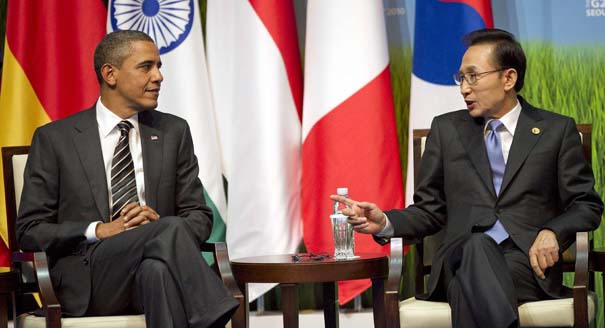
The execution of America’s strategic 'pivot' to Asia, and China's response, are combining to deepen mutual suspicions and potentially destabilize the entire area.
Source: National Interest

At that time, Washington moved decisively away from viewing China ominously as a rising "strategic competitor" (to quote George W. Bush) and toward significant levels of Sino-U.S. cooperation in combating terrorism and dealing with a growing array of common problems, from climate change to global economic instability. This shift brought Washington’s approach back into line with an earlier, long-standing U.S. policy of fostering greater Sino-American engagement while conducting low-key military hedging against the possibility of a future hostile China.
With President Obama and Secretary Clinton's recent trips to the South and Western Pacific, expanding U.S. involvement in multilateral economic and security-related fora, and a strengthening of Washington's traditional military alliances, the United States is now signaling an intention to move back toward the pre-9/11 strategic focus on a rising China. That focus places a premium on explicitly balancing against and constraining Chinese power and influence across the region.
This piece was originally published at the National Interest. Click here to continue reading.

Former Senior Fellow, Asia Program
Swaine was a senior fellow at the Carnegie Endowment for International Peace and one of the most prominent American analysts in Chinese security studies.
Recent Work
Michael D. Swaine
Michael D. Swaine
Carnegie India does not take institutional positions on public policy issues; the views represented herein are those of the author(s) and do not necessarily reflect the views of Carnegie, its staff, or its trustees.

In any defense establishment, change is an ongoing process. However, despite the best of intentions, existing bureaucracies, bound by habit and years of socialization, have their limits in implementing transformative change.

Anit Mukherjee

As AI grows more sophisticated, as the supply chains that power it become more contested, and as access to frontier models becomes geopolitically charged, India must begin to ask a different set of questions. Not what applications it can build on someone else’s infrastructure but what the world needs.

Konark Bhandari

The Indian Ocean Region hosts one of the densest concentrations of subsea cables in the world. Yet, despite accounting for a significant share of global internet traffic, India’s participation remains limited.

Charukeshi Bhatt

How is AI reshaping space security, creating governance challenges, and where does international diplomacy stand today?


Tejas Bharadwaj, Almudena Azcárate Ortega

After the chill in ties between 2020 and 2024 that brought India–China relations to their lowest point in several decades, the two countries have engaged each other afresh. This paper argues that there are predominantly four imperatives guiding India’s approach to China, and they exist in an order of priority.

Saheb Singh Chadha