

Research
- +10
Rosa Balfour, Frances Z. Brown, Yasmine Farouk, …
{
  "authors": [
    "Moisés Naím"
  ],
  "type": "legacyinthemedia",
  "centerAffiliationAll": "",
  "centers": [
    "Carnegie Endowment for International Peace"
  ],
  "collections": [],
  "englishNewsletterAll": "",
  "nonEnglishNewsletterAll": "",
  "primaryCenter": "Carnegie Endowment for International Peace",
  "programAffiliation": "",
  "programs": [],
  "projects": [],
  "regions": [
    "North America",
    "South America",
    "South Asia",
    "India",
    "East Asia",
    "China",
    "Southeast Asia"
  ],
  "topics": [
    "Economy"
  ]
}
Source: Getty
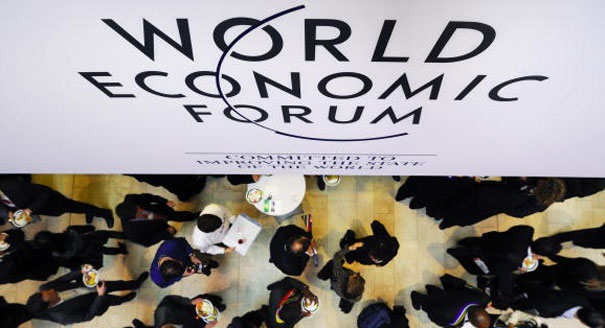
The world’s largest developing countries who were proclaiming their success at this year’s annual conference in Davos should remember the misfortunes that befell past conferences’ most confidence attendees.
Source: Financial Times

Many centuries later we got the Brics: poor countries whose economic and geopolitical success and influence – and hubris – is growing quickly. And its not just these countries. HSBC, reckons that if current trends continue, by 2050 the 100 largest economies in the world will include (in addition to the Brics and traditional leaders such as the US, Germany and Japan) countries such as the Philippines (the 16th largest), Peru, Bangladesh and Colombia. Of course, the critical assumption is “if current trends continue”.
Here is where it is worth mentioning the meeting hosted by the World Economic Forum in Davos. After many years of attending these meetings, I have become a great believer in the existence – and the power – of hubris. I do not know if it is the gods or human nature, but success and failure are too frequently inextricably linked and the Davos meeting offers an extraordinary laboratory to observe the phenomenon.
I remember vividly one of the most exuberant parties in Davos, hosted in the mid-1990s by the Mexican government. The host and star celebrity was then-president Carlos Salinas de Gortari. Shortly thereafter, the country - and its president – fell on hard times. I also remember Kenneth Lay, explaining to an enthralled audience that his business model, which generated $100bn in revenues in 2000, was the future. Soon after, his company Enron crashed. Mr Lay, if he had not passed away, would surely be in jail, joining several of his former colleagues. I also witnessed president Carlos Menem of Argentina describing the wonders of his country pre-debacle, and heard the triumphant narrative of the tycoons investing unjustifiable sums in internet companies with scant revenues and no profits. The acclaimed merger of the giant “old” Time Warner with the “new” AOL was a prime example of this. The results were catastrophic.
Another shining star very visible in Davos was Jean-Marie Messier, who tried to convert Compagnie General des Eux, a water utility and garbage collection company, into a media conglomerate: VivendiUniversal. He entitled his autobiography J6M.com Messier. In French this reads as Jean Marie Messier, myself, master of the world. I saw him at the 2002 WEF meeting in New York offering an fancy multimedia presentation of his company. A few months later VivendiUniversal announced the largest losses in French corporate history and Mr Messier was fired. I have not seen him at Davos since.
I also attended the presentations of the finance ministers of Thailand, Indonesia, Malaysia and South Korea right before the Asian economic crisis erased them from the lists of the most sought after speakers. Davos offers many more of these cases of rapid rises and dramatic falls.
This does not mean that all who go to Davos are success-crazed characters. From Nelson Mandela to Elie Wiesel, shy researchers working on the frontiers of knowledge about cancer, brain and genetics, or activists who risk their lives confronting despots and protecting the innocent, it is easy to find admirable people who are successful but far from arrogant. But it is also all too easy to trip over characters clearly possessed by hubris.
What does all this have to do with the Brics and other poor countries that have become fashionable? You can perhaps imagine. As I was recently talking in Davos with Turks, Brazilians, Indians, Indonesians, Russians and Chinese, the symptoms of the many fallen celebrities who no longer stalk the corridors of this Swiss mountain town seemed just below the surface. Are the gods plotting to put these new arrogant characters in their place? Could it be that a crash is in the future of these emerging countries? Could this be one of the most important warnings coming from this year’s meeting on the Alps?
This article was originally published in the Financial Times.

Distinguished Fellow
Moisés Naím is a distinguished fellow at the Carnegie Endowment for International Peace, a best-selling author, and an internationally syndicated columnist.
Recent Work



Rosa Balfour, Frances Z. Brown, Yasmine Farouk, …
Moisés Naím
Carnegie India does not take institutional positions on public policy issues; the views represented herein are those of the author(s) and do not necessarily reflect the views of Carnegie, its staff, or its trustees.

The Indian Ocean Region hosts one of the densest concentrations of subsea cables in the world. Yet, despite accounting for a significant share of global internet traffic, India’s participation remains limited.

Charukeshi Bhatt

How is AI reshaping space security, creating governance challenges, and where does international diplomacy stand today?


Tejas Bharadwaj, Almudena Azcárate Ortega

After the chill in ties between 2020 and 2024 that brought India–China relations to their lowest point in several decades, the two countries have engaged each other afresh. This paper argues that there are predominantly four imperatives guiding India’s approach to China, and they exist in an order of priority.

Saheb Singh Chadha

This piece argues that India’s central challenge is not managing a single flashpoint but resolving the underlying tension between expansion and institutional coherency of the BRICS grouping.

Vrinda Sahai

The ASML MoU with Tata Electronics is an indicator of how far the Indian semiconductor ecosystem has come. This ecosystem has been years in the making and represents real commercial logic.

Konark Bhandari