

Paper
Lora Saalman
{
  "authors": [
    "Lora Saalman"
  ],
  "type": "legacyinthemedia",
  "centerAffiliationAll": "dc",
  "centers": [
    "Carnegie Endowment for International Peace",
    "Carnegie China"
  ],
  "collections": [
    "China’s Foreign Relations"
  ],
  "englishNewsletterAll": "ctw",
  "nonEnglishNewsletterAll": "",
  "primaryCenter": "Carnegie China",
  "programAffiliation": "NPP",
  "programs": [
    "Nuclear Policy"
  ],
  "projects": [],
  "regions": [],
  "topics": [
    "Nuclear Policy",
    "Security",
    "Arms Control"
  ]
}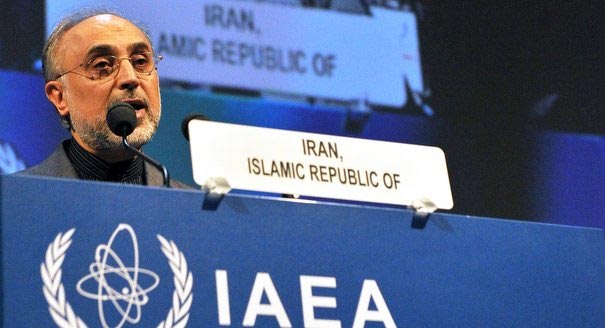
Source: Getty
Debate in China on Iran’s nuclear program continues to focus on uranium enrichment at the expense of other key aspects that could give a better indication of the broader program’s progress and outcomes.
Source: Guoji Xianqu Daobao

Uranium enrichment is classic “dual-use” technology, with both civil and military applications. However, Iran’s nuclear technology and facilities have exceeded the borders of uranium enrichment to becoming a foundation for nuclear weapons manufacture. A number of pursuits associated with Iran’s nuclear program have military characteristics. However, because of the ongoing preoccupation with discussing the level and uses of Iran’s uranium enrichment, there has been a tendency to ignore other technical indicators. These technical indicators can more clearly distinguish between civil and military nuclear activities.
The International Atomic Energy Agency (IAEA) report, issued in November 2011, represents the newest and most complete tool for assessing these indicators. This report has significant differences with those released prior to the outbreak of the nuclear debate and war in Iraq in 2003. First, the new report contains more details and evidence, prompting some Western experts to already call it a “menu” for the manufacture of nuclear weapons. The report also contains a section called “Credibility of Information,” which introduces both the origin and limitations of sources, strengthening the reliability of the documentation.Second, the intelligence provided by the report does not only come from the United States, but also from more than ten other countries, including foreign experts that were involved in aiding Iran in its nuclear research. Iranian experts often emphasize that a U.S. “hand” has played a role in pushing along this IAEA report. However, if using this metaphor, then the information contained in the report was collected by more than ten independent fingers.
According to the report, apart from uranium enrichment activities, Iran is also engaged in metal compression experiments, which are essential components in generating nuclear chain reactions. After undergoing compression, this metal can serve as the “core” of a nuclear device. Iran has also conducted computer simulations of nuclear explosions. This research and development has also included equipment for detonating the device, or “nuclear triggers.”
Simulation experiments are conducive to improving the design of a nuclear weapon from behind the scenes. Once these improvements have been made, the nuclear trigger is for conducting a nuclear test in full view. According to the report, some of these experiments were also conducted in 2008 and 2009. This indicates that the judgment of the IAEA is even harsher than that contained within the U.S. National Intelligence Estimate issued in 2007. In point of fact, Iran did not suspend its nuclear weapons-related research and experimentation in 2003.
Third, while public debate has been focused on the characteristics and intent behind Iran’s uranium enrichment, some of Iran’s military-related activities also merit greater attention. Although some of these facilities have conventional military functions, they nonetheless can also facilitate integration of military and nuclear capabilities. The large containment vessel at the Parchin military base, which can be used for hydrodynamic experiments, is just one example.
Iran has also developed 14 increasingly advanced designs for mounting nuclear warheads on ballistic missiles. Such activities can facilitate the above developments in reaching their apogee. If Iran surpasses the limits of “research” and achieves “deployment,” the debate over the “dual-use” nature of nuclear enrichment will undergo a major shift. While uranium enrichment is a crucial component of this transformation from the drawing board to reality, it is not the only factor.
All of the details mentioned above came from a report issued by the International Atomic Energy Agency. This article only articulated a small portion of the 25-page, 45-footnote report. While manufacture of nuclear weapons would violate Iran’s commitments under the Nuclear Non-Proliferation Treaty, from the perspective of technology, security, and status, Iran’s desire to pursue nuclear capabilities can be understood. The international nuclear nonproliferation regime also retains oft-cited double standards. These two points cannot be argued. However, these questions are “political” in nature, while the 2011 IAEA report is a “technical” document.
The question of whether or not Iran “should” manufacture nuclear weapons is not the issue with which this essay concerns itself. In the author’s view, whether or not Iran “can” manufacture nuclear weapons is precisely the issue that should serve as the launching point for objective debate. If in the midst of ignoring these technical indicators, Iran conducts a nuclear test, then the discussions on whether or not Iran “should” manufacture nuclear weapons will be rendered meaningless. China and the entire globe will be faced with a much more urgent question, namely “will” Iran conduct a nuclear attack, and “should” its neighbors develop their own nuclear weapons? And then the above technical discussion will become a true political “chain reaction.”

Former Nonresident Associate, Nuclear Policy Program
Saalman was a nonresident associate in the Nuclear Policy Program at the Carnegie Endowment for International Peace. Her research focuses on China’s nuclear and strategic policies toward India, Russia, and arms control.
Recent Work
Lora Saalman
Lora Saalman
Carnegie India does not take institutional positions on public policy issues; the views represented herein are those of the author(s) and do not necessarily reflect the views of Carnegie, its staff, or its trustees.

After the chill in ties between 2020 and 2024 that brought India–China relations to their lowest point in several decades, the two countries have engaged each other afresh. This paper argues that there are predominantly four imperatives guiding India’s approach to China, and they exist in an order of priority.

Saheb Singh Chadha

This piece argues that the present Indian strategy, based on opportunistic diversification and utilization of limited strategic reserves, remains inadequate when confronting supply disruptions. It evaluates India’s options in the short, medium, and long terms.

Vrinda Sahai

This piece examines India’s response to U.S. sanctions and tariffs, specifically assessing the immediate market consequences, such as alterations in import costs, and the broader strategic implications for India’s energy security and foreign policy orientation.
Vrinda Sahai
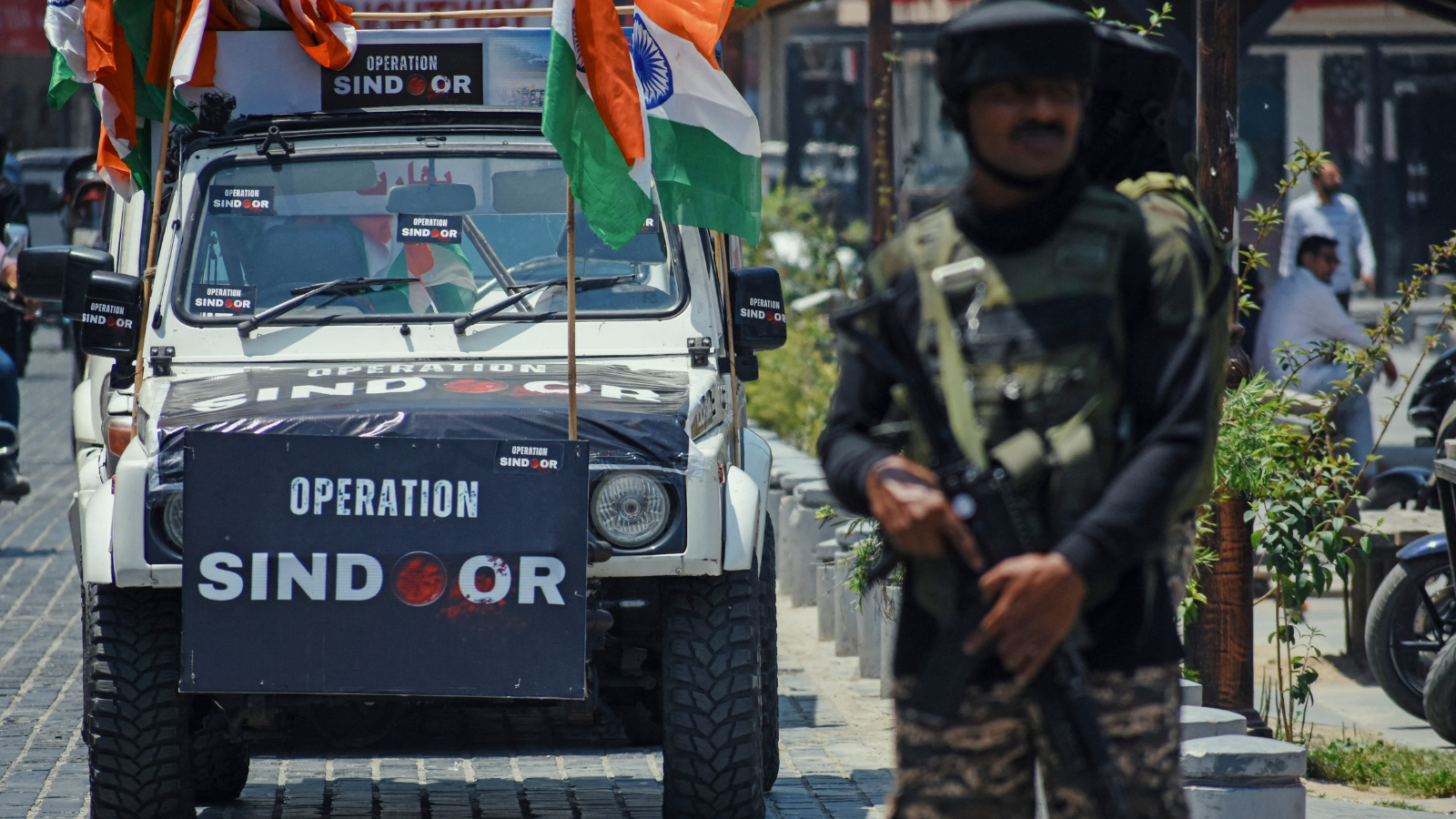
The India-Pakistan conflict that played out between May 6 and May 10, 2025, offers several military lessons. This article presents key takeaways from Operation Sindoor and breaks down how India’s preparations shaped the outcome and what more is needed to strengthen future readiness.

Dinakar Peri
This book offers a comprehensive analysis of India's evolving relationship with sovereignty in a complex global order. Moving beyond conventional narratives, it examines how the sovereignty principle shapes India's behavior across four critical domains—from traditional military power to contemporary data governance.

Rudra Chaudhuri, Nabarun Roy