

Q&A
Sami Moubayed
{
  "authors": [
    "Sami Moubayed"
  ],
  "type": "legacyinthemedia",
  "centerAffiliationAll": "",
  "centers": [
    "Carnegie Endowment for International Peace",
    "Malcolm H. Kerr Carnegie Middle East Center"
  ],
  "collections": [
    "Arab Awakening"
  ],
  "englishNewsletterAll": "",
  "nonEnglishNewsletterAll": "",
  "primaryCenter": "Malcolm H. Kerr Carnegie Middle East Center",
  "programAffiliation": "",
  "programs": [],
  "projects": [],
  "regions": [
    "Levant",
    "Syria",
    "Middle East"
  ],
  "topics": [
    "Political Reform",
    "Security"
  ]
}
Source: Getty
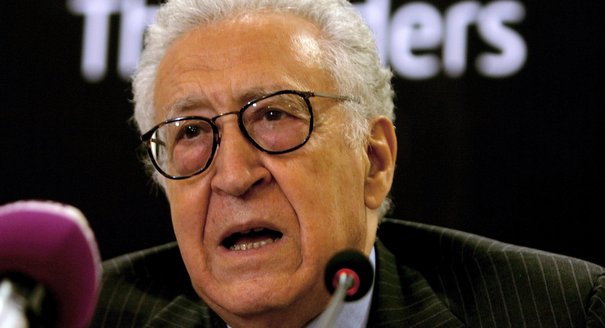
Veteran Algerian diplomat Lakhdar Brahimi knows the fears, concerns, and mentality of the Syrians, which may prove valuable in securing a diplomatic solution to the crisis.
Source: Gulf News

Many are sceptical, saying that the ingredients for a breakthrough remain lacking; that Brahimi will face the same obstacles that torpedoed Annan’s mission since last April. Others are saying that the man who helped end Lebanon’s civil war, who managed Iraq’s troubled post-Saddam elections, and propped up Hamid Karzai as president of Afghanistan, cannot go wrong. Let us take a look at Brahimi’s pros and cons for Syria.
First, unlike Annan, Brahimi is an Arab Muslim who knows the Middle East inside out; not through the narrow prism of the UN, but from hands-on experience from having lived and worked with Arabs for his entire career. He was a Nasserist during his youth, and served as his country’s ambassador to Egypt and Sudan in the 1960s. Additionally in 1984-1991, he was assistant secretary-general of the Arab League, and in 1991-93, served as his country’s foreign minister. Briefly in 1983-84, he was special consultant to Algerian president Chadli Bendjedid.His positions brought him often to Damascus, his last visit as part of The Elder’s delegation in October 2010. In 1989, he worked with the Syrians on hammering out the Taif Accords to put an end to Lebanon’s civil war. He knows their fears, concerns and mentality, and has dealt with every Syrian administration from Nour Al Din Al Atasi to Bashar Al Assad. Annan, however, knew absolutely nothing about Syria, except what was fed to him systematically by Syrian officialdom, along with the US and Israel, during his tenure as UN secretary-general in the 1990s. Brahimi won’t sound like an Orientalist approaching the region with white gloves, stating the obvious, like, for example, that the situation is “critical” in Syria. He won’t be using strong words like “horrified” and “optimistic” when describing his inner feelings towards the Syria Mission. He knows that such nonsense reads very poorly on the Syrian Street. Those statements made Annan look silly in the eyes of ordinary Syrians, who were struggling with war, poverty, and displacement, while Annan was learning his Syrian ABC.
Brahimi won’t take things at face value, as Annan did. He would know when the Syrians are lying to him about something. Unlike the Sudanese general Mustafa Al Dabbi, who led the Arab League mission to Syria and was accused of genocide in his own country, or Annan, who has shouldered accusations of corruption at the UN, Brahimi has an exceptionally unblemished political and financial record.
People trust and respect him, not only in Syria but globally. Brahimi’s setbacks are also plenty. First is his age. At 78, Brahimi is far beyond retirement age, and there is little fight left in him. Second is the firm gridlock in Syria itself, where neither the regime nor the Free Syrian Army (FSA) is ready to lay down their arms.
The Syrian opposition remains painfully disunited, and the international community divided on how to deal with Syria. Russia and Iran are still firmly committed to their Damascus allies, while the US, France, Saudi Arabia and Qatar are pushing for regime change, without providing a clear roadmap as to how and when that can be achieved.
They insist that no Libya-like strike will happen in Syria, and speak vaguely of a Yemen-like solution, forgetting perhaps, that unlike Ali Abdullah Saleh, Al Assad is not even close — not the slightest bit — to even thinking of stepping down.
The armed rebels have no single authority to take orders from; meaning even if Brahimi brokers a ceasefire, like Annan did, it is highly doubtful anybody would abide by it. The US still refuses to give Iran any role in mapping out Syria’s post-Baath future, and Brahimi knows that with no air strike, no engagement of Iran, no desire to lay down arms, and no roadmap, Syria would remain firmly grounded at Square One.
Additionally, the US is simply too busy, three months ahead of the presidential elections, to mind Syria or Brahimi.
More importantly, what will Brahimi’s point of reference be? Would it be Annan’s original six points, which called for an end to violence “from all sides”, humanitarian aid for war-torn cities, a proper observer mechanism, and a political process that, according to the Arab League, would call on Al Assad to delegate powers to his vice-president? Or would it be the recent Geneva conference, which calls for a “transition body” that would run Syria, in parallel with Al Assad, for one year?
Both ideas are seemingly dead, and neither the regime nor the opposition are interested in revisiting them. Brahimi knows the above only too well. After a prolific and successful career dating back to the 1960s, he has nothing left to prove for his legacy.
That actually might serve as a plus, since he won’t accept the Syria mission unless he gets guarantees from the UN that the Russian-American divide has been healed. He won’t risk his reputation for a failed mission in Syria which, if it materialises, would probably be his last before retirement.

Former Visiting Scholar, Carnegie Middle East Center
Moubayed, a political analyst and historian, focuses his research on Syria, Lebanon, Iraq, and the Arab-Israeli conflict.
Recent Work
Sami Moubayed
Sami Moubayed
Carnegie India does not take institutional positions on public policy issues; the views represented herein are those of the author(s) and do not necessarily reflect the views of Carnegie, its staff, or its trustees.

In any defense establishment, change is an ongoing process. However, despite the best of intentions, existing bureaucracies, bound by habit and years of socialization, have their limits in implementing transformative change.

Anit Mukherjee

After the chill in ties between 2020 and 2024 that brought India–China relations to their lowest point in several decades, the two countries have engaged each other afresh. This paper argues that there are predominantly four imperatives guiding India’s approach to China, and they exist in an order of priority.

Saheb Singh Chadha

This piece argues that the present Indian strategy, based on opportunistic diversification and utilization of limited strategic reserves, remains inadequate when confronting supply disruptions. It evaluates India’s options in the short, medium, and long terms.

Vrinda Sahai

This piece examines India’s response to U.S. sanctions and tariffs, specifically assessing the immediate market consequences, such as alterations in import costs, and the broader strategic implications for India’s energy security and foreign policy orientation.
Vrinda Sahai
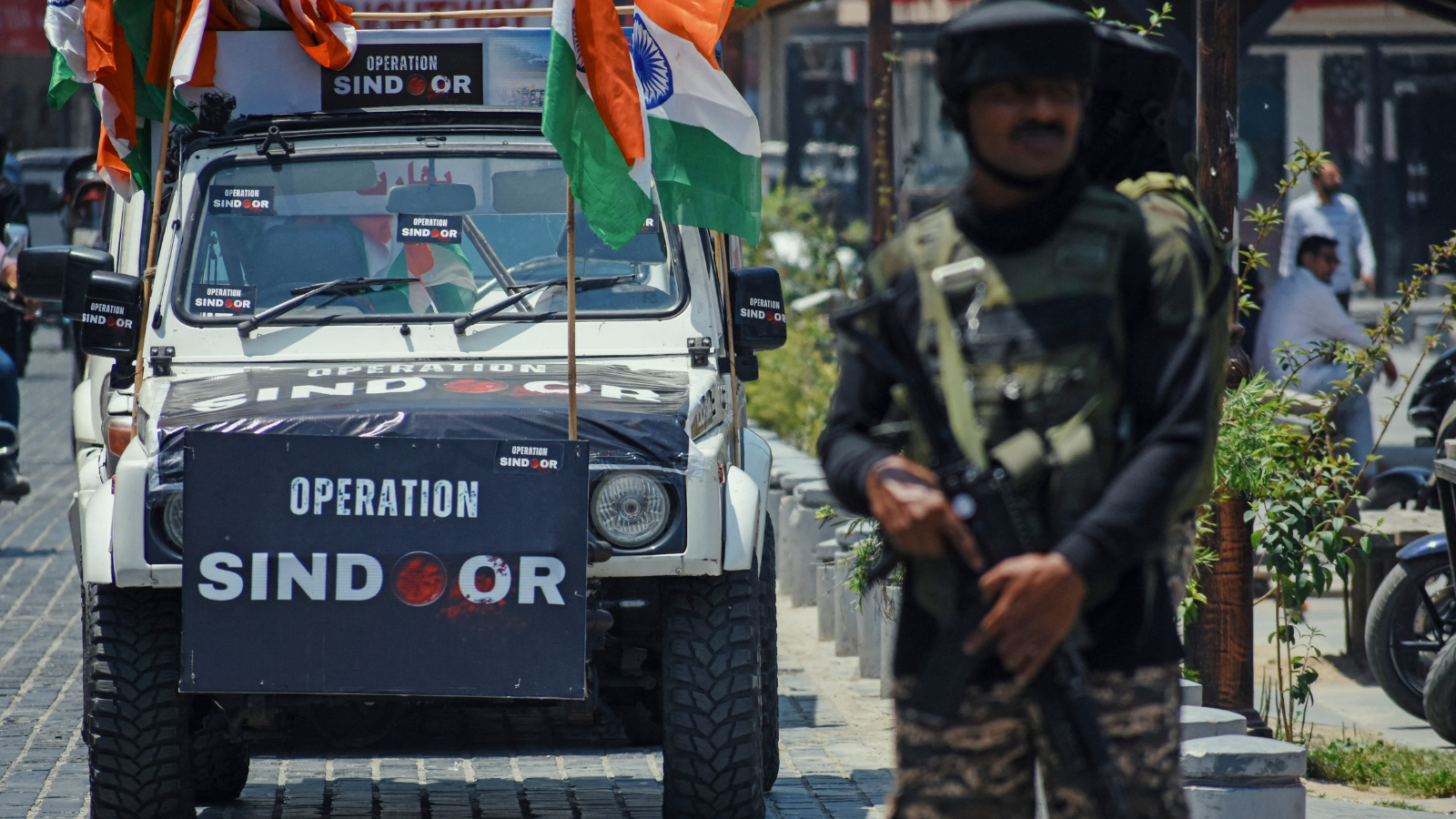
The India-Pakistan conflict that played out between May 6 and May 10, 2025, offers several military lessons. This article presents key takeaways from Operation Sindoor and breaks down how India’s preparations shaped the outcome and what more is needed to strengthen future readiness.
Dinakar Peri