

In The Media
Lina Khatib
{
  "authors": [
    "Lina Khatib"
  ],
  "type": "legacyinthemedia",
  "centerAffiliationAll": "",
  "centers": [
    "Carnegie Endowment for International Peace",
    "Malcolm H. Kerr Carnegie Middle East Center"
  ],
  "collections": [],
  "englishNewsletterAll": "",
  "nonEnglishNewsletterAll": "",
  "primaryCenter": "Malcolm H. Kerr Carnegie Middle East Center",
  "programAffiliation": "",
  "programs": [],
  "projects": [],
  "regions": [
    "Gulf",
    "Levant",
    "Syria",
    "Middle East"
  ],
  "topics": [
    "Political Reform",
    "Security"
  ]
}
Source: Getty
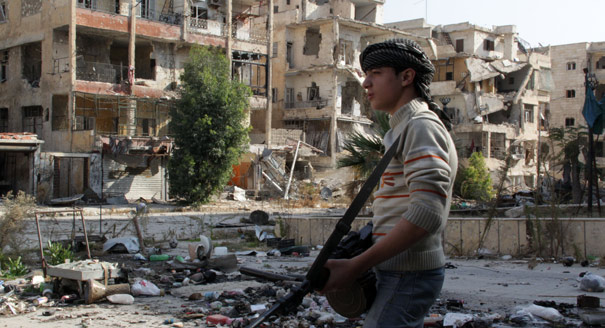
The Syrian military’s recapture of Yabroud has severely weakened an already fragmented opposition.
Source: Radio France Internationale English
ERIN CONROY: Lina Khatib is the director for the Carnegie Middle East Center in Beirut.
Could you start by telling us a bit about where extremist groups in Syria are getting the bulk of their funding at the moment?
LINA KHATIB: The primary sponsors of jihad groups in Syria are Gulf countries: primarily Kuwait, Saudi Arabia, and Qatar. But we have to recognize that funding from those countries is not always state funding; sometimes it comes from non-state actors from the Gulf.ERIN CONROY: With Islamists in retreat now in Yabroud, where are they likely to seek refuge and where are they finding their support?
LINA KHATIB: The fighters who have been defeated in the latest battle in Yabroud have been fleeing in a number of directions, and a lot of them have headed to the north of Lebanon. In the north of Lebanon, they do have sympathy amongst certain Salafist groups who reside in that area, and currently, I know that there is a search taking place for rebel fighters who have fled Yabroud in that area.
Now that the Syrian state army has taken over Yabroud, this has significantly weakened the position of rebel extremists in the area. And Yabroud had been a main thoroughfare for explosives that had been smuggled into Lebanon and had been used for a number of the car bombs that had been detonated in the country over the past few months. So it is likely that we are going to see a reduction in the number of explosions happening in Lebanon orchestrated by Jabhat Al-Nusra and other groups, because Yabroud had been a main thoroughfare for the smuggling of explosives into Lebanon.
This also means that the Syrian state army is now mostly in control of the Qalamoun area, which basically means that, further down the line, the secular opposition in Syria is under threat as well of being defeated by the Syrian regime, and that is a different story that I think is not good news for the [unclear] of the armed rebellion against Present Bashar Al-Assad.
At the moment most of the rebels, if we’re talking about jihadist rebels, jihadist rebels are taking money from a number of sources in the Gulf. Some state funding from Qatar, Saudi Arabia, and Kuwait, but mostly non-state funding from non-state actors who also happen to be Qatari or Saudi or from Kuwait. And sometimes those non-state actors are funding groups official Gulf countries are against. Those non-state actors are not necessarily following the official foreign policy of the countries they come from.
ERIN CONROY: And how have factures within rebel groups hurt their ability to get funding?
LINA KHATIB: A lot of the extremist groups in Syria get funding from competing sources and this has contributed to the lack of unity and homogeneity amongst those groups. There have been attempts, such as those led by Saudi Arabia, to bring some of the jihadist groups together under one umbrella such as the Islamic Fund. But a lot of the other groups remain fragmented, and that’s because they are sponsored by individual non-state actors who have their own strategic interest and agendas and are trying to get a stake in the Syrian conflict, which has made the operations of various jihadist groups on the ground in Syria rather weak.
I mean there’s one thing–which it’s about ISIS, the Islamic State of Iraq and Syria–they are starting to generate their own funding in the north of Syria through the sale of petrol. This is a similar trajectory to what’s happening in Iraq in relation to funding of Islamist groups, ISIS becomes more or less self-financing.
In addition to external funding that channel towards rebel groups in Syria, there is also homegrown funding, which mainly comes from the sale of petrol in the north of Syria which groups like ISIS are reliant on. The trajectory so far is that such financing by rebel groups is becoming an increasing trend. It has already become an established trend in Iraq.
If Syria heads in the same direction as Iraq, then it’s become very difficult for any external or even internal actor to control the actions of rebel groups; because if they’re not reliant on the funding from outside then they don’t have any sponsors to answer to, which will make it very difficult to basically lead the conflict into any form of settlement.
ERIN CONROY: That was Lina Khatib. She is the director of the Carnegie Middle East Center in Beirut.
LINA KHATIB: Okay, excellent. Thank you so much.
This interview was originally broadcast on Radio France Internationale English.
Former Director, Middle East Center
Khatib was director of the Carnegie Middle East Center in Beirut. Previously, she was the co-founding head of the Program on Arab Reform and Democracy at Stanford University’s Center on Democracy, Development, and the Rule of Law.
Recent Work
Lina Khatib
Lina Khatib
Carnegie India does not take institutional positions on public policy issues; the views represented herein are those of the author(s) and do not necessarily reflect the views of Carnegie, its staff, or its trustees.

In any defense establishment, change is an ongoing process. However, despite the best of intentions, existing bureaucracies, bound by habit and years of socialization, have their limits in implementing transformative change.

Anit Mukherjee

After the chill in ties between 2020 and 2024 that brought India–China relations to their lowest point in several decades, the two countries have engaged each other afresh. This paper argues that there are predominantly four imperatives guiding India’s approach to China, and they exist in an order of priority.

Saheb Singh Chadha

This piece argues that the present Indian strategy, based on opportunistic diversification and utilization of limited strategic reserves, remains inadequate when confronting supply disruptions. It evaluates India’s options in the short, medium, and long terms.

Vrinda Sahai

This piece examines India’s response to U.S. sanctions and tariffs, specifically assessing the immediate market consequences, such as alterations in import costs, and the broader strategic implications for India’s energy security and foreign policy orientation.
Vrinda Sahai
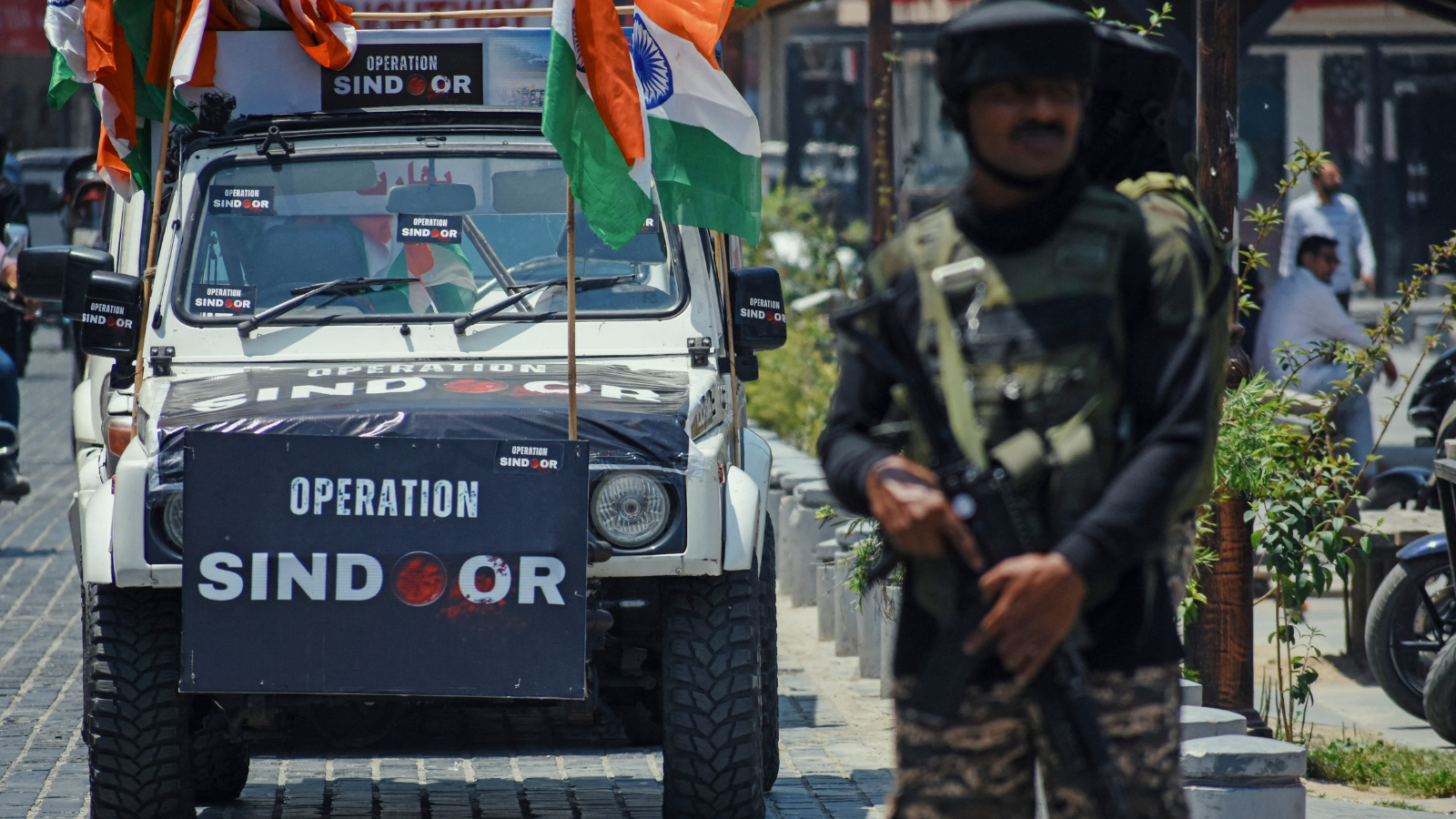
The India-Pakistan conflict that played out between May 6 and May 10, 2025, offers several military lessons. This article presents key takeaways from Operation Sindoor and breaks down how India’s preparations shaped the outcome and what more is needed to strengthen future readiness.
Dinakar Peri