

Report
- +3
James M. Acton, Alexey Arbatov, Vladimir Dvorkin, …
{
  "authors": [
    "Petr Topychkanov"
  ],
  "type": "commentary",
  "centerAffiliationAll": "",
  "centers": [
    "Carnegie Endowment for International Peace",
    "Carnegie Russia Eurasia Center"
  ],
  "collections": [],
  "englishNewsletterAll": "",
  "nonEnglishNewsletterAll": "",
  "primaryCenter": "Carnegie Russia Eurasia Center",
  "programAffiliation": "",
  "programs": [],
  "projects": [
    "Eurasia in Transition"
  ],
  "regions": [
    "Middle East",
    "Türkiye",
    "South Asia",
    "India",
    "Russia"
  ],
  "topics": [
    "Economy",
    "Foreign Policy",
    "Nuclear Policy",
    "Nuclear Energy"
  ]
}
Source: Getty
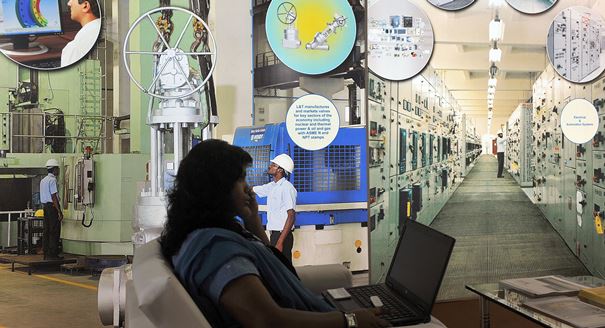
Though largely overlooked by international media, Russia has signed several significant nuclear energy agreements over the last several months. These agreements give Russia an opportunity to develop nuclear cooperation with India, Turkey, and Iran, as well as Bangladesh, Vietnam, and Egypt, where Russia plans to build nuclear plants too.
Though largely overlooked by international media, Russia has signed several significant nuclear energy agreements over the last several months. These agreements give Russia an opportunity to develop nuclear cooperation with India, Turkey, and Iran. Plus Bangladesh, Vietnam, and Egypt, where Russia plans to build nuclear plants too. Vladimir Putin called the nuclear deal with India a step toward “cooperation on a different level” and these words are equally applicable to the other aforementioned countries.
Of the deals signed, the agreement with India appears to have the most potential, as Beijing and New Delhi already have relatively developed bilateral relations. On December 11, 2014, Russia and India signed a number of documents, including the Strategic Vision for Strengthening Cooperation in Peaceful Uses of Atomic Energy Between the Republic of India and the Russian Federation, a provision on non-disclosure of technical data and confidential information, and a set of documents laying the groundwork for the construction of the third and fourth reactors at the Kudankulam Nuclear Power Plant. Nuclear energy cooperation is also covered in Paragraph 6 of the Druzhba-Dosti Joint Statement: A Vision for Strengthening the Indian-Russian Partnership over the Next Decade.
It is noteworthy that Russian high-ranking officials speak of the burgeoning nuclear cooperation with India in terms similar to those they use when describing Russia’s nascent nuclear cooperation with Turkey. For instance, during his visit to Ankara on December 1, Vladimir Putin said, “The Russian Rosatom Corporation doesn’t just build a facility in Turkey—a nuclear power plant; it creates an entire industry.” Subsequently, during his New Delhi visit on December 11, he stated, “This is not just trading goods or services or even technology—it is the creation of an entire industry, a new industry for India.”
These words are perfectly applicable to Turkey, but not India, whose nuclear sector is only slightly younger than Russia’s. The Soviet Union launched its first research reactor in 1946 in Moscow; India launched a similar reactor in 1956 in Trombay. As with Indian companies, Rosatom wants Turkish companies to be maximally involved in manufacturing equipment for future nuclear power plants in Turkey and third countries. On December 1, 2014, its general director, Sergey Kiriyenko, spoke of possible Turkish participation in Rosatom’s foreign construction projects.
The similarities between Rosatom’s approaches to Turkey and India are hardly coincidental. It appears that the corporation is trying to use the same approach in both cases. The approach involves efforts to assist the recipient countries with building their nuclear industry (rather than simply constructing nuclear power plants), maximally localizing equipment manufacturing, as well as being open to joint nuclear power plant construction projects in third countries.
Evidently, the same, somewhat modified approach will be used with Bangladesh, Vietnam, Egypt and Iran. It is still too early to expect that the local enterprises in those countries will participate in joint equipment manufacturing for Russian-engineered nuclear power plants in third countries, like they do in India and Turkey. However, local manufacturers will be involved in manufacturing equipment for national nuclear power plants to the extent possible.
Former Fellow, Nonproliferation Program, Moscow Center
Topychkanov was a fellow in the Carnegie Moscow Center’s Nonproliferation Program.
Recent Work

James M. Acton, Alexey Arbatov, Vladimir Dvorkin, …
Petr Topychkanov
Carnegie India does not take institutional positions on public policy issues; the views represented herein are those of the author(s) and do not necessarily reflect the views of Carnegie, its staff, or its trustees.

In any defense establishment, change is an ongoing process. However, despite the best of intentions, existing bureaucracies, bound by habit and years of socialization, have their limits in implementing transformative change.

Anit Mukherjee

As AI grows more sophisticated, as the supply chains that power it become more contested, and as access to frontier models becomes geopolitically charged, India must begin to ask a different set of questions. Not what applications it can build on someone else’s infrastructure but what the world needs.

Konark Bhandari

The Indian Ocean Region hosts one of the densest concentrations of subsea cables in the world. Yet, despite accounting for a significant share of global internet traffic, India’s participation remains limited.

Charukeshi Bhatt

How is AI reshaping space security, creating governance challenges, and where does international diplomacy stand today?


Tejas Bharadwaj, Almudena Azcárate Ortega

After the chill in ties between 2020 and 2024 that brought India–China relations to their lowest point in several decades, the two countries have engaged each other afresh. This paper argues that there are predominantly four imperatives guiding India’s approach to China, and they exist in an order of priority.

Saheb Singh Chadha