

Paper
James M. Acton, Ankit Panda
{
  "authors": [
    "James M. Acton"
  ],
  "type": "legacyinthemedia",
  "centerAffiliationAll": "dc",
  "centers": [
    "Carnegie Endowment for International Peace",
    "Malcolm H. Kerr Carnegie Middle East Center"
  ],
  "collections": [
    "Iranian Proliferation",
    "U.S. Nuclear Policy"
  ],
  "englishNewsletterAll": "ctw",
  "nonEnglishNewsletterAll": "",
  "primaryCenter": "Carnegie Endowment for International Peace",
  "programAffiliation": "NPP",
  "programs": [
    "Nuclear Policy"
  ],
  "projects": [],
  "regions": [
    "North America",
    "United States",
    "Middle East",
    "Iran"
  ],
  "topics": [
    "Political Reform",
    "Security",
    "Nuclear Policy",
    "Arms Control"
  ]
}
Source: Getty
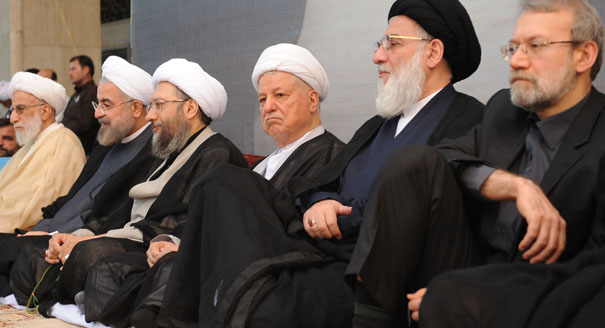
The big unknown at this point in the negotiations is how much Iran is willing to concede in its enrichment program in order to get sanctions relief. While Iran wishes to remove all sanctions immediately, the United States and its allies would like to see the sanctions removed gradually.
Source: Bloomberg News
Carnegie’s James Acton discussed Iran’s nuclear talks and trade sanctions on Bloomberg News’ Bottom Line. Acton told Bloomberg News that the big unknown at this point is how much Iran is willing to concede in its enrichment program in order to get sanctions relief. While Iran wishes to remove all sanctions immediately, the United States and its allies would like to see the sanctions removed gradually.
“There are stories coming out of the negotiations that the number of centrifuges that Iran would be permitted to operate has been agreed,” Acton said. “It’s also been reported that one of the big undecideds is the pace at which Iran demands sanctions relief," he added.
Another component to the negotiations is that many members of Congress, along with Israel, do not trust the Iranians. “Trust but verify is exactly the policy that the Obama administration is adopting for this negotiation,” Acton told Bloomberg News. “In major parts of any agreement—should one be reached—would be intrusive inspections on Iran’s program that go above and beyond additional standards,” he added.
“The Obama administration firmly believes that Iran should not be allowed to get nuclear weapons. The question is how to prevent that from happening, and [Israeli Prime Minister] Netanyahu’s proposal is completely divorced from reality in terms of any likelihood it will work," Acton concluded.

Jessica T. Mathews Chair, Co-director, Nuclear Policy Program
Acton holds the Jessica T. Mathews Chair and is co-director of the Nuclear Policy Program at the Carnegie Endowment for International Peace.
Recent Work

James M. Acton, Ankit Panda
James M. Acton
Carnegie India does not take institutional positions on public policy issues; the views represented herein are those of the author(s) and do not necessarily reflect the views of Carnegie, its staff, or its trustees.

How is AI reshaping space security, creating governance challenges, and where does international diplomacy stand today?


Tejas Bharadwaj, Almudena Azcárate Ortega

After the chill in ties between 2020 and 2024 that brought India–China relations to their lowest point in several decades, the two countries have engaged each other afresh. This paper argues that there are predominantly four imperatives guiding India’s approach to China, and they exist in an order of priority.

Saheb Singh Chadha

The U.S.–India semiconductor cooperation story is well-stocked with top-level strategic intent. What remains unresolved, however, are some underlying challenges that will determine whether the cooperation actually functions. Three such friction points stand out.

Shruti Mittal

This piece argues that the present Indian strategy, based on opportunistic diversification and utilization of limited strategic reserves, remains inadequate when confronting supply disruptions. It evaluates India’s options in the short, medium, and long terms.

Vrinda Sahai

India and the United States are close to concluding a Reciprocal Defense Procurement Agreement (RDPA) that will allow firms from the two countries to sell to each other’s defense establishments more easily. While this may not remedy the specific grievances both sides may have regarding larger bilateral issues, an RDPA could restore some momentum, following the trade deal announcement.

Konark Bhandari