

Research
- +4
Milan Vaishnav, Rahul Verma, Rukmini S., …
{
  "authors": [
    "Christophe Jaffrelot"
  ],
  "type": "legacyinthemedia",
  "centerAffiliationAll": "dc",
  "centers": [
    "Carnegie Endowment for International Peace"
  ],
  "collections": [],
  "englishNewsletterAll": "ctw",
  "nonEnglishNewsletterAll": "",
  "primaryCenter": "Carnegie Endowment for International Peace",
  "programAffiliation": "SAP",
  "programs": [
    "South Asia"
  ],
  "projects": [],
  "regions": [
    "South Asia",
    "India"
  ],
  "topics": [
    "Political Reform",
    "Economy"
  ]
}
Source: Getty
The BJP faces a dilemma: While inaction may exacerbate the discontent of the Hardik Patels of tomorrow, any questioning of the reservation system may alienate low-caste voters.
Source: Indian Express
On the eve of the Bihar assembly polls, Prime Minister Narendra Modi declared: “My government is committed to the Indian Constitution, including the reservation policies which Dr Ambedkar evolved for the emancipation of the socially oppressed and suppressed sections of society”.
However, while the quota system conceived by Babasaheb Ambedkar is based on caste, the recent Patel agitation in Gujarat questioned this criterion. The president of the Kshatriya-Thakor Sena, an OBC organisation, Alpesh Thakor, termed the Patel movement as “part of a larger conspiracy to remove the reservation [system]” as it has been functioning so far. His apprehensions were substantiated by RSS chief Mohan Bhagwat’s interview to the Organiser, and by senior RSS leader M.G. Vaidya’s statements. Vaidya said that Hardik Patel, the main leader of the Patel agitation, who, according to Vaidya, contested the use of caste as a criterion for reservations, was “right in this regard”. “People are backward these days not because of caste but because of economic conditions. If the criterion of reservation is changed from caste to economic status, then there won’t be permanent reservation. Caste-based reservation is making people remember their caste. How can you eradicate it if you make them remember it since their birth?” Vaidya said.This proposition harks back to the RSS’s traditional stand, which opposed the implementation of the Mandal Commission report and advocated, instead, quotas based on socio-economic criteria. The BJP has always been cautious on this front so as not to alienate OBC voters, a majority of the electorate.
In the 1990s, some of its leaders were even in favour of the “Mandalisation” of the party in the name of “social engineering”, a move that was short-lived because of inner-party opposition.
Today, BJP governments in some states are experimenting with something different. In Rajasthan, seemingly the most active BJP laboratory for “reforms”, two bills were passed in September: the Rajasthan economically backward classes bill and the Rajasthan special backward classes bill. They cater to the needs of two different groups. The first, in accordance with Vaidya’s recommendations, is intended to reserve 14 per cent of the seats in educational institutions and public-sector jobs for those who are neither OBCs nor SCs/ STs, but poor. The second, in tune with the traditional method, uses the caste criterion to establish additional quotas for the benefit of additional jatis. Among them, Gujjars, who have been demanding quotas for a long time, are the largest group. The Rajasthan government has not taken away any existing reservations. In a bid to circumvent the Supreme Court’s 49 per cent cap on reservations, the state government is seeking the inclusion of these two legislation that have pushed the total proportion of quotas up to 68 per cent in the Ninth Schedule of the Constitution. The inclusion of Tamil Nadu’s legislation on reservation in the Ninth Schedule has allowed quotas in the state to touch 69 per cent. Whether the court is prepared to make another exception remains to be seen.
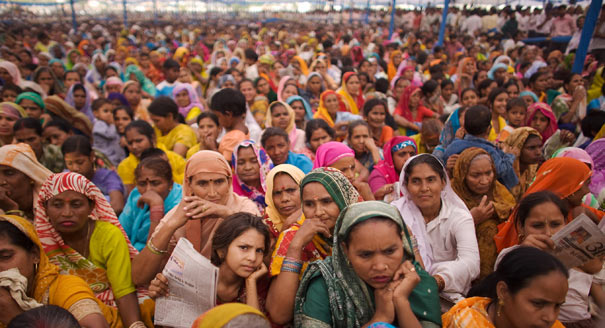
Even so, the Rajasthan government’s decision is revealing of an attempt to question the exclusion from the reservation policy of certain groups that claim it an injustice. These groups come primarily from what M.N. Srinivas called “dominant castes”: castes that are numerous and own comparatively more land than others. These broad categories are witnessing differentiation along class lines because of the capacity of some of their members to grow cash crops, access education, and migrate to cities. Many do well but others do not get the jobs they hoped for — unsurprising given the jobless growth in India — in spite of having a better education, and a costly education when it is acquired privately. This results in frustrations and the demand for quotas — or their abolition. Several groups have witnessed this same trajectory. Patels, Gujjars and Marathas are cases in point. The Maharashtra government has endorsed the demand of Marathas and filed an appeal in the Supreme Court after the Bombay High Court rejected the 16-per cent reservations for Marathas last year.
But the judges will probably not reverse decades of jurisprudence easily and the malaise of these groups is likely to deepen. Hardik Patel already views these groups as sharing common interests — and even a common identity. For him, “Patel” is the Gujarati name of a generic category that is present all over India and which he calls “Patidars”: “We may be 1.8 crore in Gujarat, but nationally we are 27 crore. Chief Minister of Bihar Nitish Kumar is from our community and so is Andhra Pradesh Chief Minister Chandrababu Naidu. In all, we have 117 Patidar members of Parliament. This demonstrates our strength and reach .”
Whether or not these groups form a new social coalition at the national level, the BJP will have to address their demand one way or another. The party may then face a dilemma. On the one hand, the judges’ “no” and other excuses for inaction may only exacerbate the discontent of the Hardik Patels of tomorrow. But on the other, any questioning of the reservation system may alienate all the low castes, including Dalits, at a time when the BJP is trying to benefit from the decline of the BSP in UP. Interestingly, Udit Raj, one of the Dalit faces of the party, has announced a big pro-reservation rally in Delhi on December 7. But will this be sufficient for defusing the consolidation of the coalition of those who benefit from the quota system today and fear for its future? In Gujarat, a new version of the KHAM coalition (Kshatriya, Harijan, Adivasi and Muslim) is already taking shape: OBCHA (OBC, Harijan and Adivasi).
In the past, when caste politics damaged the political prospects of the BJP in Gujarat, as in the 1980s, when Madhavsinh Solanki registered electoral performances no BJP leader has matched so far, the Sangh Parivar resorted to religion-based mobilisations. This antidote has effectively silenced the Congress and ensured the BJP’s rise for 20 years. Will it work again? Can it be tried again? The answer to this question, which may become clear only after local elections in the state, is not important only for Gujarat but for the whole of India.
Former Nonresident Scholar, South Asia Program
Jaffrelot’s core research focuses on theories of nationalism and democracy, mobilization of the lower castes and Dalits (ex-untouchables) in India, the Hindu nationalist movement, and ethnic conflicts in Pakistan.
Recent Work

Milan Vaishnav, Rahul Verma, Rukmini S., …
Christophe Jaffrelot
Carnegie India does not take institutional positions on public policy issues; the views represented herein are those of the author(s) and do not necessarily reflect the views of Carnegie, its staff, or its trustees.

In any defense establishment, change is an ongoing process. However, despite the best of intentions, existing bureaucracies, bound by habit and years of socialization, have their limits in implementing transformative change.

Anit Mukherjee

As AI grows more sophisticated, as the supply chains that power it become more contested, and as access to frontier models becomes geopolitically charged, India must begin to ask a different set of questions. Not what applications it can build on someone else’s infrastructure but what the world needs.

Konark Bhandari

The Indian Ocean Region hosts one of the densest concentrations of subsea cables in the world. Yet, despite accounting for a significant share of global internet traffic, India’s participation remains limited.

Charukeshi Bhatt

How is AI reshaping space security, creating governance challenges, and where does international diplomacy stand today?


Tejas Bharadwaj, Almudena Azcárate Ortega

After the chill in ties between 2020 and 2024 that brought India–China relations to their lowest point in several decades, the two countries have engaged each other afresh. This paper argues that there are predominantly four imperatives guiding India’s approach to China, and they exist in an order of priority.

Saheb Singh Chadha