

Research
- +4
Milan Vaishnav, Rahul Verma, Rukmini S., …
{
  "authors": [
    "Christophe Jaffrelot"
  ],
  "type": "legacyinthemedia",
  "centerAffiliationAll": "dc",
  "centers": [
    "Carnegie Endowment for International Peace"
  ],
  "collections": [],
  "englishNewsletterAll": "ctw",
  "nonEnglishNewsletterAll": "",
  "primaryCenter": "Carnegie Endowment for International Peace",
  "programAffiliation": "SAP",
  "programs": [
    "South Asia"
  ],
  "projects": [],
  "regions": [
    "South Asia",
    "India"
  ],
  "topics": [
    "Political Reform",
    "Civil Society"
  ]
}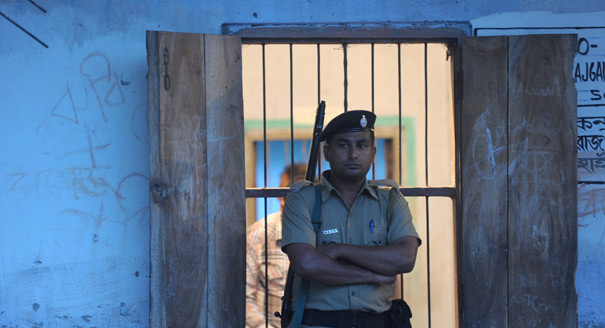
Source: Getty
Anti-Dalit attitudes are on the rise.
Source: Indian Express
The Dalit mobilisation that is gaining momentum in the wake of Rohith Vemula’s suicide reflects structural issues that he was well aware of. Certainly, reservations have given birth to Dalit entrepreneurs and a Dalit middle class benefiting from government jobs. But in spite of this, or because of this, anti-Dalit attitudes have been on the rise.
The number of registered cases of anti-Dalit atrocities, notoriously under-reported, jumped by 17.1 per cent in 2013 (compared to 2012) according to the National Crime Records Bureau (NCRB). The increase was even more dramatic between 2013 and 2014 — 19.4 per cent. The word “atrocities” needs to be fleshed out here, otherwise it will become another bureaucratic, abstract euphemism.The Scheduled Castes and Scheduled Tribes (Prevention of Atrocities) Act, 1989 (the PoA act), gives a list of “offences and atrocities”.
Someone is guilty of one of these “offences and atrocities” if he or she forces a Dalit or an Adivasi “to drink or eat any inedible or obnoxious substance”, “forcibly removes clothes from the person of a member of a Scheduled Caste or a Scheduled Tribe or parades him [sic] naked or with painted face or body”, dispossesses him “from his land”, compels him to do “bonded labour”, “exploits her sexually”, “corrupts or fouls the water” he or she is using, denies him or her “right of passage to a place of public resort”, forces him or her “to leave his house, village or other place of residence”, etc.
This list is surprising, not only because of its detail but also because the Constitution drafted by Ambedkar had already taken care of most of these issues. Article 17 abolishes untouchability, Article 23 prohibits bonded labour and Article 15(2) stipulates that no citizen should be subject to restriction with regard to access to shops, public restaurants, hotels and places of entertainment, the use of wells, tanks, bathing ghats, roads and places of public resort on the grounds of caste. In 1955, the Untouchability (Offences) Act reasserted that Dalits should not be prevented from entering any public place. Then, in 1976, the Bonded Labour System (Abolition) Act was passed. In 1989, why did a new, detailed law have to be made that listed instances of “offences and atrocities”? Because none of the previous legislation had made any difference.
The PoA Act has not made a huge impact either, as evident from the figures mentioned above. Atrocities have continued, unbearably. In October 2014, a 15-year-old boy was burnt alive by an upper-caste man in Mohanpur village (Rohtas district) because his goats had eaten his paddy crop. In June 2015, two Dalit boys were killed in an altercation because they were short of Rs 4 in a flour mill of Allahabad. In October 2015, two kids of three and eight were burnt alive in their house in Ballabgarh village (Haryana) after an argument with local Rajputs. In May this year, a 21-year-old Dalit man was killed in Shirdi (Maharashtra) because he was playing a song in praise of Ambedkar.
In parallel, Dalit women continue to be victims of violence and rape, the same way as Mahasweta Devi, who turned 90 this month, described them decades ago in her short stories.
What has been the response of the state, lately? A new law was passed. Last month, the Indian Parliament made the existing legislation even more sophisticated. This law provides stringent action against those who sexually assault Dalits and Adivasis and occupy their land illegally; it also declares as an offence garlanding with footwear a man or a statue, compelling to dispose or carry human or animal carcasses or do manual scavenging.
Will that make any difference? Not if the police and the judiciary do not change their attitude. In spite of the fact that the PoA Act has introduced special courts for speedy trials, the conviction rate under this act has remained very low and has declined even — from 30 per cent in 2011 to 22.8 per cent in 2013 (more recent data are not available). And the percentage of “pending cases” has increased from 80 to 84 per cent.
But to have a case registered under the PoA Act is in itself a problem. On average, only one-third of the cases of atrocities are registered under the PoA Act. The police is reluctant to do so because of the severity of the penalties likely to be imposed by the act.
Many Dalits do not know their rights anyway and cannot fight a legal battle that is costly in terms of time and money. The 2011 Census offers a poignant picture of the socio-economic condition of the SCs, which explains their vulnerability. Out of the 4,42,26,917 Dalit households in India, 74 per cent live in rural areas, where the per-household land area they own on an average is less than 0.3 ha — most of them are landless. A total of 2,06,16,913 Dalit households live in one room and 1,39,24,073 in two rooms. Only 22 per cent of the Dalit households live in larger homes. And only 34 per cent of them have toilets in their premises. More than 50 per cent Dalit households use firewood as their main fuel for cooking.
The literacy rate among Dalits is rising, though. In 2011, their literacy rate crossed the 66 per cent landmark (8 percentage points below the non-SC/STs). But educated Dalits want more — to join the university system. Some of them have succeeded in doing so, but they often face frustrating experiences when they are discriminated against in the very institution that should promote social mobility. Rohith Vemula was one of them. There are many others. Take the case of Senthil Kumar from Jalakandapuram (near Salem). This son of a pig-breeder joined Hyderabad University, just like Rohith Vemula, and got a PhD scholarship in physics in 2007. But he committed suicide in 2008 — victim of the local atmosphere — after failing his exams and losing his scholarship. Today, the children of his family don’t want education — his mother even “hates education”. But can a country progress if a fifth of its population does not have full access to higher education? What kind of development (today’s key word in India) will that be?
This article was originally published in the Indian Express.

Former Nonresident Scholar, South Asia Program
Jaffrelot’s core research focuses on theories of nationalism and democracy, mobilization of the lower castes and Dalits (ex-untouchables) in India, the Hindu nationalist movement, and ethnic conflicts in Pakistan.
Recent Work


Milan Vaishnav, Rahul Verma, Rukmini S., …
Christophe Jaffrelot
Carnegie India does not take institutional positions on public policy issues; the views represented herein are those of the author(s) and do not necessarily reflect the views of Carnegie, its staff, or its trustees.

In any defense establishment, change is an ongoing process. However, despite the best of intentions, existing bureaucracies, bound by habit and years of socialization, have their limits in implementing transformative change.

Anit Mukherjee

As AI grows more sophisticated, as the supply chains that power it become more contested, and as access to frontier models becomes geopolitically charged, India must begin to ask a different set of questions. Not what applications it can build on someone else’s infrastructure but what the world needs.

Konark Bhandari

The Indian Ocean Region hosts one of the densest concentrations of subsea cables in the world. Yet, despite accounting for a significant share of global internet traffic, India’s participation remains limited.

Charukeshi Bhatt

How is AI reshaping space security, creating governance challenges, and where does international diplomacy stand today?


Tejas Bharadwaj, Almudena Azcárate Ortega

After the chill in ties between 2020 and 2024 that brought India–China relations to their lowest point in several decades, the two countries have engaged each other afresh. This paper argues that there are predominantly four imperatives guiding India’s approach to China, and they exist in an order of priority.

Saheb Singh Chadha