

Research
- +4
Milan Vaishnav, Rahul Verma, Rukmini S., …
{
  "authors": [
    "Christophe Jaffrelot"
  ],
  "type": "legacyinthemedia",
  "centerAffiliationAll": "dc",
  "centers": [
    "Carnegie Endowment for International Peace"
  ],
  "collections": [],
  "englishNewsletterAll": "ctw",
  "nonEnglishNewsletterAll": "",
  "primaryCenter": "Carnegie Endowment for International Peace",
  "programAffiliation": "SAP",
  "programs": [
    "South Asia"
  ],
  "projects": [],
  "regions": [
    "South Asia",
    "India"
  ],
  "topics": [
    "Political Reform"
  ]
}
Source: Getty
Bhagat Singh believed neither in religion nor violence.
Source: Indian Express
Bhagat Singh was in the headlines on the occasion of the 85th anniversary of his death on March 23. But does the publicity he was getting do justice to the man he was? After all, he believed neither in religion nor in violence.
His rejection of religion as it was practised by his fellow countrymen has been systematically articulated in the name of humanistic values. He once said: “A branch of peepal tree is cut and religious feelings of the Hindus are injured. A corner of a paper idol, tazia, of the idol-breaker Mohammedans is broken, and ‘Allah’ gets enraged, who cannot be satisfied with anything less than the blood of the infidel Hindus. Man ought to be attached more importance than the animals and, yet, here in India, they break each other’s heads in the name of ‘sacred’ animals.”This humanism was key to the Hindustan Socialist Republican Association that Bhagat Singh initiated in 1928. He drew most of his ideas from readings. The list of books in his library, however, shows works of various Western authors: One finds Karl Marx, Friedrich Engels, Leon Trotsky, Alfred Barton, Thomas Paine, Upton Sinclair, Morris Hillquit, Jack London, Theodor Hertzka, Patrick McGill, Scott Nearing, Victor Hugo, Fyodor Dostoyevsky, Baruch Spinoza, Henry van Dyke, Bertrand Russell, John Stuart Mill, Thomas Jefferson, Karl Kautsky, Nikolai Bukharin, Edmund Burke, Vladimir Lenin, Thomas d’Aquin, John Locke, Austin, Georges Danton, Charles Edwards Russell, James Russell Lowell, William Wordsworth, Lord Tennyson, V.N. Figner, N.A. Morozov, Horace Greeley, Wendell Phillips, Frederic Harrison, J. Campbell, George D. Herron, Herbert Spencer, Henry Maine and Jean-Jacques Rousseau.
Bhagat Singh presented his view of religion in Why I am an Atheist, written in prison — just when he was condemned to death. He said he stopped believing in god after he “studied Bakunin, the anarchist leader, something of Marx, the father of communism, and much of Lenin, Trotsky and others, the men who had successfully carried out a revolution in their country… By the end of 1926, I had been convinced as to the baselessness of the theory of existence of an almighty supreme being who created, guided and controlled the universe”.
His rejection of religion as the “opium of the people” went together with his socialist criticism of society. He wanted to get rid of two forms of oppression, not only capitalism but also the caste system. In Why I am an Atheist, he objected to “the punishment of those people who were deliberately kept ignorant by the haughty and egotist Brahmans and who had to pay the penalty by bearing the stream of being led in their ears for having heard a few sentences of your sacred books of learning, the Vedas.”
Bhagat Singh targeted individual imperialists. But how could some attacks against a few British people prepare the ground for revolution? For Bhagat Singh, striking the British this way was to show them that Indians did not lay down their arms and that their submission was forced. He wanted to face death to give courage to others. This stands out clearly from the letter in which Bhagat Singh, from his distant, condemned cell, strongly reproached his father who had been trying for his clemency. He refused mercy, refused life — till the very end. He wished that his trial remain in the annals of history as a moment when the British clearly appeared contemptuous of the law and he wished nothing else than to die like a martyr, a model to be emulated.
Bhagat Singh was clearly not an advocate of violence for the sake of violence, an anti-Gandhi, as some people would like to depict him today. Violence not only had to give Indians an opportunity to show their courage — and to give courage to those who could, now, imitate him — but it also had to aim at some social goal. On April 8, 1929, he threw two bombs, along with B.K. Dutt, in the Central Legislative Assembly, not to kill (they made sure not to hurt anybody) but “to make the deaf hear”, according to the tracts they distributed at the time.
They wanted to dissuade the assembly from voting for a law, namely, the Public Safety and Trade Disputes Bill, whose implementation would have penalised Indian workers. This motivation reflected not an anarchist but a socialist mindset.
The rejection of violence as a legitimate method was even clearer from the declaration of Bhagat Singh and B.K. Dutt before their judges. In it, they emphasised that the two bombs had been thrown at the unoccupied rows and that their composition — the details of which they provided, like great chemists — made them inoffensive. Bhagat Singh and B.K. Dutt even defended themselves against their recourse to violence — they merely spoke of “force”: “Force, when aggressively applied is ‘violence’ and is, therefore, morally unjustifiable, but when it is used in the furtherance of a legitimate cause, it has its moral justification”.
The denial of violence comes up constantly in the discourse of Bhagat Singh. From his prison where he had only a month left before his execution, Bhagat Singh, in prophetic terms, redefined the revolutionary technique to be followed: “We require — to use the term so dear to Lenin — the ‘professional revolutionaries’. The whole-time workers who have no other ambitions or life-work except the revolution. The greater the number of such workers organised into a party, the greater the chances of your success. To proceed systematically, what you need the most is a party with workers of the type discussed above with clear-cut ideas and keen perception and ability of initiative and quick decisions. The party shall have iron discipline and it need not necessarily be an underground party, rather the contrary”. To build a party fighting electoral battles for a socialist agenda was to be the strategy of the CPI after 1951.
Former Nonresident Scholar, South Asia Program
Jaffrelot’s core research focuses on theories of nationalism and democracy, mobilization of the lower castes and Dalits (ex-untouchables) in India, the Hindu nationalist movement, and ethnic conflicts in Pakistan.
Recent Work

Milan Vaishnav, Rahul Verma, Rukmini S., …
Christophe Jaffrelot
Carnegie India does not take institutional positions on public policy issues; the views represented herein are those of the author(s) and do not necessarily reflect the views of Carnegie, its staff, or its trustees.

The Indian Ocean Region hosts one of the densest concentrations of subsea cables in the world. Yet, despite accounting for a significant share of global internet traffic, India’s participation remains limited.

Charukeshi Bhatt

How is AI reshaping space security, creating governance challenges, and where does international diplomacy stand today?


Tejas Bharadwaj, Almudena Azcárate Ortega

After the chill in ties between 2020 and 2024 that brought India–China relations to their lowest point in several decades, the two countries have engaged each other afresh. This paper argues that there are predominantly four imperatives guiding India’s approach to China, and they exist in an order of priority.

Saheb Singh Chadha

This piece argues that India’s central challenge is not managing a single flashpoint but resolving the underlying tension between expansion and institutional coherency of the BRICS grouping.

Vrinda Sahai
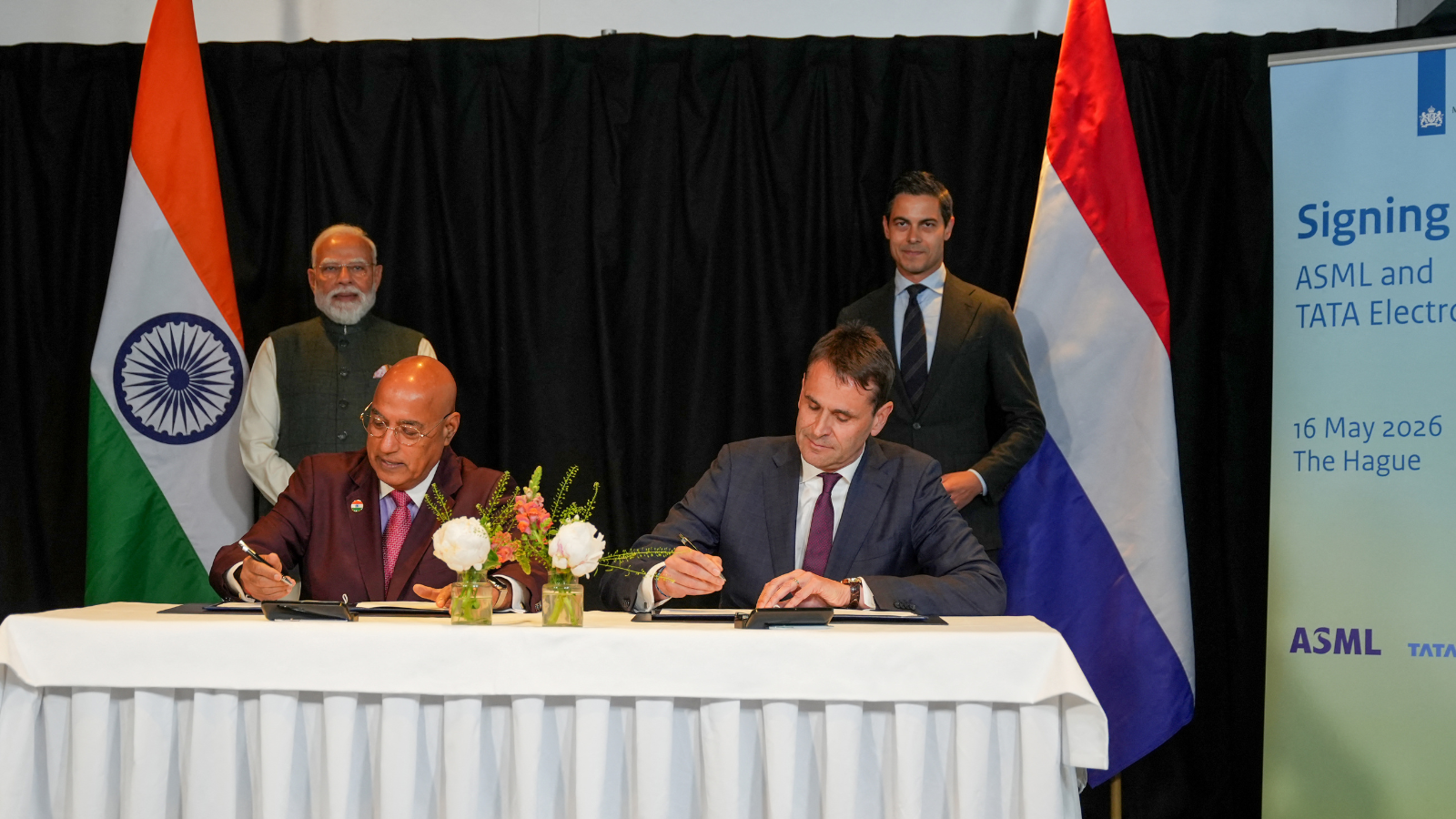
The ASML MoU with Tata Electronics is an indicator of how far the Indian semiconductor ecosystem has come. This ecosystem has been years in the making and represents real commercial logic.

Konark Bhandari