

Research
- +4
Milan Vaishnav, Rahul Verma, Rukmini S., …
{
  "authors": [
    "Christophe Jaffrelot"
  ],
  "type": "legacyinthemedia",
  "centerAffiliationAll": "dc",
  "centers": [
    "Carnegie Endowment for International Peace"
  ],
  "collections": [],
  "englishNewsletterAll": "ctw",
  "nonEnglishNewsletterAll": "",
  "primaryCenter": "Carnegie Endowment for International Peace",
  "programAffiliation": "SAP",
  "programs": [
    "South Asia"
  ],
  "projects": [],
  "regions": [
    "South Asia",
    "India"
  ],
  "topics": [
    "Political Reform"
  ]
}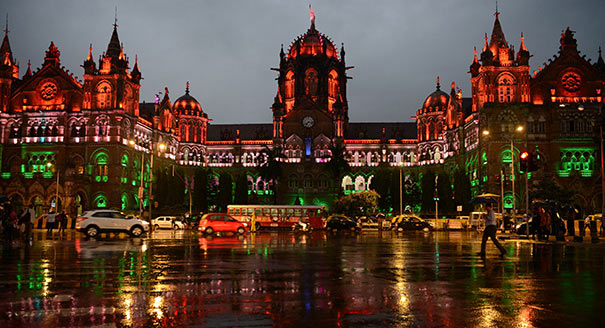
Source: Getty
The perception that Dalits owe their liberation to British colonialism continues to inspire many Dalits to celebrate the British conquest of India, in spite of accusations that such behavior is anti-national.
Source: Indian Express
Why do the Mahars take the risk of being labelled as “anti-national” by celebrating every year the 1818 battle of Koregaon that the British considered as a key victory in their conquest of India? The very fact that the Dalits take this risk reveals their gratefulness vis-à-vis the colonisers who have contributed to their emancipation by recruiting them in large numbers in the regular army which fought the Maratha Federation — and in the military industry (they were, for example, well represented in the ammunition factories). The Mahars had up to 70 non-commissioned officers in 20 regiments of the infantry and a naval regiment of their own, which was conducive to the formation of a small elite within them. Until the revolt of 1857, they represented about one-sixth of the regiments of the East India Company under the Bombay command.
Bhimrao Ramji Ambedkar was among the beneficiaries of this recruitment policy. His father, as his father before him, held a job in the army. He had joined in 1866 and in the course of his career he had been promoted as subedar and had become headmaster of an army school. This is why Ambedkar was born in the garrison town of Mhow (Military Headquarters of War). His mother came from a family which had even more fully benefited from the opportunities offered to the Mahars by the army since her father and six uncles were subedar-majors.
In 1892-93, the British stopped employing Mahars largely because members of other castes, and in particular the Marathas, were reluctant to mix with them. But since education was given to the children of military servants, not only the sons but also the daughters of Mahar soldiers were literate and this qualification was to help them to get other jobs in the city, especially in Bombay.
Besides, the Mahars benefited from the Westerners’ presence in another way, which contributed to their education too: Missionaries helped them, so much so that in 1881, Ahmednagar’s American Marathi Mission noticed that “the main part of our Christian converts are the Mahars”. In 1910, a petition of Mahars asking the British for the recruitment of members of their caste to the army underlined that “beneficial contact with the Christian religion immediately raised the Mahars”. It is also mentioned that those who “have attended schools and colleges, as Christian converts, have attained a distinction in the Indian University Examinations, and hold positions of Pleaders, Doctors, Professors, Magistrates, and Judges in this and other Presidencies.” Many Mahars also became priests according to this petition, which suggests that conversions were partially motivated by a desire for social ascent. Mahars opened schools and hostels for the use of members of their community in Nagpur, Poona, Ahmednagar and Amraoti. They thus reached a rate of literacy of 2.3 per cent in 1921 (against 0.01 per cent in 1901), which represented 5,000 men and 3,000 women in the Marathi-speaking districts of Bombay Presidency. Among them, 288 knew English, but only one, Ambedkar, was a university graduate.
As a result, in 1921, only 13 per cent of the active Mahars exercised one of their traditional professions, against 55 per cent of the Chambhars and 33.2 per cent of the Mangs. Many among them migrated to Bombay, where they often found a job in the police, in the factories (including the textile mills) or the mineral coal labour area of the docks.
While the British played a key role in the initial steps of the Mahars’ emancipation, some Marathas did too. While they were partly excluded from the army in 1892-93 because of some Maratha leaders, others helped them. The Maharaja of Baroda is a case in point. Fifteen days after Ambedkar had joined, as a lieutenant, the Baroda state army in 1913, his father died and he decided to resume his studies — with the help of the Maharaja. The Gaekwad, who had started schools for Dalits (where mostly Muslims agreed to teach) financed Ambedkar’s studies at the Elphinstone College of Bombay. After he graduated, the Maharaja offered him a deal: He would pay for further studies in the United States — where the son of the Gaekwad had been a student at Harvard — against the commitment to serve during 10 years the Baroda state on his return. This is how Ambedkar ended up in Columbia University.
In 1917, he came back to Baroda where — the army remaining the first channel of social mobility for Dalits — he joined the state administration as Military Secretary to the Maharaja. But he was not welcome — so much so that he did not manage to find any accommodation as long as he introduced himself by his real identity — and went back to the West, with the help of another Maratha ruler, the descendant of Shivaji (who, incidentally, had recruited Mahars in his army as watchmen in the mountain forts or in the artillery), Shahu Maharaj, the Maharaja of Kolhapur, who also supported the cause of the Dalits. (He had financed a Mahar boarding school in 1909).
He wrote an amazing recommendation letter for Ambedkar when he applied to the LSE in 1920. Considering him as his emissary, he mentioned that Ambedkar “intends to lay before you, the enlightened public of England, the viewpoint of non-Brahmin Hindus who are unanimous in the opinion that in asking for Home Rule, the real object of the Brahmins has been to regain and establish their long lost power”.
Many decades before, this “anti-national” anti-Brahmin solidarity had already presided over the making, by Jotirao Phule, of the Satyashodhak Samaj (society for the search of truth) in 1873. In his effort for uniting all the lower castes, Phule had emphasised the fact that, in the past, Mahars had attacked the “Bhats [Brahmins] to free their Shudra brethren from their clutches”.
Today, this history is largely obliterated and only the other side of the coin — the Dalit-British amity — is referred to. This is revealing of the malleability of caste identities: Two jatis may join hands when they are facing a common enemy, but may well fight again the moment the latter is down. Brahmins may still be resented by the Dalits and Marathas, but they have lost most of their political power — inspite of the fact that one of them has become chief minister after decades.
This article was originally published in the Indian Express.
Former Nonresident Scholar, South Asia Program
Jaffrelot’s core research focuses on theories of nationalism and democracy, mobilization of the lower castes and Dalits (ex-untouchables) in India, the Hindu nationalist movement, and ethnic conflicts in Pakistan.
Recent Work

Milan Vaishnav, Rahul Verma, Rukmini S., …
Christophe Jaffrelot
Carnegie India does not take institutional positions on public policy issues; the views represented herein are those of the author(s) and do not necessarily reflect the views of Carnegie, its staff, or its trustees.

In any defense establishment, change is an ongoing process. However, despite the best of intentions, existing bureaucracies, bound by habit and years of socialization, have their limits in implementing transformative change.

Anit Mukherjee
As AI grows more sophisticated, as the supply chains that power it become more contested, and as access to frontier models becomes geopolitically charged, India must begin to ask a different set of questions. Not what applications it can build on someone else’s infrastructure but what the world needs.

Konark Bhandari

The Indian Ocean Region hosts one of the densest concentrations of subsea cables in the world. Yet, despite accounting for a significant share of global internet traffic, India’s participation remains limited.

Charukeshi Bhatt

How is AI reshaping space security, creating governance challenges, and where does international diplomacy stand today?


Tejas Bharadwaj, Almudena Azcárate Ortega

After the chill in ties between 2020 and 2024 that brought India–China relations to their lowest point in several decades, the two countries have engaged each other afresh. This paper argues that there are predominantly four imperatives guiding India’s approach to China, and they exist in an order of priority.

Saheb Singh Chadha