

Report
- +2
George Perkovich, Jessica Tuchman Mathews, Joseph Cirincione, …

REQUIRED IMAGE
The U.S. position at the Non-Proliferation Treaty (NPT) conference on toughening penalties for any state that withdraws from the treaty makes a lot of sense. It reflects the proposals of several other countries (particularly the European Union common position), and closely parallels recommendations made in the Carnegie study, Universal Compliance. If adopted, these positions could discourage additional states from following North Korea’s example and could substantially reduce the potential for withdrawing states to proceed to the production of nuclear weapons. (Read More)
The U.S. position at the Non-Proliferation Treaty (NPT) conference on toughening penalties for any state that withdraws from the treaty makes a lot of sense. It reflects the proposals of several other countries (particularly the European Union common position), and closely parallels recommendations made in the Carnegie study, Universal Compliance. If adopted, these positions could discourage additional states from following North Korea’s example and could substantially reduce the potential for withdrawing states to proceed to the production of nuclear weapons.
The U.S. position was presented at the NPT review conference in New York on May 23 by Sally Horn, senior advisor to the bureau of verification and compliance at the department of state. It has several key elements, provided in the excerpts from her speech, below.
1. Withdrawal does not absolve a state of any violation of the Treaty that was committed while still a party to the Treaty. Should a party withdraw from the Treaty before it remedies any violations that it has committed, that state remains accountable for those violations even after it withdraws from the Treaty.
2. NPT parties should consider undertaking a wide range of actions to seek to dissuade a state from withdrawal and to express opposition to an intended withdrawal. They should outline and be prepared to take measures if a state withdraws after breach of the Treaty's nonproliferation obligations or for purposes of pursuing a nuclear weapons program. The NPT Depositary Governments should consult to consider possible action.
3. The Security Council must carefully consider the security consequences of the intended withdrawal. Upon its receipt of a notification of withdrawal, the Security Council, therefore, should meet promptly and should consider the full range of options provided by the Charter and warranted by the circumstances of the case.
4. Independent of any action by the Security Council, the International Atomic Energy Agency's Board of Governors should consider the following: one, measures for continued safeguarding of nuclear equipment and material in the withdrawing state; two, prompt reporting to the UN Security Council of any outstanding safeguards or other compliance concerns; and three, suspension of IAEA technical assistance to the party in question, whether on Statutory grounds, as a matter of policy, or as directed by the UN Security Council.
5. No nation or agency should supply nuclear assistance to a country that has withdrawn from the Treaty and is pursuing unsafeguarded nuclear activities or nuclear weapons. Even the act of providing a notification of withdrawal should provide sufficient cause for suspending nuclear supply in these instances.
6. Nor should such a withdrawing party be allowed to benefit from the use of nuclear materials and equipment that it imported while it was party to the Treaty. The withdrawing state should not be entitled to the benefits acquired while it was a party to the Treaty and subject to comprehensive safeguards.
7. Nuclear supplier states may wish, through appropriate means, to seek a halt in the use of nuclear material and equipment previously supplied to the withdrawing state and the elimination of such items or their return to the original supplier.
8. Nuclear suppliers should reserve these rights in their bilateral nuclear supply agreements. The Nuclear Suppliers Group, which is already considering a requirement that IAEA safeguards apply for the lifetime of supplied items, could also incorporate a "right of return" in its export guidelines.
9. Return of such items could also be directed by the Security Council in a Chapter VII resolution if such an action were deemed necessary to respond to a threat to international peace and security.
10. In the case of withdrawal, nuclear suppliers could also meet to consider joint or unilateral action to monitor compliance with bilateral assurances that may pertain to nuclear material and equipment supplied prior to withdrawal.
11. Under Article XII.A.7 of the Statute of the IAEA, the Agency has the right to "withdraw any material or equipment made available by the Agency or a member" in furtherance of an Agency project if a recipient state does not comply with its safeguards agreement and fails to take corrective action in a reasonable time. Article XII.C has a similar provision. Thus, the concept of removing materials and equipment from a State based on its failure to meet nonproliferation norms is not a new or novel concept.
12. Finally, parties may have their own intelligence and interdiction resources. In the event of withdrawal, parties with these resources could focus them on the withdrawing state in an attempt to stop any clandestine transfers directed at the acquisition of a nuclear weapons capability or of the proliferation of such technology to others.
Ms. Horn concluded: "The right to withdraw from the Treaty remains a sovereign right. But it is also true that parties to the NPT have a sovereign right to consider the ramifications upon their individual and collective security of such a withdrawal, including by states that have breached their obligations prior to withdrawal. We, the parties to the Treaty, should make clear that consequences will flow from withdrawal from the Treaty and, in doing so, deter such actions and further the goal of universal adherence."
"NPT Article X," Statement to the 2005 NPT Review Conference by Sally Horn, Senior Advisor, Bureau of Verification and Compliance, U.S. Department of State, 23 May 2005
Universal Compliance: A Strategy for Nuclear Security, Carnegie Report, March 2005

Former Senior Associate, Director for NonProliferation
Recent Work


George Perkovich, Jessica Tuchman Mathews, Joseph Cirincione, …
Joseph Cirincione
Carnegie India does not take institutional positions on public policy issues; the views represented herein are those of the author(s) and do not necessarily reflect the views of Carnegie, its staff, or its trustees.

The U.S.–India semiconductor cooperation story is well-stocked with top-level strategic intent. What remains unresolved, however, are some underlying challenges that will determine whether the cooperation actually functions. Three such friction points stand out.

Shruti Mittal

India and the United States are close to concluding a Reciprocal Defense Procurement Agreement (RDPA) that will allow firms from the two countries to sell to each other’s defense establishments more easily. While this may not remedy the specific grievances both sides may have regarding larger bilateral issues, an RDPA could restore some momentum, following the trade deal announcement.

Konark Bhandari

On the last day of the India AI Impact Summit, India signed Pax Silica, a U.S.-led declaration seemingly focused on semiconductors. While India’s accession to the same was not entirely unforeseen, becoming a signatory nation this quickly was not on the cards either.
Konark Bhandari

This piece examines India’s response to U.S. sanctions and tariffs, specifically assessing the immediate market consequences, such as alterations in import costs, and the broader strategic implications for India’s energy security and foreign policy orientation.

Vrinda Sahai
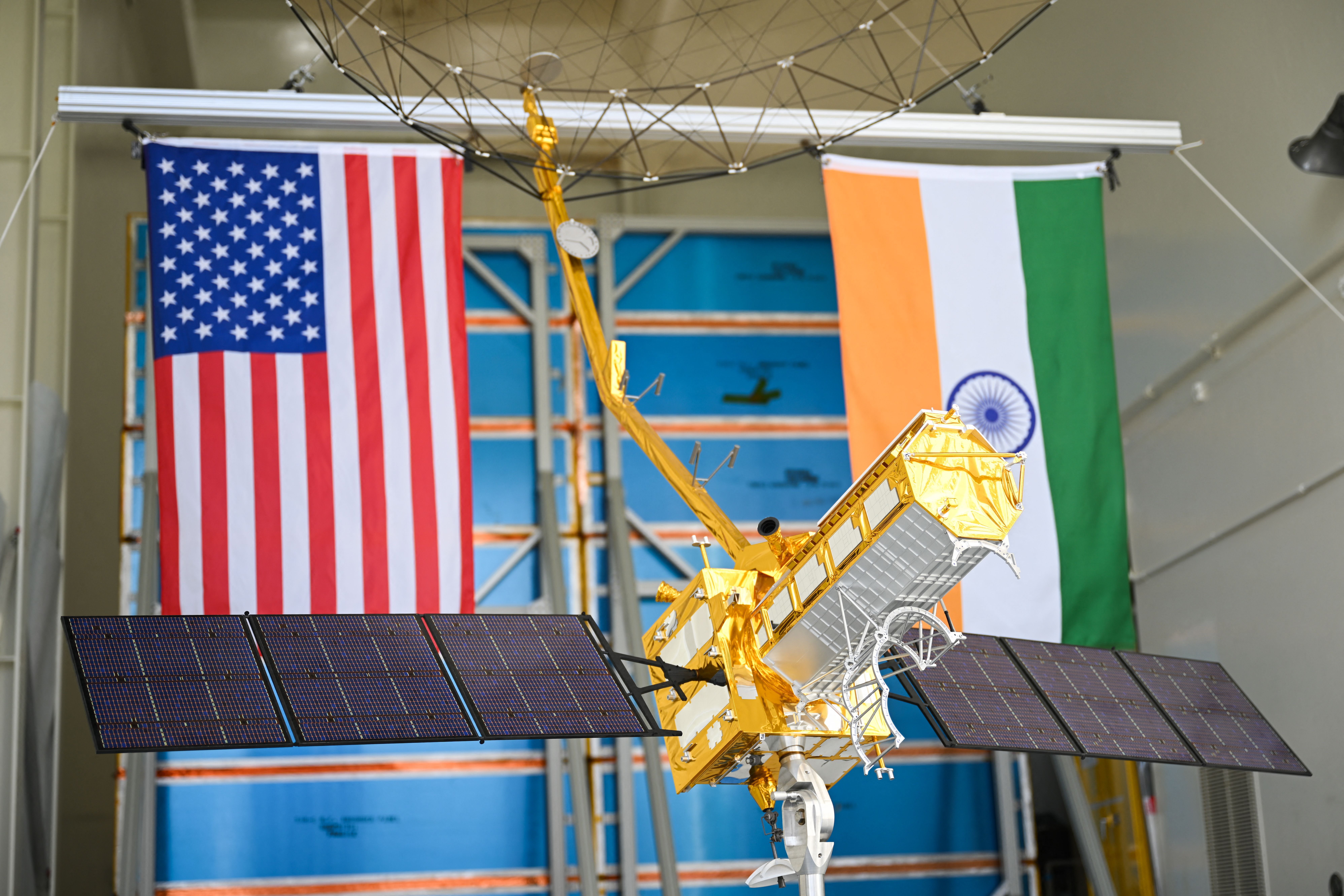
On July 30, 2025, the United States announced 25 percent tariffs on Indian goods. While diplomatic tensions simmered on the trade front, a cosmic calm prevailed at the Sriharikota launch range. Officials from NASA and ISRO were preparing to launch an engineering marvel into space—the NASA-ISRO Synthetic Aperture Radar (NISAR), marking a significant milestone in the India-U.S. bilateral partnership.

Tejas Bharadwaj