

Commentary
Omayma Abdel-Latif

REQUIRED IMAGE
Islamist women, increasingly restless with their subordinate status in Egypt’s Muslim Brotherhood, are pushing for greater representation and a wider role. Their call for broader participation in decision-making bodies are not signs of a “rebellion of the Sisters,” but part of the normal dynamics of change.
Islamist women, increasingly restless with their subordinate status in Egypt’s Muslim Brotherhood, are pushing for greater representation and a wider role, according to a new paper from the Carnegie Middle East Center.
Omayma Abdel-Latif explores the role of women within the movement, including recent debates following the release of the 2007 draft party platform that denied women the right to the country’s top position. She studies the growing impact of young leaders and female activists and examines what type of change is possible, despite major obstacles.
Key conclusions
Abdel-Latif concludes:
“Far from being resolved, the issue of the position of women in the Muslim Brotherhood is at the center of a lively debate. However, there is no evidence that this debate is threatening the unity of the movement. The questioning by women activists of their role, and their call for broader participation in decision-making bodies, are parts of the normal dynamics of change, not signs of a “rebellion of the Sisters,” as some observers described it. The Muslim Brotherhood, like any other sociopolitical movement, is not a static body. It is influenced by the social and political milieu in which it operates.”
Click on icon above for the full text of this Carnegie Paper.
About the Author
Omayma Abdel-Latif is a research and program associate at the Carnegie Middle East Center in Beirut. Prior to joining Carnegie, she was assistant editor-in-chief at Al-Ahram Weekly, the Middle East’s leading English weekly. She has done extensive work on Islamist movements, with special emphasis on the Muslim Brotherhood of Egypt. She also covered a wide range of issues including Islamic–Western relations, political reform in Egypt, and political transition in Syria, Lebanon, and Iraq.
Former Research and Program Associate, Middle East Center
Abdel-Latif, formerly the assistant editor-in-chief at Al-Ahram Weekly, has done extensive work on Islamist movements with special emphasis on the Muslim Brotherhood of Egypt.
Recent Work
Omayma Abdel-Latif
Omayma Abdel-Latif
Carnegie India does not take institutional positions on public policy issues; the views represented herein are those of the author(s) and do not necessarily reflect the views of Carnegie, its staff, or its trustees.

A partnership between India, a country of subcontinental size, and Africa, a continent of fifty-four countries, may seem asymmetric until one notes that both are home to nearly the same number of people—1.4 billion. This essay spells out the existing challenges to the partnership, its optimal potential, and the possible pathways to realize it over the next quarter-century.

Rajiv Bhatia
Experts weigh in on whether the United States is too hostile toward China.


Stephen Wertheim, Evan S. Medeiros, Vijay Gokhale

As India’s economy recovers from the coronavirus pandemic, Indian businesses need efficient financial structures to regain their ground. Key reforms to India’s Insolvency and Bankruptcy Code could fill these gaps.

Anirudh Burman

Access to cross-border data is an integral piece of the law enforcement puzzle. India is well placed to lead the discussions on international data agreements subject to undertaking necessary surveillance reforms.

Smriti Parsheera, Prateek Jha
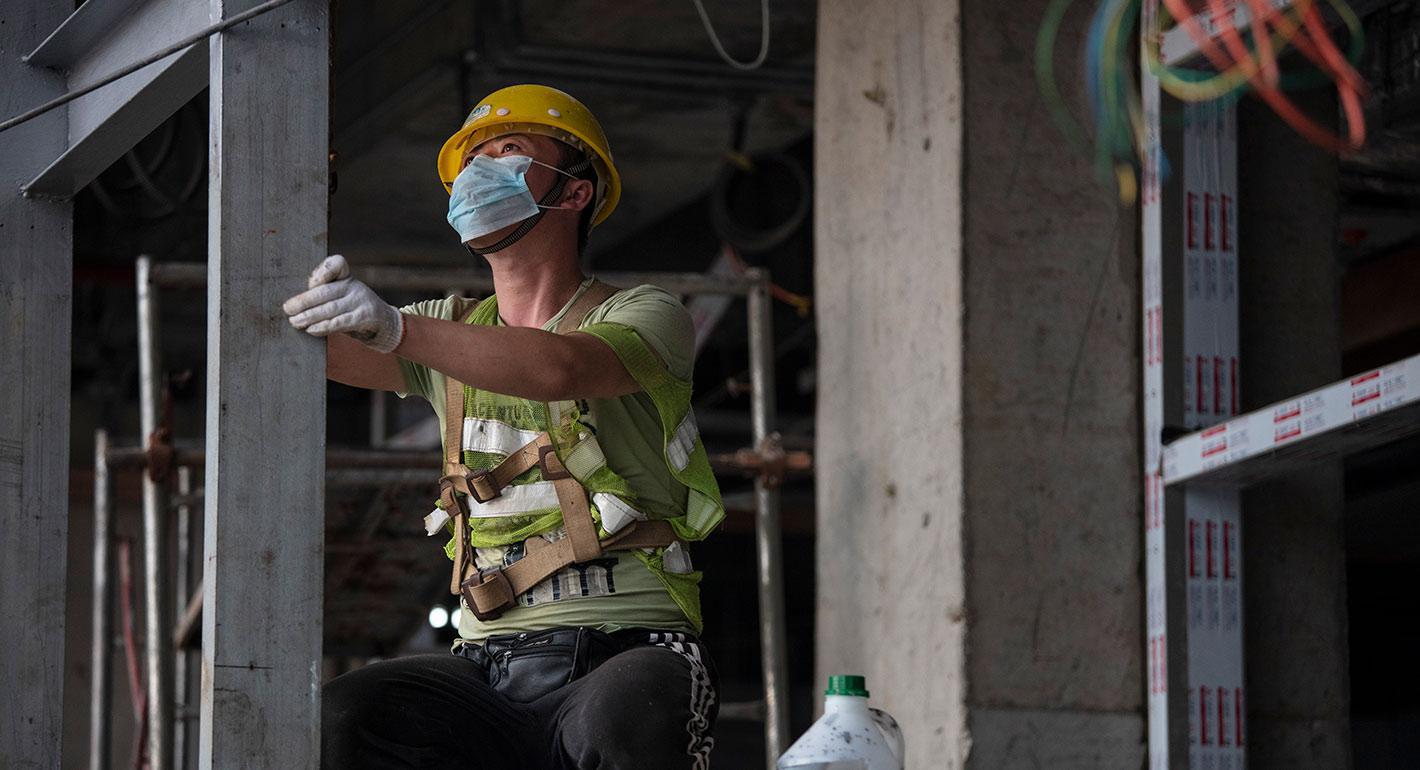
After the coronavirus pandemic wanes, how will China’s reorientation of the Belt and Road Initiative to address global health concerns influence its relationships with South Asian countries?

Deep Pal, Rahul Bhatia