

Paper
Ashley J. Tellis
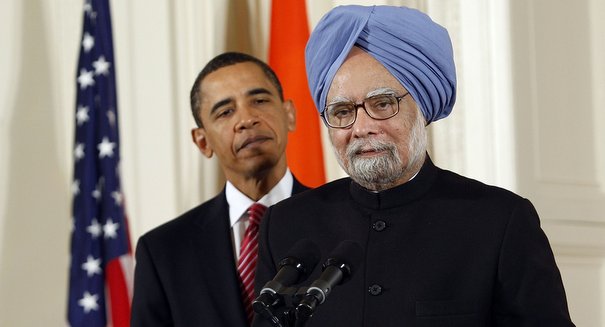
Source: Getty
A broad-based relationship between the U.S. and India will be necessary to solve complex global challenges, achieve security in the South Asian region, reestablish stability in the global economy, and overcome the threat of violent Islamic radicalism.
As the Obama Administration transitions to power already burdened with global economic crises and two wars, two events underscore India’s importance for US interests: the brutal Mumbai attacks and the financial sector meltdown. The Mumbai attacks reminded Americans of India’s vulnerability to global terrorism, our shared struggle against violent Islamic extremism, and the potential for crisis to rapidly escalate in the region. The financial sector meltdown and the emerging global response showed how India can be a key part of the solution through leadership in global bodies such as the G20.
India matters to virtually every major foreign policy issue that will confront the United States in the years ahead. A broad-based, close relationship with India will thus be necessary to solve complex global challenges, achieve security in the critical South Asian region, reestablish stability in the global economy, and overcome the threat of violent Islamic radicalism which has taken root across the region and in India. The members of this Task Force believe that the US relationship with India will be among our most important in the future, and will at long last reach its potential for global impact—provided that strong leadership on both sides steers the way.
The new relationship rests on a convergence of US and Indian national interests, and never in our history have they been so closely aligned. With India, we can harness our principles and power together to focus on the urgent interconnected challenges of our shared future: economic stability, expanded trade, the environment and climate change, innovation, nonproliferation, public health, sustainability, and terrorism. Together our two countries will
be able to take on some of the most vexing problems facing the world today, and improve the lives and security of our citizens in doing so. But to get there, we must set broad yet realistic goals to be shared by both countries.
This report offers goals toward that ambitious agenda for our shared future. Our Task Force recommends dramatically enhancing cooperation with India not only between our governments, but also between our governments and both our private sectors. We must tap the private sector momentum in the relationship to address the kinds of big problems governments cannot solve alone.
Over the next four years, we recommend the following priorities for action across two parallel tracks:
Track 1: Strengthening Governmental Ties
Track 2: Joint Public-Private Partnerships for Complex Global Challenges
This Task Force believes deeply in the vast potential of our relationship with India. The compatibility of our values, our strengths, and our global visions offers a unique context for us both to craft an ambitious agenda for the years ahead—for, unusually among two powers, we have no intrinsic conflicts of interest. With a new administration in Washington, and national elections in India during the first half of 2009, we have an opportunity to deliver on the promise that the world’s two largest democracies have to offer each other, and the world.
The Task Force is chaired by Amb. Frank G. Wisner and Charles R. Kaye. Other members include Alyssa Ayres, Scott R. Bayman, Marshall M. Bouton, Stephen P. Cohen, Vishakha N. Desai, Amy Gutmann, Victor J. Menezes, Jamie F. Metzl, George Rupp and Amb. Teresita Schaffer.
Former Senior Fellow
Ashley J. Tellis was a senior fellow at the Carnegie Endowment for International Peace.
Recent Work
Ashley J. Tellis
Ashley J. Tellis
Carnegie India does not take institutional positions on public policy issues; the views represented herein are those of the author(s) and do not necessarily reflect the views of Carnegie, its staff, or its trustees.

The Indian Ocean Region hosts one of the densest concentrations of subsea cables in the world. Yet, despite accounting for a significant share of global internet traffic, India’s participation remains limited.

Charukeshi Bhatt

How is AI reshaping space security, creating governance challenges, and where does international diplomacy stand today?


Tejas Bharadwaj, Almudena Azcárate Ortega

After the chill in ties between 2020 and 2024 that brought India–China relations to their lowest point in several decades, the two countries have engaged each other afresh. This paper argues that there are predominantly four imperatives guiding India’s approach to China, and they exist in an order of priority.

Saheb Singh Chadha

This piece argues that India’s central challenge is not managing a single flashpoint but resolving the underlying tension between expansion and institutional coherency of the BRICS grouping.

Vrinda Sahai
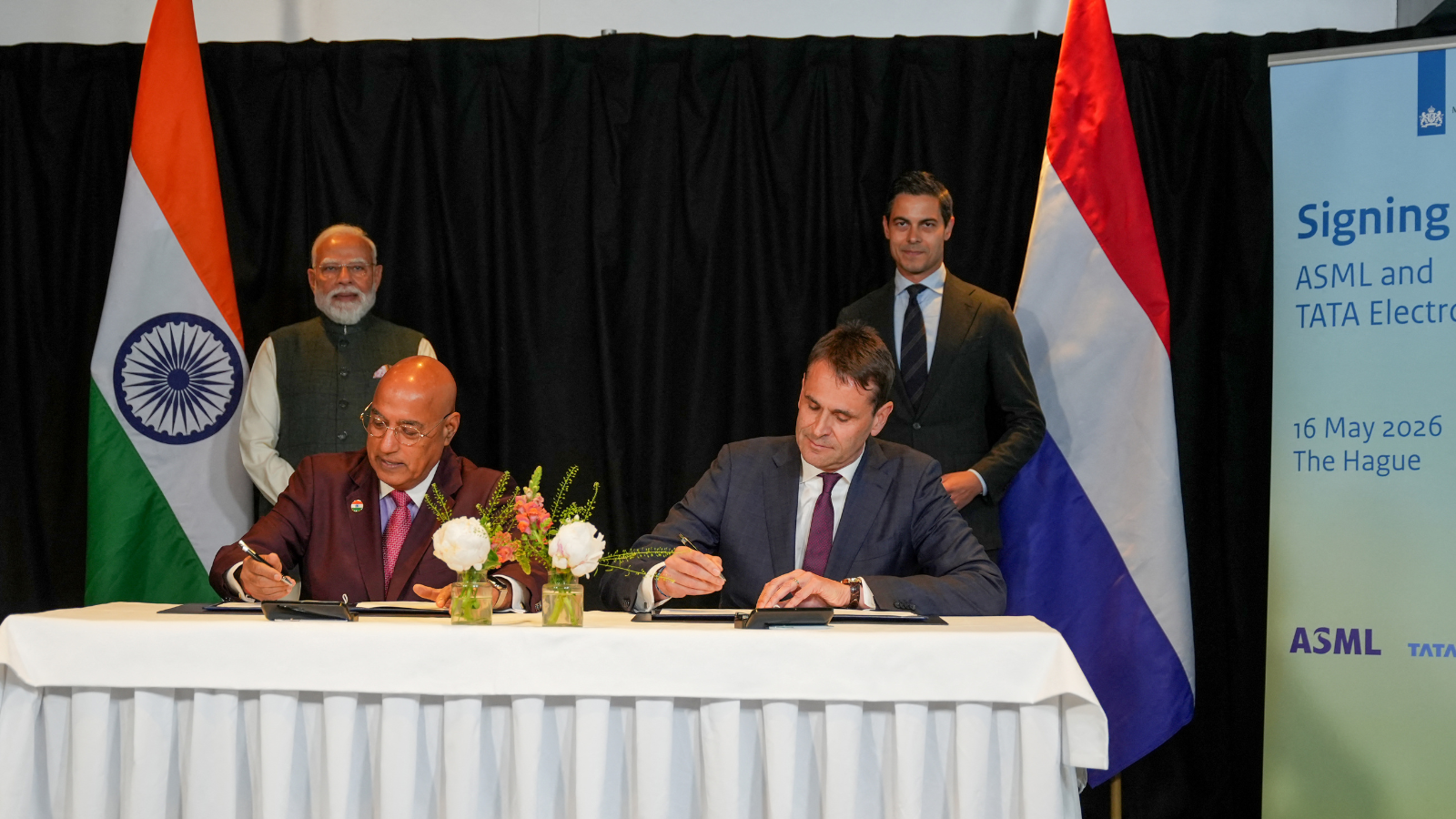
The ASML MoU with Tata Electronics is an indicator of how far the Indian semiconductor ecosystem has come. This ecosystem has been years in the making and represents real commercial logic.

Konark Bhandari