

Article
Marina Ottaway, Omar Hossino
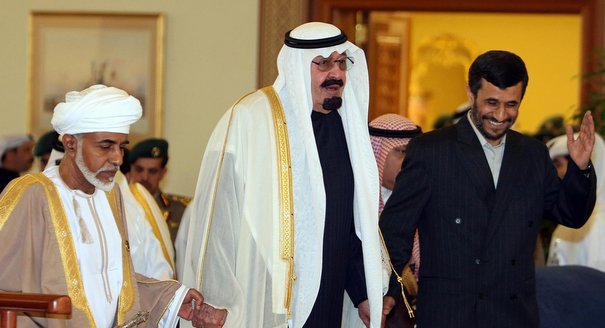
Source: Getty
Any effective U.S. diplomatic approach to Iran must involve other countries in the Gulf, but Washington will not succeed if it continues to strive for an anti-Iranian alliance. A normalization of relations between Iran and its neighbors is an important and attainable step for reintegrating Iran into the international community.
Any effective U.S. diplomatic approach to Iran must involve other countries in the Gulf, but Washington will not succeed if it continues to strive for an anti-Iranian alliance. While an overall security arrangement including all Gulf countries is not possible at this stage, a normalization of relations between Iran and its neighbors is an important and attainable step for reintegrating Iran into the international community, Marina Ottaway concludes in a new paper.
Gulf countries can help engage Iran in negotiations, but messy and often significant divisions between them complicate efforts to normalize relations. Ottaway analyzes Iran’s relationship with the Gulf Cooperation Council (GCC) countries—Saudi Arabia, Kuwait, Bahrain, Qatar, the United Arab Emirates, and Oman—as well as Jordan, Israel, Egypt, and Iraq.
Key Conclusions:
“Although during the negotiations over Iran’s nuclear program Gulf countries are essentially spectators to a process—the outcome of which will be determined by the United States, Iran, major European countries, Russia, and China—GCC countries have an important role to play in the difficult process of reintegrating Iran into the international community,” Ottaway writes. “Normalization of relations among the GCC countries, Iraq, and Iran would be a positive step in this process of reintegration. It would also help stabilize the region, decreasing tensions and the possibility of conflicts over bilateral issues that might trigger more serious problems.”

Former Senior Associate, Middle East Program
Before joining the Endowment, Ottaway carried out research in Africa and in the Middle East for many years and taught at the University of Addis Ababa, the University of Zambia, the American University in Cairo, and the University of the Witwatersrand in South Africa.
Recent Work
Marina Ottaway, Omar Hossino
Marina Ottaway
Carnegie India does not take institutional positions on public policy issues; the views represented herein are those of the author(s) and do not necessarily reflect the views of Carnegie, its staff, or its trustees.

After the chill in ties between 2020 and 2024 that brought India–China relations to their lowest point in several decades, the two countries have engaged each other afresh. This paper argues that there are predominantly four imperatives guiding India’s approach to China, and they exist in an order of priority.

Saheb Singh Chadha

This piece argues that India’s central challenge is not managing a single flashpoint but resolving the underlying tension between expansion and institutional coherency of the BRICS grouping.

Vrinda Sahai

A partnership between India, a country of subcontinental size, and Africa, a continent of fifty-four countries, may seem asymmetric until one notes that both are home to nearly the same number of people—1.4 billion. This essay spells out the existing challenges to the partnership, its optimal potential, and the possible pathways to realize it over the next quarter-century.

Rajiv Bhatia

The India–EU Free Trade Agreement (FTA) is shaping up to be one of the most consequential trade negotiations, both economically and strategically. But, what’s in the agreement, what’s missing, and what will determine its success in the years ahead
Vrinda Sahai, Nicolas Köhler-Suzuki
Trump 2.0 has unsettled India’s external environment—but has not overturned its foreign policy strategy, which continues to rely on diversification, hedging, and calibrated partnerships across a fractured order.



Milan Vaishnav, ed., Sameer Lalwani, Tanvi Madan, …