• Research
  • About
  • Experts
Carnegie India logoCarnegie lettermark logo
Technology
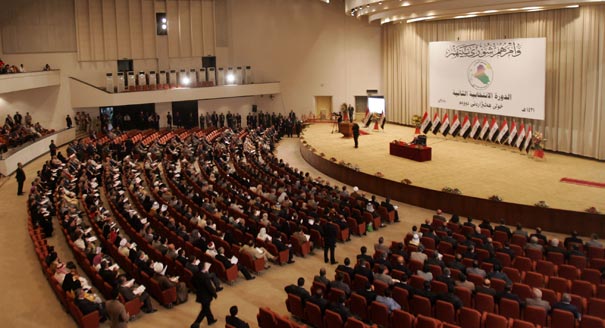
The State of Iraq

Source: Getty

Paper
Malcolm H. Kerr Carnegie Middle East Center

The State of Iraq

Iraq's future depends on whether the political factions that dominate the country can find it in their interest to forge a real compromise or if they will conclude that they would benefit more from going in separate directions.

Link Copied
By Marina Ottaway and Danial Kaysi
Published on Feb 8, 2012

Additional Links

Full Text

Within days of the official ceremonies marking the end of the U.S. mission in Iraq, Prime Minister Nouri al-Maliki moved to indict Vice President Tariq al-Hashemi on terrorism charges and sought to remove Deputy Prime Minister Saleh al-Mutlaq from his position, triggering a major political crisis that fully revealed Iraq as an unstable, undemocratic country governed by raw competition for power and barely affected by institutional arrangements. Large-scale violence immediately flared up again, with a series of terrorist attacks against mostly Shi’i targets reminiscent of the worst days of 2006.

But there is more to the crisis than an escalation of violence. The tenuous political agreement among parties and factions reached at the end of 2010 has collapsed. The government of national unity has stopped functioning, and provinces that want to become regions with autonomous powers comparable to Kurdistan’s are putting increasing pressure on the central government. Unless a new political agreement is reached soon, Iraq may plunge into civil war or split apart.

To conservatives in the United States, particularly the architects of the war and of the ensuing state-building exercise, the crisis into which Iraq plunged after the U.S. withdrawal was final proof of the ineptitude of the Obama administration in failing to secure an agreement with Maliki that would have allowed a residual U.S. force to stay. But the lesson is more sobering: Iraq demonstrates the resilience of domestic political forces in the face of even an eight-year occupation, thus the futility of nation-building and political engineering efforts conducted from the outside. The U.S. occupation tried to superimpose on Iraq a set of political rules that did not reflect either the dominant culture or the power relations among political forces. And while cultures and power relations are not immutable, they do not change on demand to accommodate the goals of outsiders.

For the second time since the 2003 U.S. intervention brought down Saddam Hussein and his regime, Iraq is facing a real threat of political disintegration. In 2007, the United States held the country together forcibly, but the infusion of new troops could not secure a lasting agreement among Iraqis. This time, the outcome depends on whether the political factions that dominate Iraq and tear it apart find it in their interest to forge a real compromise or conclude that they would benefit more from going in separate directions.

About the Authors

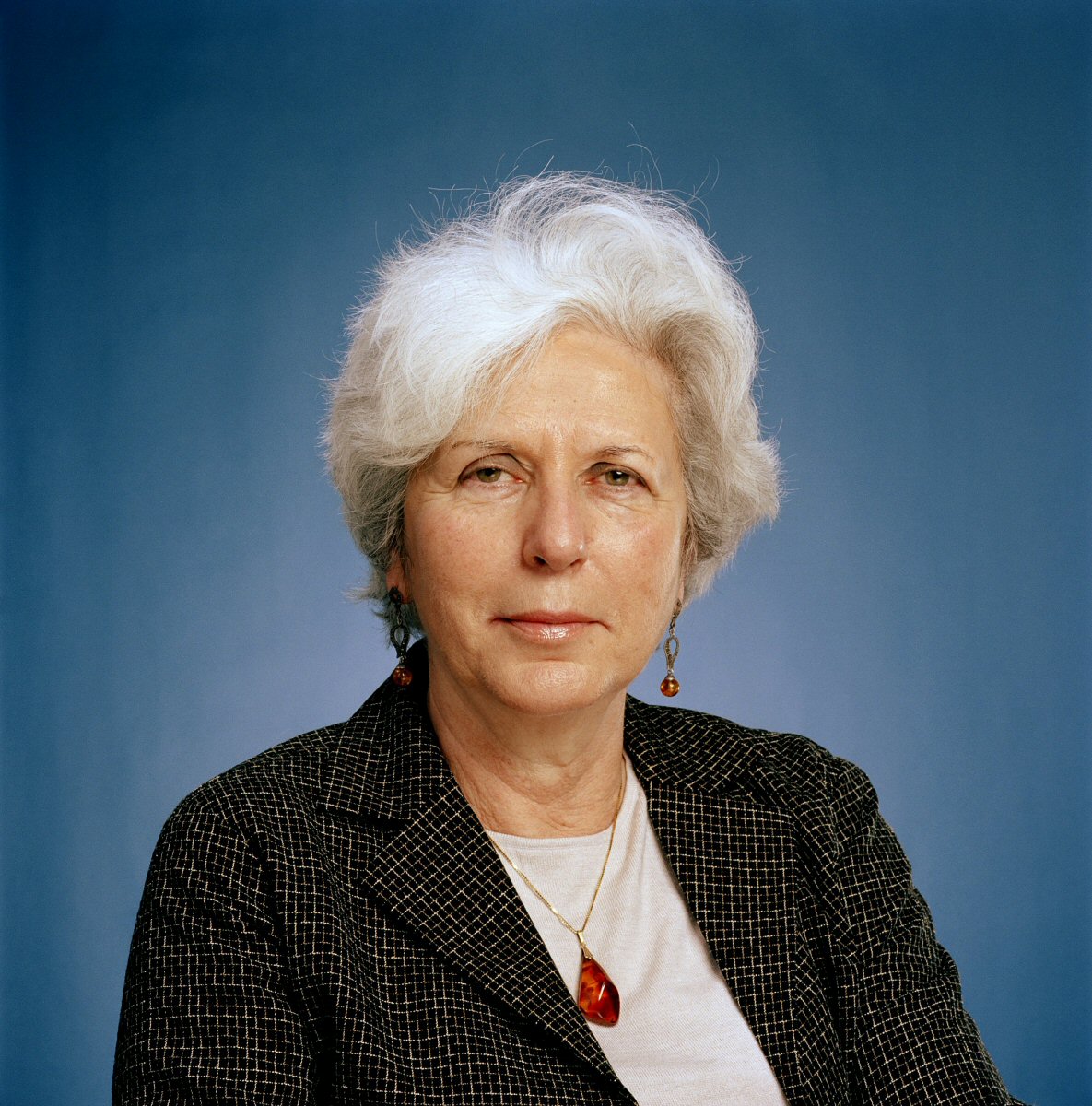
Marina Ottaway

Former Senior Associate, Middle East Program

Before joining the Endowment, Ottaway carried out research in Africa and in the Middle East for many years and taught at the University of Addis Ababa, the University of Zambia, the American University in Cairo, and the University of the Witwatersrand in South Africa.

Danial Kaysi

Authors

Marina Ottaway
Former Senior Associate, Middle East Program
Marina Ottaway
Danial Kaysi
Middle EastIraqGulfPolitical ReformSecurity

Carnegie India does not take institutional positions on public policy issues; the views represented herein are those of the author(s) and do not necessarily reflect the views of Carnegie, its staff, or its trustees.

More Work from Carnegie India

  • Commentary
    The Impact of U.S. Sanctions and Tariffs on India’s Russian Oil Imports

    This piece examines India’s response to U.S. sanctions and tariffs, specifically assessing the immediate market consequences, such as alterations in import costs, and the broader strategic implications for India’s energy security and foreign policy orientation.

      Vrinda Sahai

  • Article
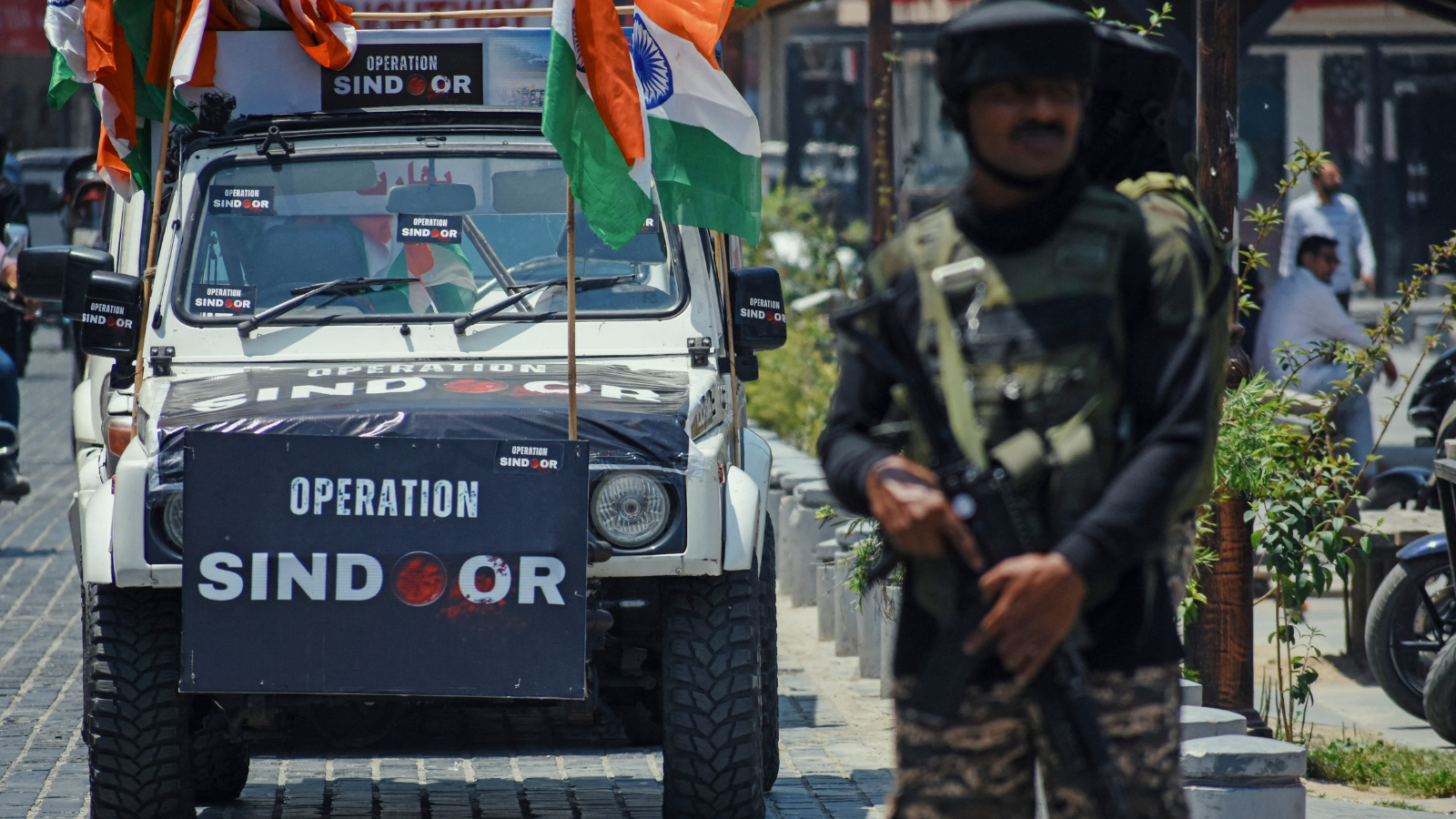
    Military Lessons from Operation Sindoor

    The India-Pakistan conflict that played out between May 6 and May 10, 2025, offers several military lessons. This article presents key takeaways from Operation Sindoor and breaks down how India’s preparations shaped the outcome and what more is needed to strengthen future readiness.

      Dinakar Peri

  • Book
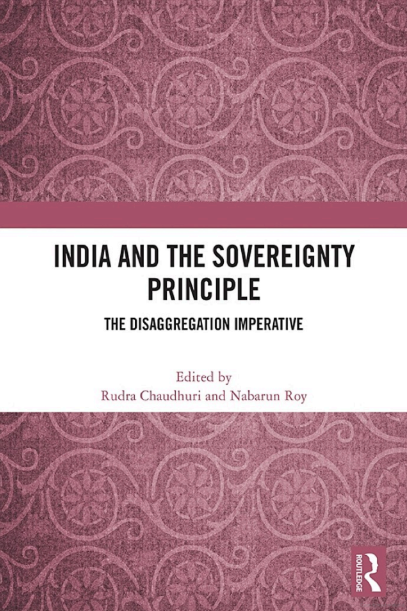
    India and the Sovereignty Principle: The Disaggregation Imperative

    This book offers a comprehensive analysis of India's evolving relationship with sovereignty in a complex global order. Moving beyond conventional narratives, it examines how the sovereignty principle shapes India's behavior across four critical domains—from traditional military power to contemporary data governance.

      Rudra Chaudhuri, Nabarun Roy

  • Article
    Hidden Tides: IUU Fishing and Regional Security Dynamics for India

    This article examines the scale and impact of Chinese IUU fishing operations globally and identifies the nature of the challenge posed by IUU fishing in the Indian Ocean Region (IOR). It also investigates why existing maritime law and international frameworks have struggled to address this growing threat.

      Ajay Kumar, Charukeshi Bhatt

  • Book
    Violence and Development Along the India-Pakistan Border in Jammu and Kashmir

    This book examines the impact of cross-border violence on communities living along the Line of Control and the International Border in Jammu and Kashmir, India.

      Deep Pal, Surya Valliappan Krishna, Saheb Singh Chadha

Get more news and analysis from
Carnegie India
Carnegie India logo, white
Unit C-4, 5, 6, EdenparkShaheed Jeet Singh MargNew Delhi – 110016, IndiaPhone: 011-40078687
  • Research
  • About
  • Experts
  • Projects
  • Events
  • Contact
  • Careers
  • Privacy
  • For Media
Get more news and analysis from
Carnegie India
© 2026 Carnegie Endowment for International Peace. All rights reserved.