

Commentary
Dmitri Trenin
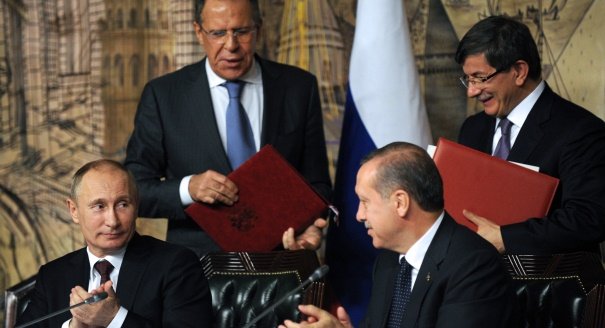
Source: Getty
As the Russians recognize that the current Syrian regime is likely to be overwhelmed by its opponents, there is a chance that Moscow and the West could finally reconcile their positions on Syria.
Some have interpreted Vladimir Putin’s remarks during his recent trip to Turkey as a sign that Moscow’s policy on Syria might be softening. President Putin reiterated that Russia is neither a supporter of nor an advocate for the regime of Bashar al-Assad. But he also said that Russia and Turkey were coming up with new approaches to the Syrian crisis. Since Ankara’s approach toward Assad has, if anything, hardened of late, hopes were raised in the West about the potential change in Russia’s stance.
Moscow’s basic proposal for dealing with the Syrian crisis has long been negotiating a deal between the Assad government and its opponents. The Western view, by contrast, has been that Assad must step down as the prerequisite for starting a political transition.
In midsummer, it appeared that a compromise of sorts was reached in Geneva when the United Nations Security Council agreed on a plan for a political transition, stopping short of calling for Assad’s removal. This compromise, however, soon unraveled as the United States and other Western countries reaffirmed their refusal to deal with the regime unless Assad completely surrendered. Thus, the gulf that seemed for a moment to have been bridged stood as wide as ever: what Russia envisaged as the end state—Assad’s departure—was the West’s starting point.The Istanbul talks might suggest that those two positions could finally be reconciled. The situation on the ground in Syria has changed considerably. The opposition is better armed and better supported from the outside, and as a result it is gaining on the battlefield. Western governments, including the United States, are edging ever closer to aiding the rebels directly, and the Russians, who so far have been more realistic in assessing Assad’s chances of survival, recognize that in the end, the current regime is likely to be overwhelmed by its opponents.
The situation around Syria has changed as well. The Syrian political opposition has become more united and is now recognized by France, Turkey, Britain, and the United States as the legitimate representative of the Syrian people. NATO’s decision to deploy Patriot missiles to Turkey, Russian experts believe, could pave the way for a de facto no-fly zone in northern Syria, which could in turn become a “liberated” area and a base for the anti-Assad government. Once that government is formed and recognized diplomatically, it can seek foreign military assistance in whatever form to help it liberate the rest of the country.
The problem with peace efforts is that Bashar al-Assad is unwilling or unable to leave and that the opposition refuses to deal with him. U.S. Secretary of State Hillary Clinton, meeting with Foreign Minister Sergey Lavrov a few days after Putin’s visit to Turkey, tried to persuade her Russian counterpart to talk Assad into retirement in order to begin a dialogue between the opposition and elements of the present regime (minus Assad) on forming a transitional government. The Russians, however, balked, suggesting that the United States and its allies talk to Assad themselves.
The war is likely to continue, and the death toll will mount ever higher. The United States is concerned that Assad or his associates, in the eleventh hour, might use chemical weapons as a last resort. The Russians are more skeptical, apparently believing the Syrian authorities when they say that chemical weapons might only be used against foreign invaders, not domestic opponents.
But neither the Syrian regime nor the opposition will negotiate peace while Assad holds Damascus. And when Damascus eventually falls, as Russian officials now believe is likely to happen, the Syrian civil war will not automatically come to an end. The forces loyal to the current regime will redeploy to the Alawite enclaves in the west of the country. Meanwhile, the threat of a bloodbath in the capital and the other major cities will become imminent. Under such circumstances, there will be a need for not only urgent action to stop violence on a bigger scale than has been seen in Syria so far but also better conditions for bringing peace to the country.
At that point, the West and Russia might be in a better position to reengage and stop the carnage.
Maybe that end game is what Putin and Turkish Prime Minister Recep Tayyip Erdoğan had in mind when they talked about “new approaches” to Syria. Rather than trying to piece together the puzzle at hand, they could simply be looking ahead, anticipating future developments.
Former Director, Carnegie Moscow Center
Trenin was director of the Carnegie Moscow Center from 2008 to early 2022.
Recent Work
Dmitri Trenin
Dmitri Trenin
Carnegie India does not take institutional positions on public policy issues; the views represented herein are those of the author(s) and do not necessarily reflect the views of Carnegie, its staff, or its trustees.

After the chill in ties between 2020 and 2024 that brought India–China relations to their lowest point in several decades, the two countries have engaged each other afresh. This paper argues that there are predominantly four imperatives guiding India’s approach to China, and they exist in an order of priority.

Saheb Singh Chadha

This piece argues that the present Indian strategy, based on opportunistic diversification and utilization of limited strategic reserves, remains inadequate when confronting supply disruptions. It evaluates India’s options in the short, medium, and long terms.

Vrinda Sahai

This piece examines India’s response to U.S. sanctions and tariffs, specifically assessing the immediate market consequences, such as alterations in import costs, and the broader strategic implications for India’s energy security and foreign policy orientation.
Vrinda Sahai
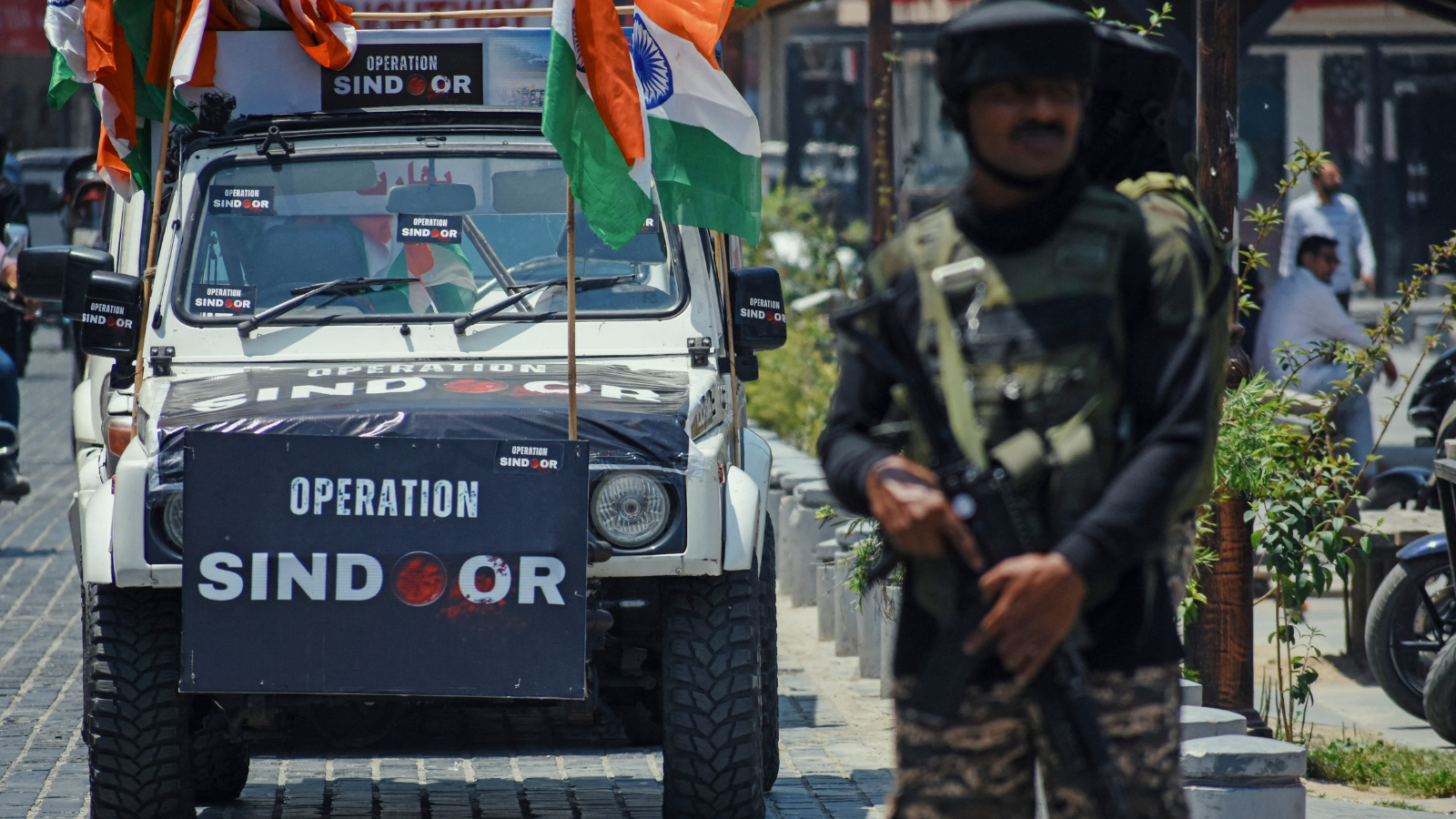
The India-Pakistan conflict that played out between May 6 and May 10, 2025, offers several military lessons. This article presents key takeaways from Operation Sindoor and breaks down how India’s preparations shaped the outcome and what more is needed to strengthen future readiness.

Dinakar Peri
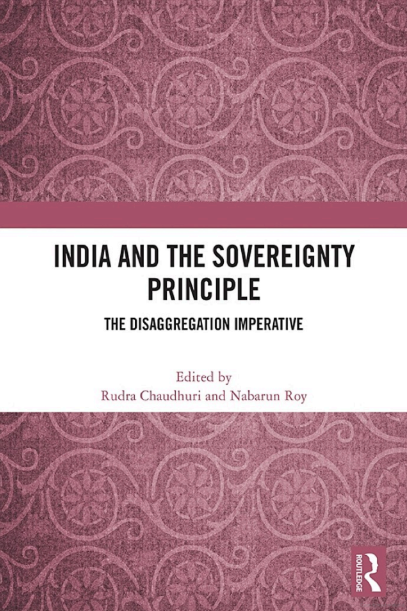
This book offers a comprehensive analysis of India's evolving relationship with sovereignty in a complex global order. Moving beyond conventional narratives, it examines how the sovereignty principle shapes India's behavior across four critical domains—from traditional military power to contemporary data governance.
Rudra Chaudhuri, Nabarun Roy