

Commentary
Marwan Muasher
{
  "authors": [
    "Marwan Muasher"
  ],
  "type": "commentary",
  "blog": "Diwan",
  "centerAffiliationAll": "dc",
  "centers": [
    "Carnegie Endowment for International Peace",
    "Malcolm H. Kerr Carnegie Middle East Center"
  ],
  "collections": [],
  "englishNewsletterAll": "menaTransitions",
  "nonEnglishNewsletterAll": "",
  "primaryCenter": "Malcolm H. Kerr Carnegie Middle East Center",
  "programAffiliation": "MEP",
  "programs": [
    "Middle East"
  ],
  "projects": [],
  "regions": [
    "Middle East",
    "Israel",
    "Palestine",
    "United Arab Emirates",
    "Gulf",
    "Levant"
  ],
  "topics": [
    "Political Reform"
  ]
}
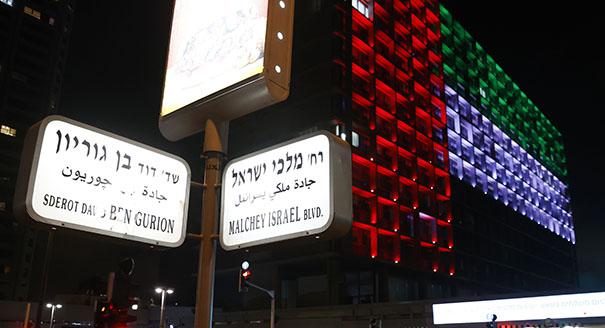
Source: Getty
The Emirati-Israeli peace agreement will help refocus Palestinian objectives on securing equal rights.
Much has been made in the international media about the announcement by the United Arab Emirates (UAE) and Israel that they would be establishing diplomatic and economic ties. The announcement has not been met with the same enthusiasm in the Middle East, let alone in Palestinian areas.
It is important to realize what this agreement is not about. Unlike what the United States, Israel, and the UAE are painting it to be, this is not an agreement to move the peace process forward. It is simply an agreement to serve Emirati-Israeli bilateral interests and make public those relations that had been taking place under the table for years. The announced achievement by the UAE—that the agreement froze Israel’s annexation of large parts of the West Bank in exchange for normalization with the UAE—was no achievement at all. It was a reminder of former Israeli prime minister Menachem Begin’s pledge in 1978 to freeze settlement activity for three months as part of the Egyptian-Israeli peace agreement. We all know how that went.
The UAE has started a public relations campaign to contextualize its decision within a peace framework. President Donald Trump and Israeli Prime Minister Benjamin Netanyahu are doing the same. And some voices in the United States are portraying Emirati-Israeli normalization as a major breakthrough on the way to resolving the Arab-Israeli conflict. It is no such thing, and the people of the region are not fooled. Here is why.
It took Netanyahu no more than a few hours to announce on Israeli television that Israel’s West Bank annexation plans would be implemented regardless of the agreement. The Trump peace plan, which was the first scheme to call for annexation and encouraged Netanyahu to go in that direction, has not been shelved because of the Emirati-Israeli deal. In other words nothing has changed.
The bottom line remains the same. Any peace agreement that does not have as an aim the termination of the Palestinian-Israeli conflict through the achievement of a two-state solution should not be hailed as a breakthrough. When Egypt and Jordan signed peace treaties with Israel, they did so for the return of the Sinai Peninsula and the hope that a Palestinian state would be established on Palestinian soil. No such hope exists today. The UAE and Israel are free to pursue their bilateral interests, but these interests are not a replacement for achieving peace among the two peoples directly concerned—the Palestinians and Israelis. It should be clear that no such peace can be achieved without the involvement of Palestinians themselves, who are, after all, the ones living under occupation.
Other Gulf countries might follow the UAE. Israel will repeat the mantra that it does not need peace with the Palestinians since it can jump over them and conclude peace with other Arab countries. This is short-term thinking that is also delusional. By applauding the agreement as a breakthrough for peace, many are contributing, intentionally or not, to the delusion that one can achieve peace even when no peace exists between the occupier and occupied.
The biggest loser from this agreement is not the Palestinians, as many believe, but the two-state solution. Sadly, we are at a point where Israel does not believe it needs to end its occupation, does not believe in a credible two-state solution, and does not seem to believe it needs peace with the Palestinians. It would be prudent to think of the consequences. The misapprehension that one can further peace without the direct involvement of the Palestinians is helping to kill the very aim of the international community—a two-state solution.
This mistake has already shifted the focus, particularly among a new generation of Palestinians, from a solution based on two states to a reality based on one state. The question from now on will increasingly cease to be whether and when a two-state solution will be achieved, but what kind of a one-state solution will emerge from the current reality: a democratic system or an apartheid state?
We need to realize that the conflict has reached a point where the emphasis is shifting from the shape of a solution to the pursuit of rights—equal rights, that is. By concentrating on form at the expense of substance, the international community has buried the very outcome it had hoped to achieve. Now it will have to deal with a long and bloody struggle for equal rights that the Palestinians will find themselves forced to adopt. So before naively hailing the UAE-Israel agreement as a breakthrough for the kind of peace they envisage, let those who have praised the plan hold their applause and think more carefully about what the outcome is likely to be.

Vice President for Studies
Marwan Muasher is vice president for studies at Carnegie, where he oversees research in Washington and Beirut on the Middle East. Muasher served as foreign minister (2002–2004) and deputy prime minister (2004–2005) of Jordan, and his career has spanned the areas of diplomacy, development, civil society, and communications.
Recent Work
Marwan Muasher



James M. Acton, Saskia Brechenmacher, Cecily Brewer, …
Carnegie does not take institutional positions on public policy issues; the views represented herein are those of the author(s) and do not necessarily reflect the views of Carnegie, its staff, or its trustees.
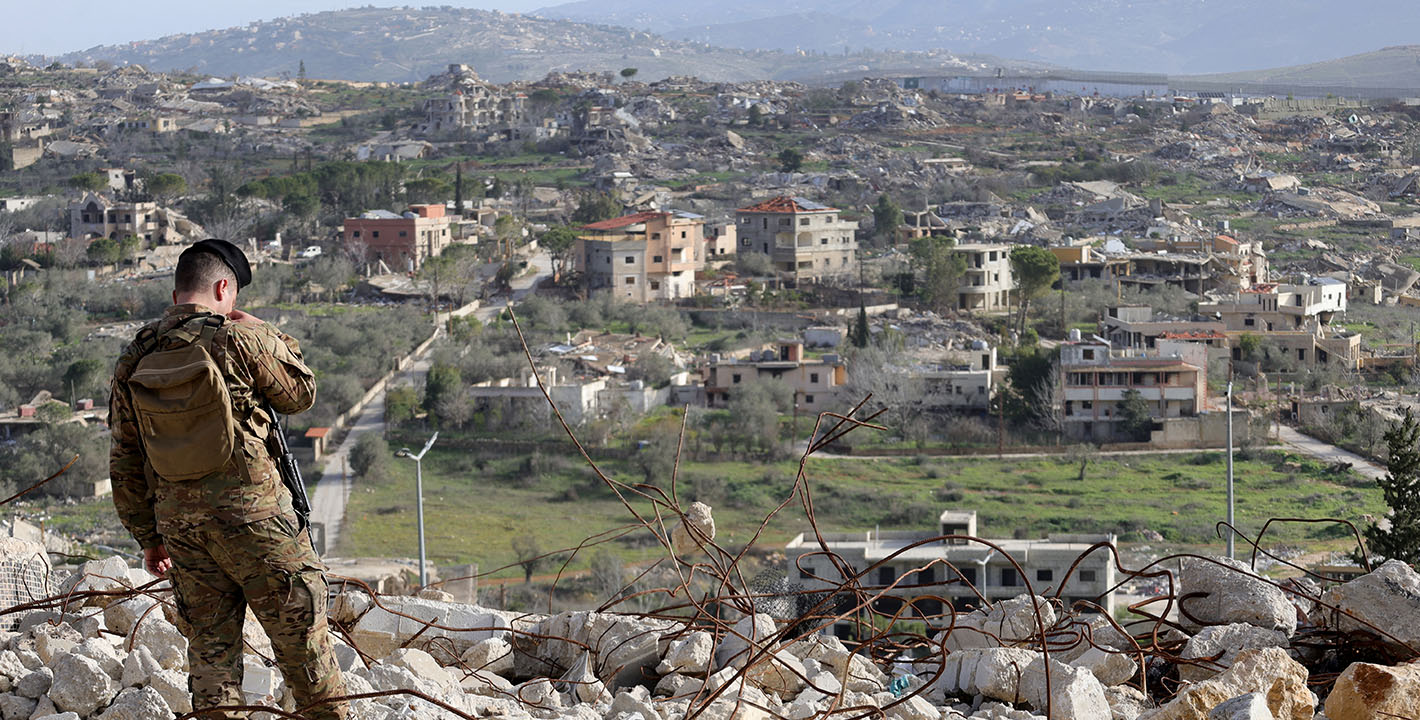
While armed forces commander Rudolph Haykal’s caution is understandable, he is in a position to act, and must.

Michael Young
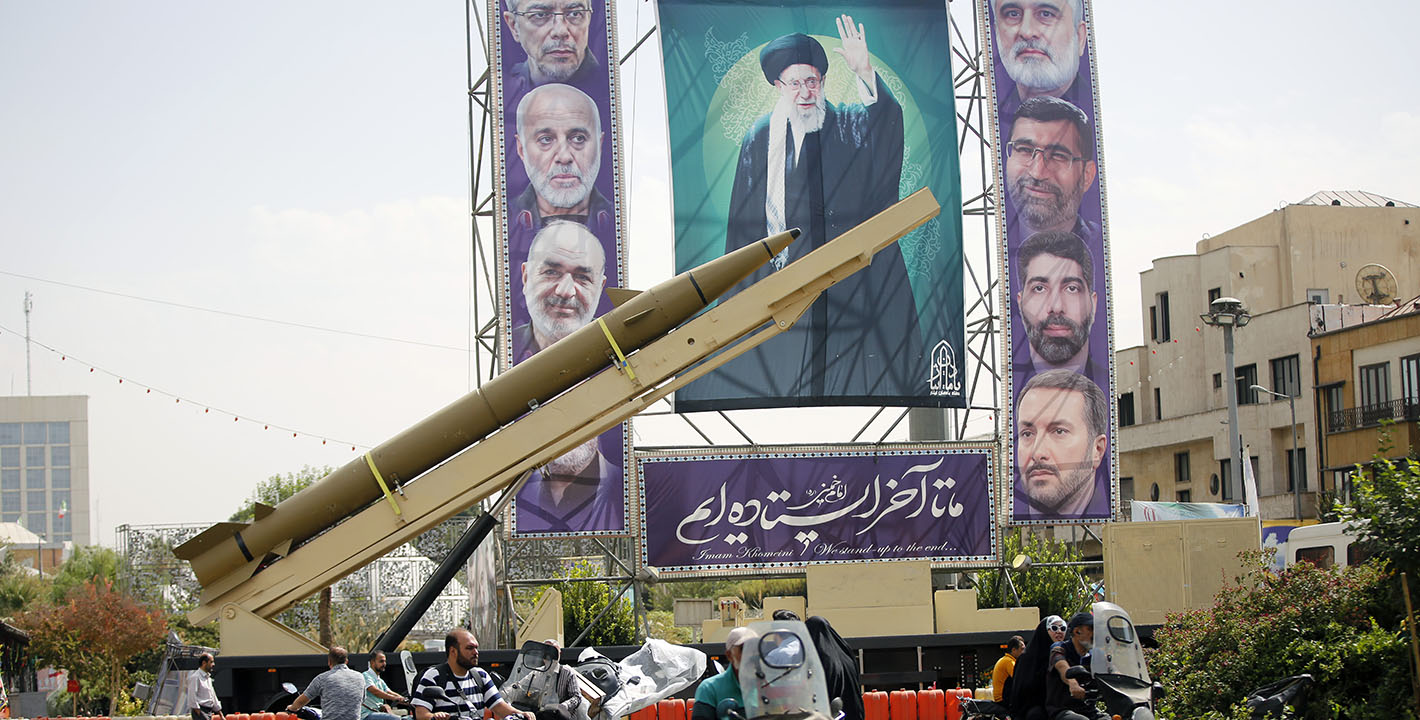
In an interview, Hamidreza Azizi discusses how Tehran has adapted in real time to the conflict with the United States and Israel.
Michael Young
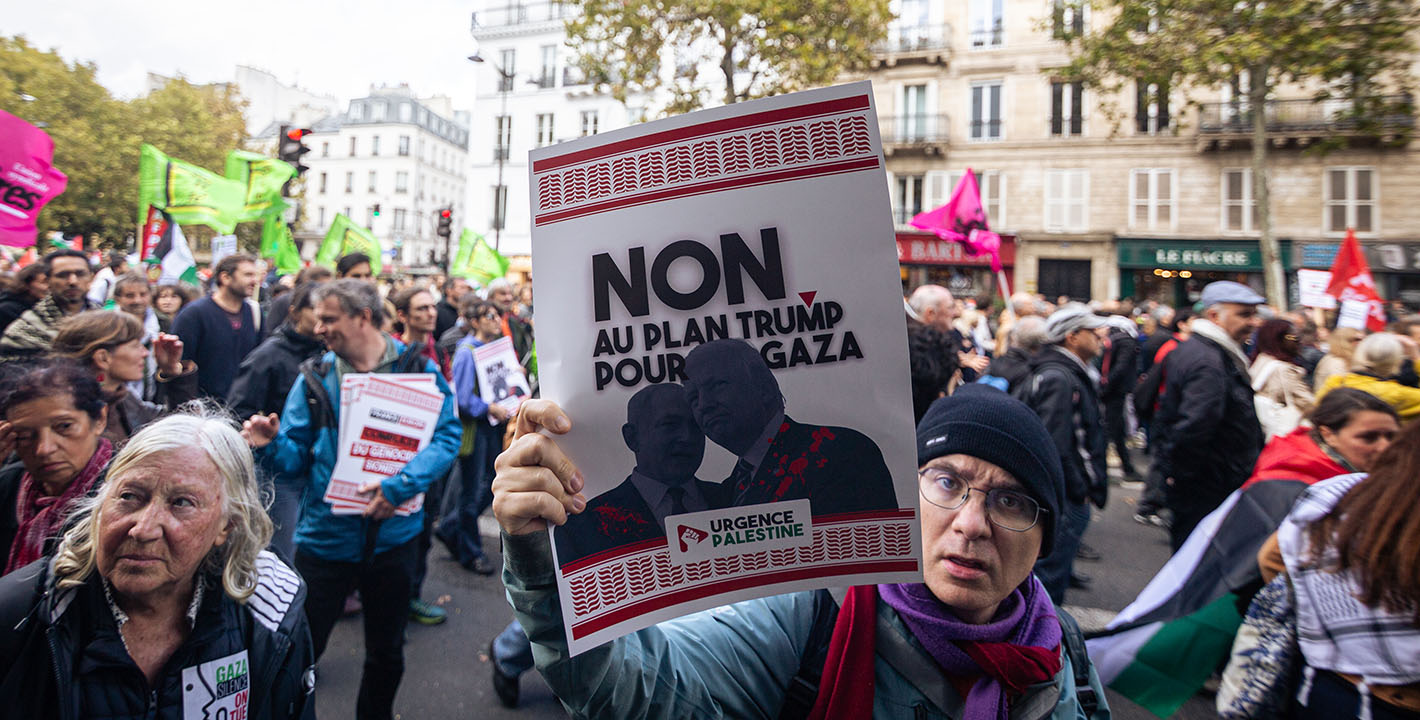
The simple conclusion is that the scheme will bring neither peace nor prosperity, but will institutionalize devastation.

Nathan J. Brown
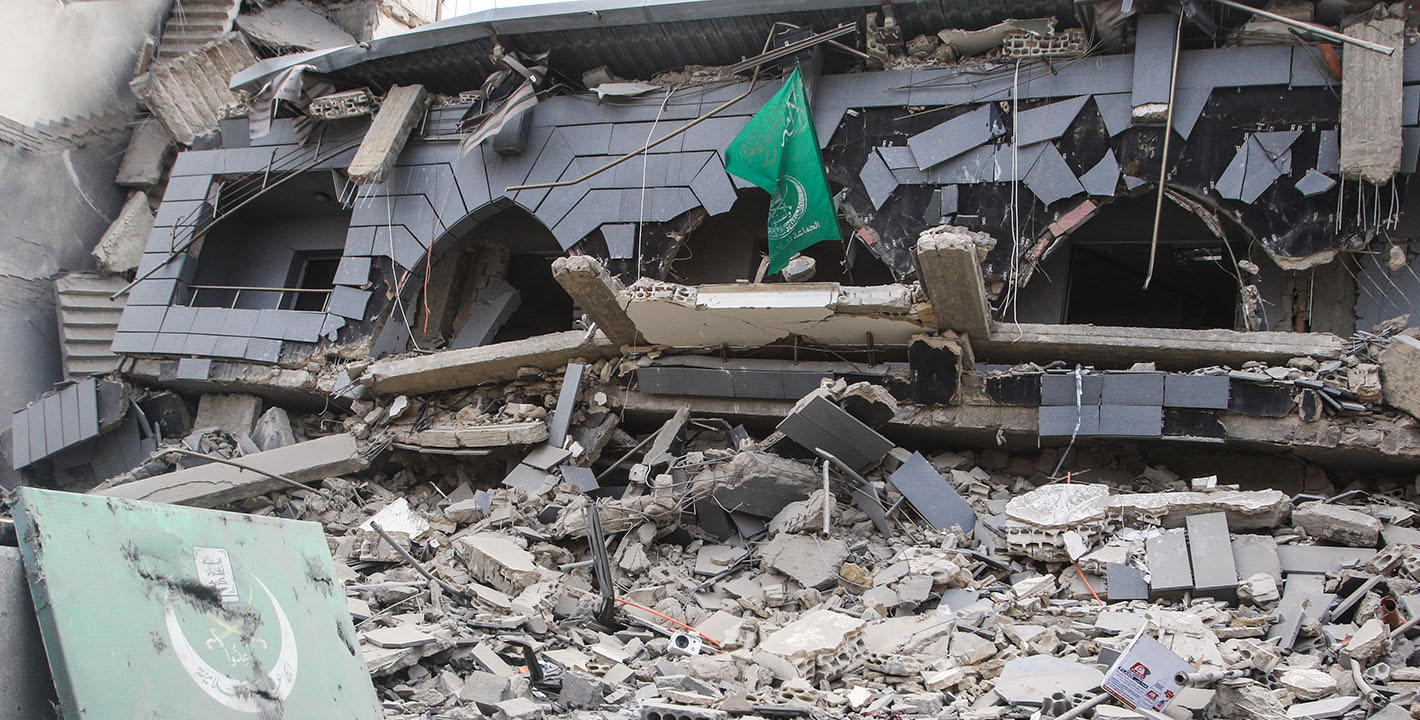
The Jamaa al-Islamiyya is the local Lebanese dimension of a broader struggle involving rival regional powers.

Issam Kayssi
In an interview, Roger Diwan discusses where the global economy may be going in the third week of the U.S.-Israeli war with Iran.

Nur Arafeh