

Other
Fiona Hill, Anatol Lieven, Thomas de Waal
{
  "authors": [
    "Anatol Lieven"
  ],
  "type": "legacyinthemedia",
  "centerAffiliationAll": "dc",
  "centers": [
    "Carnegie Endowment for International Peace"
  ],
  "collections": [],
  "englishNewsletterAll": "ctw",
  "nonEnglishNewsletterAll": "",
  "primaryCenter": "Carnegie Endowment for International Peace",
  "programAffiliation": "russia",
  "programs": [
    "Russia and Eurasia"
  ],
  "projects": [],
  "regions": [
    "Caucasus",
    "Russia",
    "Eastern Europe",
    "Western Europe"
  ],
  "topics": [
    "Security",
    "Foreign Policy"
  ]
}
REQUIRED IMAGE
Western Europe badly needs a new relationship with Russia - and not simply because of a shared interest in the fight against terrorism. Equally important is the fact that new US priorities may lead to a significant diminution of American interest in the Balkans and parts of the former Soviet Union.
Source: Carnegie
Western Europe badly needs a new relationship with Russia - and not simply because of a shared interest in the fight against terrorism. Equally important is the fact that new US priorities may lead to a significant diminution of American interest in the Balkans and parts of the former Soviet Union.
In this event, the European Union will at last be compelled to take real and not just rhetorical responsibility for coping with dangerous developments on the European continent. Given Russia's great residual strength in some areas, and the EU's chronic weakness when it comes to security issues, it is extremely desirable for Russia to act in any crisis as a partner and not a rival of western Europe. For such a partnership to develop, the EU and its chief member states need to take the lead in developing new regional security structures that include the Russians.
An obvious area where the chances of crisis have increased is the Balkans. Even before September 11, the US refused to participate directly in Nato operations in Macedonia; and despite Nato's grandiose rhetoric at the time of the Kosovo war, the western European states decided on only a limited commitment, after shameful hesitation.
If the US becomes involved in long-running security commitments in the Muslim world in which most EU states refuse to participate, it seems possible that sooner or later US troops will be withdrawn from Kosovo and Bosnia. If so, the radicals on all sides will be emboldened to return to war. In these circumstances, Russian co-operation will be as essential as it was during the Kosovo war of 1999.
To avoid future Russian support for a Serbian campaign of revanche and to guarantee joint crisis management, western Europe should recognise that in the west's dispute with Russia over Kosovo policy, neither side was wholly right. Russia was wrong on several points but was right in its warnings about the nature of the Albanian militants.
Co-operation is also essential in the western parts of the former Soviet Union and perhaps the Caucasus. Across this region, post- Communist economic, social and political development has so far failed. Moreover, several ageing former Communist leaderships are heading for what could be bloody succession crises. The west cannot possibly control the resulting risks without Russian co-operation.
Unfortunately, in recent years much of US policy has been devoted to "rolling back" Russian influence on the territory of the former Soviet Union. This has naturally encouraged harsh Russian responses. Anyone who asks why should pause to consider likely US responses to such an expansionist strategy by a rival great power in Central America, or real French responses over several decades to outside "meddling" in France's sphere of influence in Africa.
European policy by contrast should recognise the inevitability of important - though not exclusive - Russian influence in several countries and seek to shape this influence rather than eliminate it. The goal should be crisis avoidance and economic development, not western geopolitical expansionism; and the policy should be to encourage Russia to minuet, not tango, with her neighbours - encouraging Moscow to exert "soft power" rather than try to lock other states into a rigid security alliance a`la Belarus.
The exceptions are the Baltic states, which should be brought fully into the west. An offer of Nato membership to the Baltic states at the Prague summit in November 2002 is now obviously undesirable. Few US senators are likely to want to hold a debate very soon on the need for America to defend these states against the alleged possibility of a Russian invasion. This means that the EU must take the lead in guaranteeing Baltic security and must make sure that all three Baltic states join the EU in 2004.
This approach means, among other things, shelving the false promise of Russia's ultimate integration into western Europe, which has too often been used as an excuse for avoiding real thought about a new relationship today. It would take a miracle to get western Europeans to accept Chechens and Daghestanis into the EU, or a European border with central Asia and China. But that does not mean the EU and Russia cannot co-operate successfully on many issues. Above all, the EU must learn to treat Russia not as an errant child to be lectured but rather as the US treats Turkey: as an important country, albeit with some unwelcome traits, whose friend-ship is essential to US interests.
Does this involve moral compromises? Perhaps. But as Max Weber pointed out, taking responsibility for actions and consequences in the real world is also an ethical position. And too much past European posturing has been conducted in the happy conviction that thanks to the US military presence, Europeans would never have to take such responsibility. Those happy days are now passing away.

Former Senior Associate
Recent Work

Fiona Hill, Anatol Lieven, Thomas de Waal
Carnegie does not take institutional positions on public policy issues; the views represented herein are those of the author(s) and do not necessarily reflect the views of Carnegie, its staff, or its trustees.

In an interview, Ian Lustick and Eli Clifton discuss their new book on why a prominent ally has so much influence in America.

Michael Young

By failing to address Palestinian representation, the current process is bound to lead to just another temporary arrangement.

Nathan J. Brown
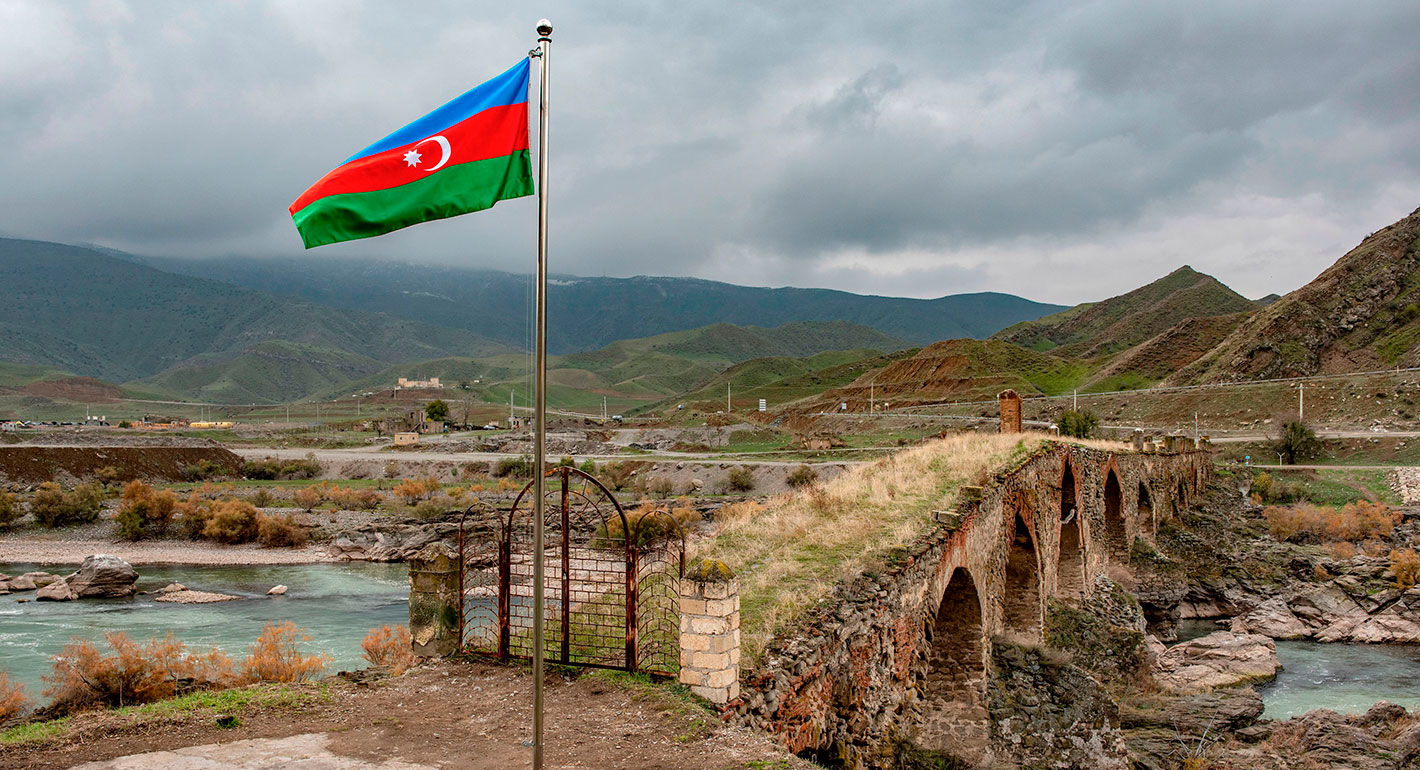
In an interview, Sergei Melkonian discusses Armenia’s and Azerbaijan’s careful balancing act among the United States, Israel, and Iran.

Armenak Tokmajyan

Just look at Iraq in 1991.

Marwan Muasher

A coalition of states is seeking to avert a U.S. attack, and Israel is in the forefront of their mind.
Michael Young