

Commentary
Fabrice Pothier
{
  "authors": [
    "Fabrice Pothier"
  ],
  "type": "legacyinthemedia",
  "centerAffiliationAll": "",
  "centers": [
    "Carnegie Endowment for International Peace",
    "Carnegie Europe"
  ],
  "collections": [],
  "englishNewsletterAll": "",
  "nonEnglishNewsletterAll": "",
  "primaryCenter": "Carnegie Europe",
  "programAffiliation": "",
  "programs": [],
  "projects": [],
  "regions": [
    "Europe"
  ],
  "topics": [
    "Foreign Policy"
  ]
}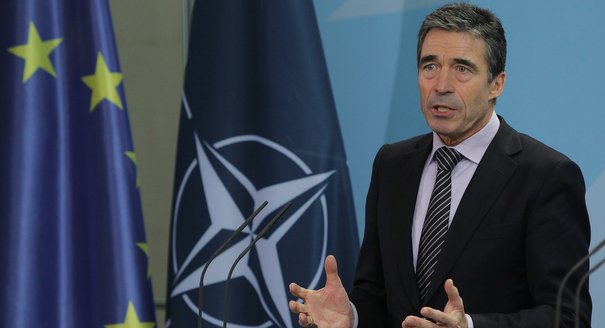
Source: Getty
Two decades after the end of the Cold War, NATO must demonstrate that it can adapt to the security challenges of the 21st century, including nuclear weapons proliferation, terrorism and cyber-warfare.
Source: Global Europe

The predicament NATO faces in the coming decade boils down to one simple truth: it is not enough to share values; you must share the will to fight for and defend those values. Two decades after the end of the Cold War, the moment of truth has finally arrived for NATO: it must demonstrate that it can adapt to the security challenges of the 21st century.
The alliance must begin by identifying these challenges, and defining the role it can play in tackling them. From the threat of nuclear weapons proliferation to terrorism and cyber-warfare, NATO needs to pick its issues. It is only then, when the alliance faces the task of shaping its capabilities according to these threats, that the real work will begin.
NATO members are ill-equipped to deal with the emerging threats of the 21st century. The United States, for example, is wholly unprepared to respond to cyber-threats, while Europe can barely deploy 30 percent of its troops, few of whom are equipped or trained for modern warfare and training missions.
Finally, a 21st century NATO must be prepared to reach out to other regional and multilateral organizations. This would necessarily involve other organizations, such as the United Nations, improving their own effectiveness, but would make interventions in complex theatres like Afghanistan as comprehensive and legitimate as possible. Ultimately, the early 21st century is a time when NATO needs to fight for both effectiveness and relevance.
This article first appeared in Global Europe.

Former Director, Carnegie Europe
Pothier, director of Carnegie Europe, is a noted commentator on European policy in Afghanistan and Pakistan, transatlantic issues, and global drug policy.
Recent Work
Fabrice Pothier
Fabrice Pothier
Carnegie does not take institutional positions on public policy issues; the views represented herein are those of the author(s) and do not necessarily reflect the views of Carnegie, its staff, or its trustees.

By failing to address Palestinian representation, the current process is bound to lead to just another temporary arrangement.

Nathan J. Brown

Just look at Iraq in 1991.

Marwan Muasher

A coalition of states is seeking to avert a U.S. attack, and Israel is in the forefront of their mind.

Michael Young

Baku may allow radical nationalists to publicly discuss “reunification” with Azeri Iranians, but the president and key officials prefer not to comment publicly on the protests in Iran.

Bashir Kitachaev

The country’s leadership is increasingly uneasy about multiple challenges from the Levant to the South Caucasus.

Armenak Tokmajyan