

Other
Michael D. Swaine
{
  "authors": [
    "Michael D. Swaine"
  ],
  "type": "legacyinthemedia",
  "centerAffiliationAll": "dc",
  "centers": [
    "Carnegie Endowment for International Peace",
    "Carnegie Europe",
    "Carnegie China"
  ],
  "collections": [],
  "englishNewsletterAll": "asia",
  "nonEnglishNewsletterAll": "",
  "primaryCenter": "Carnegie China",
  "programAffiliation": "AP",
  "programs": [
    "Asia"
  ],
  "projects": [],
  "regions": [
    "North America",
    "United States",
    "East Asia",
    "China",
    "Asia"
  ],
  "topics": [
    "Political Reform",
    "Economy",
    "Security",
    "Military",
    "Foreign Policy",
    "Domestic Politics"
  ]
}
Source: Getty
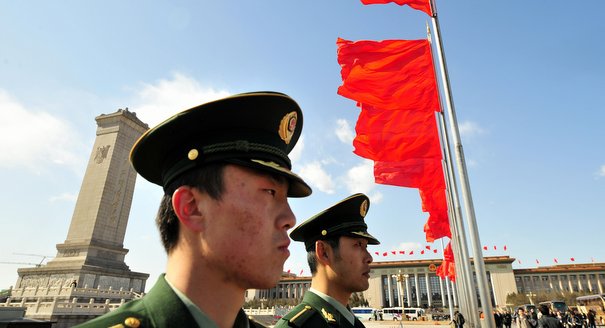
The widely-held belief among both Chinese and Western observers that China is growing increasingly assertive has the potential to create significant challenges for Sino-U.S. relations.
Source: China Leadership Monitor

Such observations are causing some U.S. politicians, military officials, and members of the business community to question whether China remains committed to the two elements that have together stood for over three decades as the hallmarks of the reform era: maintenance of cooperative relations with the West and a basic reliance on the open, freemarket system. If they conclude that China is transitioning to a less cooperative, more assertive, fundamentally revisionist, and in many ways anti-Western approach to vital global and bilateral issues, the repercussions for the international system, and Sino-U.S. relations in particular, could be enormous.
This essay examines the features of the discussion in the West, and among many Chinese, regarding the notion of a more assertive China. It attempts to answer several questions: How is assertiveness defined or understood among Western and Chinese observers? What are the main manifestations or expressions of Chinese assertiveness? What is driving such assertiveness, in the views of both Western and Chinese observers? What are the lines of debate over this issue in China and the West, if any? What are the perceived implications of Chinese assertiveness for the future of the international system and Sino-Western relations? The conclusion provides some general observations regarding the significance of this issue for the future.

Former Senior Fellow, Asia Program
Swaine was a senior fellow at the Carnegie Endowment for International Peace and one of the most prominent American analysts in Chinese security studies.
Recent Work
Michael D. Swaine
Michael D. Swaine
Carnegie does not take institutional positions on public policy issues; the views represented herein are those of the author(s) and do not necessarily reflect the views of Carnegie, its staff, or its trustees.

Huawei pushed hard to enter the Egyptian data centers market, until the Americans made a better offer.

Angie Omar

Middle Eastern states should welcome an accelerated U.S. disengagement from their region.

Michael Young

In an interview, former ambassador Charles Freeman assesses the Trump administration’s war against Iran.
Michael Young

By failing to address Palestinian representation, the current process is bound to lead to just another temporary arrangement.

Nathan J. Brown

The armed forces champion a form of capitalism that is generating revenue, but its reliance on rent faces diminishing returns, leaving the country with massive sunk costs and deferred returns, deepening dependency on external borrowing.

Yezid Sayigh